Preserving Cemetery Art: How Conservationists Save Historic Monuments
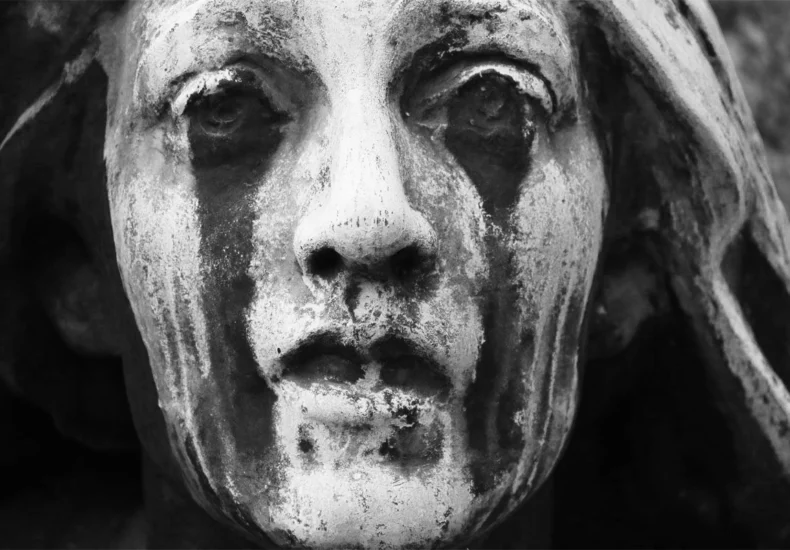
Walk through an old cemetery and you’ll notice something unsettling: names fading, angels losing their faces, marble flaking like old parchment. Cemeteries are often described as “cities of the dead,” but in truth they are more like open-air archives—fragile libraries written in stone. When a gravestone erodes or a sculpture collapses, we don’t just lose an object; we lose language, memory, and cultural meaning.
Preserving cemetery art is not about freezing death in time. It is about slowing forgetting. Conservationists stand at a strange intersection of art history, chemistry, ethics, and anthropology, quietly negotiating between decay and dignity. How exactly do they do it? And why does it matter so much? Let’s step carefully among the monuments and find out.
Contents
Cemeteries as Outdoor Museums
Historic cemeteries are often misunderstood as purely functional spaces. In reality, many of them rival museums in artistic and architectural value. From neoclassical mausoleums to Victorian funerary sculpture, cemeteries preserve entire aesthetic movements in situ.
Unlike museum objects, however, cemetery art is exposed to everything the world throws at it: rain, pollution, biological growth, vandalism, and time itself. Imagine leaving a Renaissance sculpture outdoors for 200 years with no climate control. That’s essentially what we’ve done.
Cemetery art matters because it tells stories beyond individual lives. It reveals social hierarchies, religious beliefs, artistic trends, and even public health anxieties.
A broken column doesn’t just symbolise a life cut short—it also reflects 19th-century romanticism and attitudes toward mortality. Lose the monument, and you lose that layered narrative.
What Exactly Is Cemetery Art?
Cemetery art is far more than decorative tombstones. It includes:
- Gravestones and headstones made of marble, limestone, sandstone, or slate
- Sculptural elements such as angels, allegorical figures, and mourning women
- Mausoleums with architectural detailing rivaling civic buildings
- Metalwork, including iron fences, gates, and plaques
- Carved symbols and epitaphs, which are both textual and visual artifacts
Each material behaves differently over time, and conservation strategies must adapt accordingly. Stone, like people, ages in its own way.
The Enemies of Cemetery Art
Before anything can be saved, conservationists must understand what is destroying it. And the list is surprisingly long.
Weather and Climate
Water is the greatest villain. Freeze-thaw cycles cause stone to crack from the inside, while acid rain dissolves marble and limestone like sugar in tea. Climate change has only accelerated these processes, introducing more intense rainfall, heat stress, and biological growth.
Biological Growth
Lichen, moss, algae, and even tree roots slowly invade monuments. While they may look romantic in photographs, they are quietly destructive. Their root-like structures penetrate stone, holding moisture and accelerating decay.
Air Pollution
Urban cemeteries suffer from pollutants that react chemically with stone. Marble, in particular, transforms into gypsum crusts under polluted conditions, causing surfaces to blacken and flake away.
Human Damage
Vandalism, theft, and well-meaning but misguided cleaning attempts often do more damage than time itself. A wire brush and bleach might seem harmless, but to stone, they are catastrophic.
The Science Behind Conservation
Cemetery conservation is not about making monuments look “new.” In fact, that’s one of the cardinal sins. The goal is stabilisation, not cosmetic perfection.
Assessment Comes First
Every conservation project begins with a detailed condition assessment. Conservationists document cracks, biological growth, material loss, and structural instability. Photography, 3D scanning, and even ground-penetrating radar may be used.
Think of it as a medical check-up for monuments. You don’t prescribe surgery without a diagnosis.
Cleaning: Less Is More
Cleaning is the most misunderstood aspect of conservation. Aggressive methods can erase tool marks, inscriptions, and patina—essentially sanding away history.
Accepted methods include:
- Soft bristle brushes
- Low-pressure water washing
- Specialised biocidal treatments (used sparingly)
If you ever see a gravestone that looks suspiciously bright white, chances are it has been over-cleaned—and permanently damaged.
Stone Repair and Consolidation
When stone begins to crumble, conservators use consolidants—materials that penetrate stone and bind it together internally. Cracks may be filled with lime-based mortars that are chemically compatible with historic stone.
Compatibility is crucial. Using modern cement on historic stone is like repairing a violin with duct tape: it might hold, but at a terrible cost.
Ethics: When Should We Intervene?
Not every broken monument should be repaired. This is where conservation becomes philosophical.
Is a fallen headstone a failure—or a natural part of the cemetery’s lifecycle? Should we restore a monument to its original form, or preserve it exactly as time has shaped it?
Most professionals follow the principle of minimal intervention:
- Intervene only when necessary
- Use reversible methods whenever possible
- Never falsify history
A missing angel’s arm, for instance, is often left missing. To replace it would be to invent a past that no longer exists.
Who Decides What Gets Saved?
Resources are limited. Not every monument can be preserved, which raises uncomfortable questions.
Decisions are often based on:
- Historical significance
- Artistic value
- Rarity
- Community attachment
- Risk of imminent loss
This process inevitably reflects social biases. Grand mausoleums of the wealthy are more likely to be saved than modest graves of marginalised individuals. Increasingly, preservationists are challenging this imbalance, advocating for the conservation of overlooked histories.
After all, silence in stone often mirrors silence in society.
Technology Enters the Graveyard
Modern technology has quietly revolutionised cemetery conservation.
Digital Documentation
High-resolution photography, photogrammetry, and 3D scanning allow conservators to record monuments in extraordinary detail. Even if a stone is eventually lost, its form and inscriptions can survive digitally.
Laser Cleaning
In some cases, lasers are used to remove surface grime without damaging underlying stone. It sounds futuristic—and it is—but it’s also incredibly precise when done correctly.
Databases and Mapping
Digital cemetery maps help track conditions, prioritise interventions, and make burial records accessible to researchers and descendants alike. Memory, it turns out, can be backed up.
Community-Led Preservation
One of the most encouraging trends in cemetery conservation is community involvement. Local volunteers, descendants, historians, and artists increasingly participate in preservation efforts.
Workshops teach proper cleaning techniques. Adopt-a-grave programs foster stewardship. Cemeteries shift from neglected spaces to shared cultural landscapes.
Preservation succeeds best when people care. Stone alone cannot save itself.
Why Preserving Cemetery Art Really Matters
At first glance, this may all seem like a niche concern. Why invest time, money, and expertise in old stones?
Because cemetery art teaches us how societies understand death—and therefore life. It shows how we mourned, whom we honoured, and what we believed mattered enough to carve into stone.
Destroy cemetery art, and you flatten history. Preserve it, and you keep complexity alive.
Cemeteries are not morbid leftovers of the past. They are slow, quiet storytellers. Conservationists simply help them keep speaking.
Bottom Line
Preserving cemetery art is an act of restraint rather than domination. It requires patience, humility, and a willingness to let time show—without letting it erase everything.
Conservationists do not battle death; they negotiate with decay. They remind us that memory, like stone, requires care. And perhaps that is the most human lesson cemeteries offer: that what we value must be maintained, not assumed to endure.
Leave a Reply