My Visit to Highgate Cemetery: A First-Hand Experience
Highgate Cemetery is not merely a burial ground. It is a palimpsest—layered with history, ideology, grief, vegetation, neglect, revival, and a faint but persistent whisper of the Gothic imagination. Visiting Highgate is less like strolling through a cemetery and more like stepping into a contested archive, where nature and memory wrestle constantly for dominance. I arrived expecting atmosphere. I left having encountered an argument about death, class, Victorian morality, and what we choose to preserve when time begins to erase us.
Contents
- Arriving at Highgate: First Impressions of a Victorian Necropolis
- A Cemetery Born of Crisis: The Victorian Context
- The East vs. West Cemetery: Two Philosophies of Death
- Nature as Archivist: Decay, Growth, and Unintended Beauty
- Symbolism at Every Turn: Reading the Stones
- The Atmosphere of Myth: Vampires, Legends, and Cultural Afterlives
- Walking as Method: Experiencing Cemeteries First-Hand
- Ethics of Visiting the Dead: Respect, Curiosity, and Responsibility
- Why Highgate Matters Today
- Bottom Line
- FAQs
Arriving at Highgate: First Impressions of a Victorian Necropolis
The approach to Highgate Cemetery already feels deliberate. Perched on a hill in North London, it distances itself physically and symbolically from the city below. This elevation was no accident.
In the 19th century, height meant health, prestige, and spiritual proximity to heaven. Even before passing through the gates, Highgate announces its intentions: this is not a humble resting place, but a carefully curated landscape of remembrance.
The gates themselves are austere rather than ornate, setting the tone for what lies beyond. As I stepped inside, the city noise fell away almost instantly, replaced by birdsong, rustling leaves, and that particular hush unique to cemeteries—a silence that isn’t empty, but attentive. It feels as though the place is watching you back.
A Cemetery Born of Crisis: The Victorian Context
To understand Highgate, one must understand why it exists at all. By the early 19th century, London’s churchyards were dangerously overcrowded. Corpses were stacked, disturbed, and, in some cases, sold. Disease, particularly cholera, thrived in these conditions. Highgate was part of the “Magnificent Seven” cemeteries created to solve this urban and public health crisis.
Yet Highgate was more than a sanitary solution. It was a social statement. Death here was aestheticised, organised, and stratified. Wealth dictated location, monument size, and permanence. In this sense, Highgate is less democratic graveyard and more posthumous real estate market. Even in death, Victorian London clung fiercely to hierarchy.
Walking through the cemetery, this becomes painfully visible.
The East vs. West Cemetery: Two Philosophies of Death
Highgate is divided into two distinct halves, each reflecting different attitudes toward burial and memory.
The West Cemetery: Theatre, Symbolism, and Gothic Excess
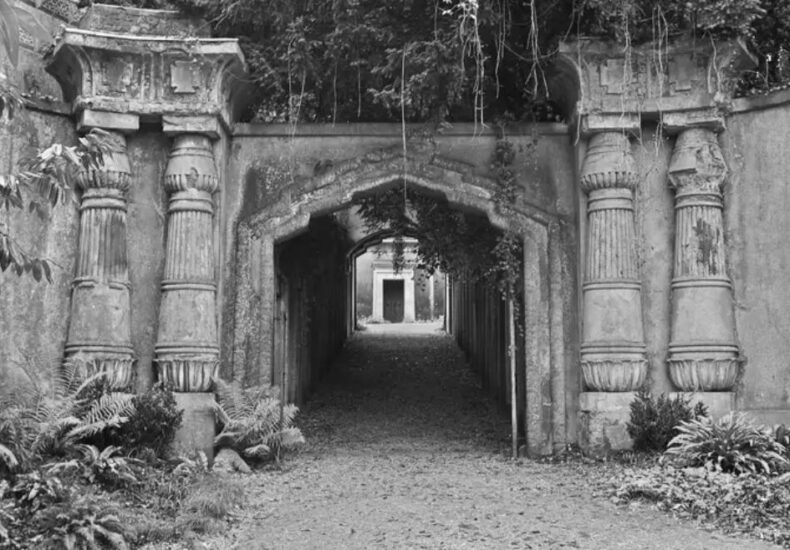
The West Cemetery is accessible only via guided tour, and for good reason. It is fragile, overgrown, and heavy with symbolism. This is the Highgate of popular imagination—the Egyptian Avenue, the Circle of Lebanon, the terraced tombs that feel more like stage sets than graves.
The Egyptian Avenue is perhaps the most overtly symbolic space. Built during Britain’s Egyptomania phase, it reflects Victorian obsessions with eternity, resurrection, and exotic antiquity. Passing through its shadowed passageways feels ritualistic, almost initiatory. The Circle of Lebanon, centred around a now-ancient cedar tree, reinforces the idea of cyclical time: death feeding life, roots piercing tombs, history collapsing inward.
Here, monuments shout rather than whisper. Angels loom. Obelisks rise. Names insist on being remembered. It is beautiful, but also unsettling—less a place of peace and more a monument to anxiety about oblivion.
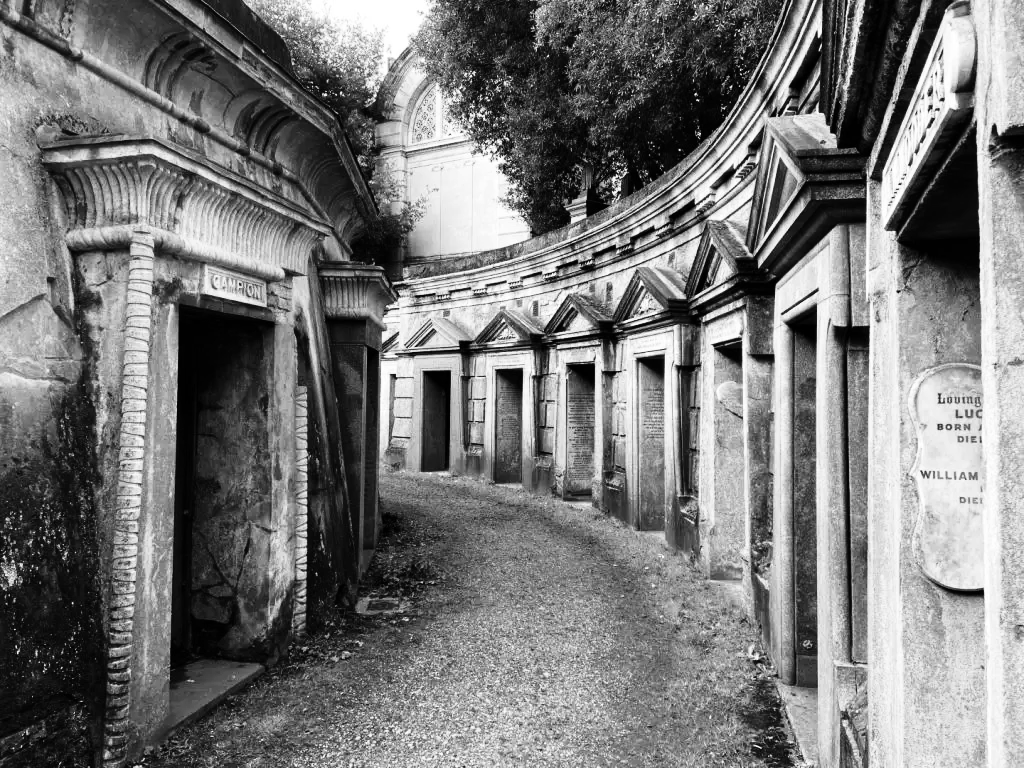
Photo by Talita Soncini
The East Cemetery: Order, Fame, and Accessibility
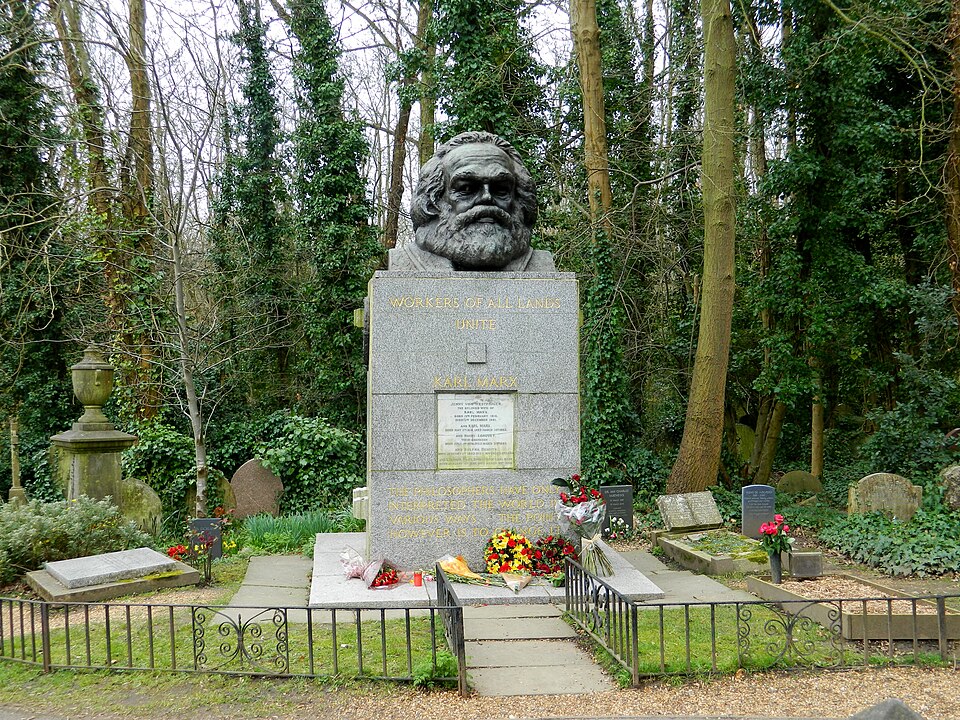
The East Cemetery, by contrast, is open, navigable, and more recognisably “modern.” Paths are clearer, graves simpler, symbolism restrained. It is here that the famous dead reside: Karl Marx, George Eliot, Douglas Adams.
Marx’s grave, in particular, attracts crowds. It is less a tomb than a pilgrimage site, complete with offerings, slogans, and ideological devotion. Standing there, I was struck by how death transforms people into symbols. Marx the man disappears; Marx the idea remains, endlessly repurposed.
The East Cemetery feels less intimate, but more communal. It invites interpretation rather than awe. If the West Cemetery is Romantic and theatrical, the East is Enlightenment-driven—ordered, rational, and legible.
Nature as Archivist: Decay, Growth, and Unintended Beauty
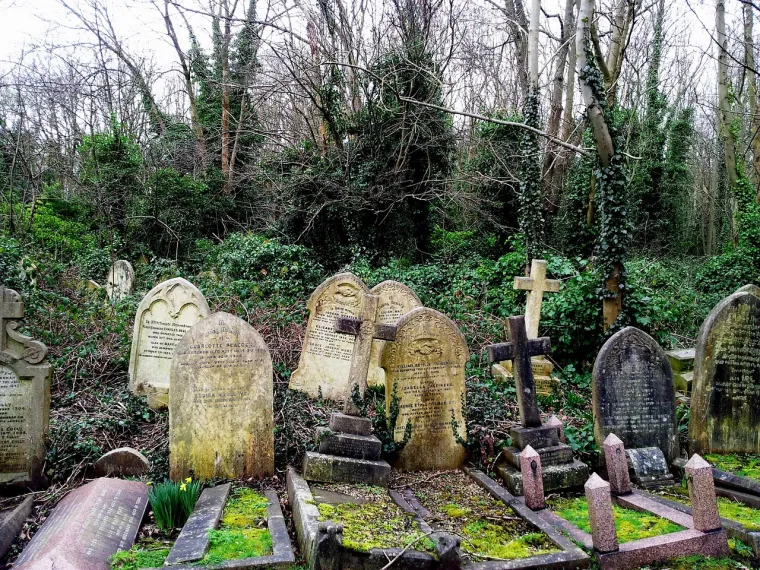
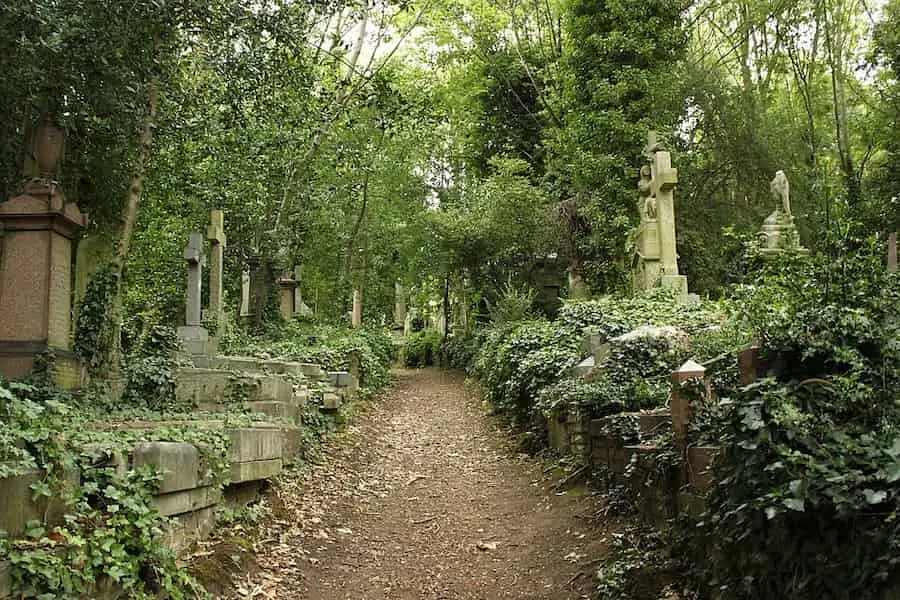
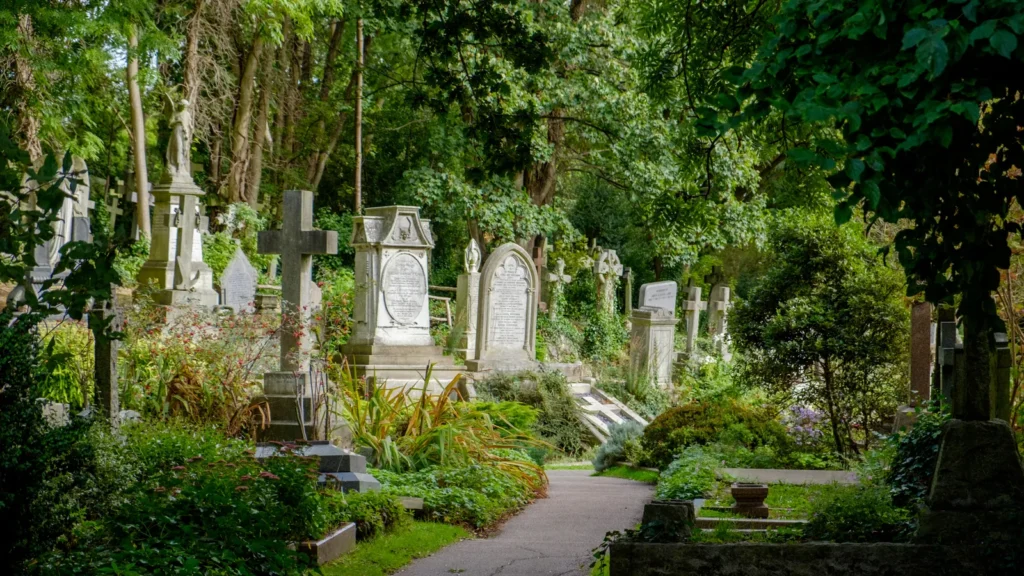
One of Highgate’s most compelling features is its uneasy partnership with nature. Ivy climbs mausoleums. Moss softens inscriptions. Trees fracture tombs with quiet persistence. This is not neglect; it is a deliberate conservation philosophy. Highgate is managed, not manicured.
This raises an uncomfortable but fascinating question: should cemeteries be preserved exactly as they were, or allowed to age naturally? Highgate suggests a third path. Here, decay becomes part of the narrative. Erosion is not failure; it is documentation.
Walking among half-legible names, I found myself thinking of memory itself. What survives? What fades? And who decides which stories deserve restoration?
Symbolism at Every Turn: Reading the Stones
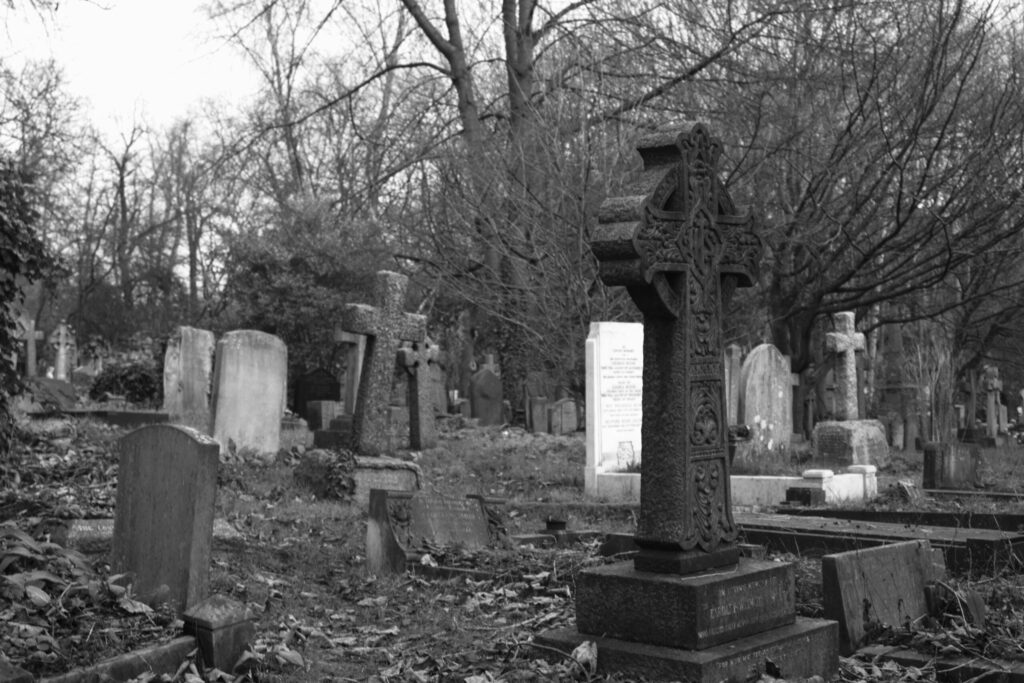
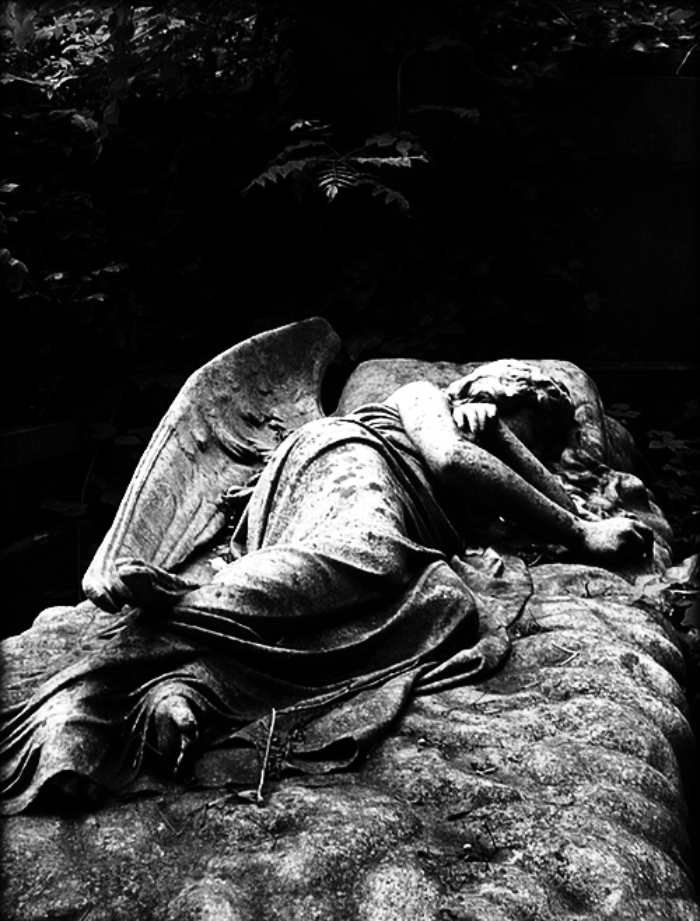
Highgate is a masterclass in funerary symbolism. Broken columns signal lives cut short. Weeping angels embody eternal mourning. Draped urns represent the veil between worlds. Each symbol is a visual shorthand, designed to communicate emotion quickly in an era before photography was widespread.
What struck me most was how little ambiguity Victorians allowed in death. Grief was scripted. Meaning was encoded. Contrast this with contemporary cemeteries, where minimalism reigns and ambiguity is often preferred. Highgate belongs to a time when death demanded explanation, not silence.
The Atmosphere of Myth: Vampires, Legends, and Cultural Afterlives
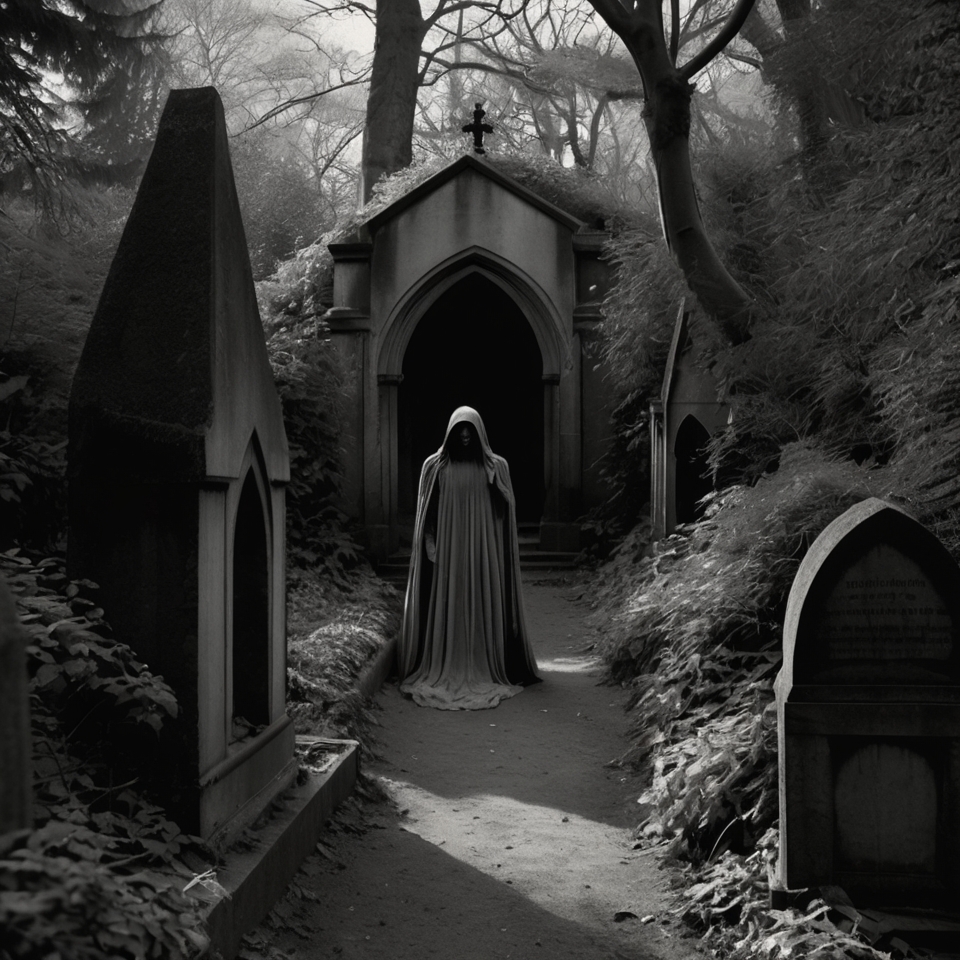
No discussion of Highgate would be complete without acknowledging its mythological reputation. The infamous “Highgate Vampire” of the 1970s may be folklore, but it speaks volumes about the cemetery’s cultural power. Overgrown, poorly lit, and symbolically dense, Highgate was a perfect canvas for projecting collective fears.
What interests me is not whether these legends are true (they are not), but why they persist. Cemeteries like Highgate exist at the intersection of history and imagination. When institutional narratives fade, myth rushes in to fill the gap.
Walking as Method: Experiencing Cemeteries First-Hand
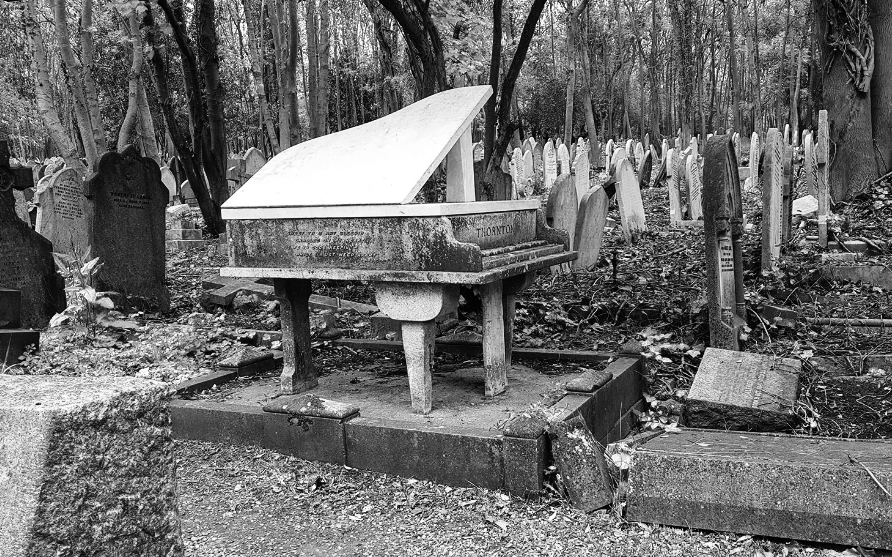
What Highgate taught me most forcefully is that cemeteries cannot be understood solely through books or archives. They must be walked. Experienced. Felt underfoot.
The incline of the paths, the uneven stones, the sudden clearings—these physical elements shape interpretation. A cemetery is not a static text; it is a spatial argument. Highgate argues that death is not an endpoint, but a process—ongoing, contested, and deeply human.
Ethics of Visiting the Dead: Respect, Curiosity, and Responsibility
As a visitor, I was constantly aware of my role. Was I observing or intruding? Learning or consuming? Highgate walks a fine ethical line between heritage site and burial ground.
Photography is allowed, but not indiscriminately. Certain behaviours are discouraged. This subtle regulation reinforces an important idea: curiosity is welcome, but reverence is required. Cemeteries are not museums, even when they resemble them.
Why Highgate Matters Today
Highgate Cemetery matters because it refuses to let death become invisible. In an age where mortality is sanitised, hidden, or outsourced, Highgate insists on presence. It reminds us that remembrance is work—that memory, like stone, requires maintenance.
More importantly, Highgate reveals how societies encode values into landscapes. Class, belief, fear, hope—all carved into limestone and marble. To walk through Highgate is to read Victorian London’s autobiography, written in graves.
Bottom Line
I left Highgate slowly, reluctantly. Cemeteries have a way of recalibrating time. Hours feel shorter; thoughts feel heavier. What lingered with me was not morbidity, but clarity. Highgate is not about death alone—it is about how fiercely we resist being forgotten.
Visiting Highgate Cemetery is not a passive experience. It asks questions of you. What will remain of us? How will we be remembered?
Leave a Reply