
Cemetery Sculptures: The Stories Behind the Most Famous Memorials
Walk through almost any historic cemetery and you’ll notice something curious: the silence is never truly silent. Marble angels lean forward mid-lament, bronze figures seem to breathe in the cold air, and stone hands reach across centuries in gestures of grief, hope, or defiance. Cemeteries, in this sense, are not merely resting places — they are open-air museums of memory.
Cemetery sculptures exist at the intersection of art, mourning, religion, and social identity. They are emotional architecture, carved not just to mark death but to negotiate it. Think of them as letters written in stone to the future, each one telling a story about the person beneath it and the society that buried them.
In this article, we’ll explore the stories behind some of the world’s most famous cemetery sculptures and what they reveal about grief, beauty, symbolism, and the strange human desire to immortalise the temporary.
Contents
The Origins of Sculptural Memorials
Long before modern cemeteries existed, humans were already marking death with art. Ancient Egyptians filled tombs with statues meant to serve the dead in the afterlife. The Greeks sculpted idealised figures to preserve dignity beyond death. Romans perfected portrait busts that captured personality in marble permanence.
But cemetery sculpture as we recognise it today truly flourished during the 18th and 19th centuries, particularly in Europe and North America. This was the era of the garden cemetery movement, when burial grounds were redesigned as landscaped parks filled with monuments, symbolism, and elaborate statuary.
Why such artistic devotion to the dead? Because the Industrial Revolution transformed cities into crowded, chaotic places. Cemeteries became spaces where grief could be aestheticised and controlled, where mortality could be softened by beauty.
In other words, sculpture became a way to make death look less like an ending and more like a transition.
The Angel of Grief: Eternal Sorrow in Marble
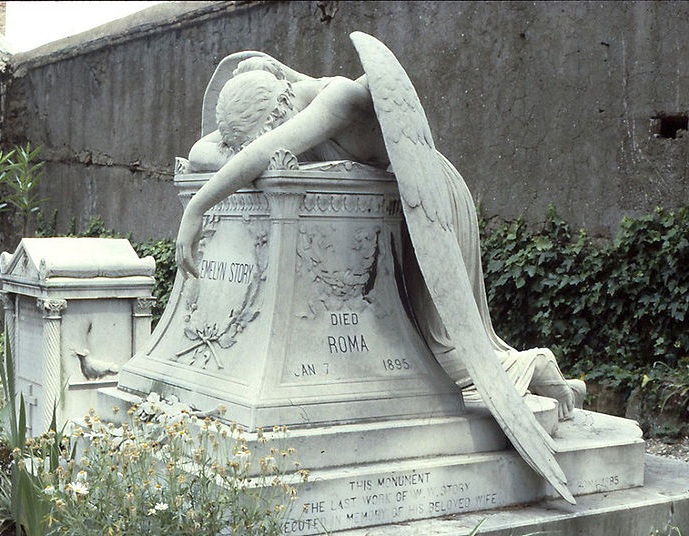
One of the most famous cemetery sculptures in the world is the Angel of Grief, originally sculpted by American artist William Wetmore Story in 1894 for his wife’s grave in Rome’s Protestant Cemetery.
The sculpture depicts a winged angel collapsed across a tomb, overcome with sorrow. Unlike triumphant religious angels, this figure is exhausted by grief. The wings droop. The body folds inward. Mourning is not dignified — it is heavy.
Copies of this sculpture appear in cemeteries across the world, from the United States to Cuba.
Why does it resonate so deeply?
Because it captures something uncomfortable but universal: grief is not poetic when you are inside it. It is weight. It is gravity. It is collapse.
The Angel of Grief reminds us that cemetery sculpture often reveals more about the living than the dead.
The Veiled Sculptures of Italy: Illusion and Immortality
In several Italian cemeteries — especially Staglieno Cemetery in Genoa — visitors encounter a strange artistic phenomenon: sculptures covered in stone veils so delicate they appear transparent.
These veiled figures symbolise the thin boundary between life and death, body and spirit, presence and absence.
Technically, they are masterpieces of illusion. Emotionally, they are metaphors carved into limestone.
A veil both hides and reveals. It suggests mystery without erasing identity. It says, “The person is gone, but not entirely.”
Isn’t memory itself a kind of veil? We see the outline of someone who once existed, but never again in full clarity.
The Weeping Figures of Père Lachaise
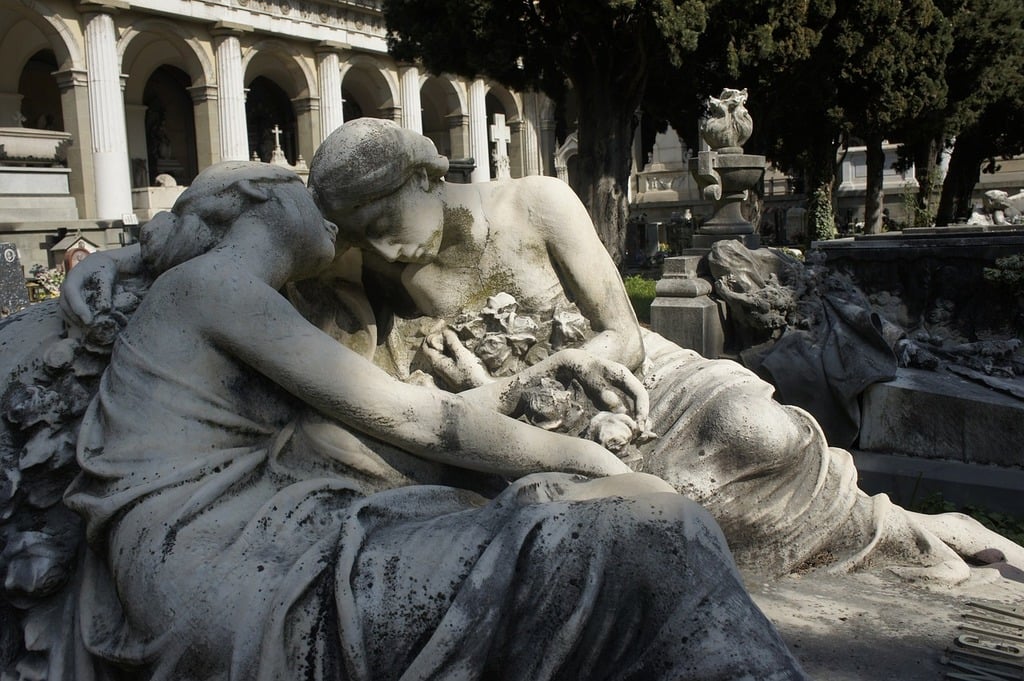
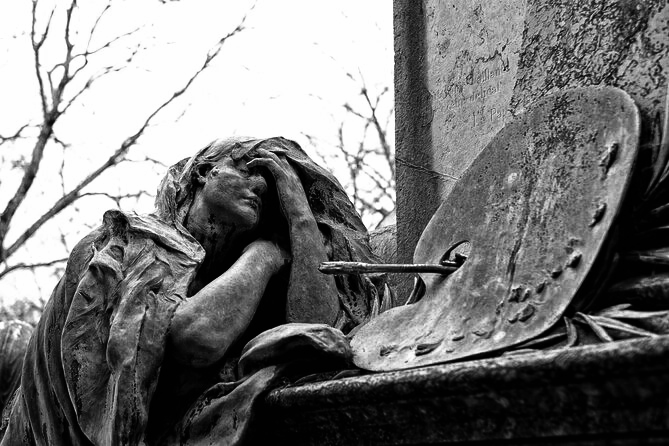
Paris’s Père Lachaise Cemetery contains some of the most expressive funerary sculpture in the world. Here, mourning figures appear frozen in theatrical sorrow — leaning on tombs, clutching flowers, or gazing toward the sky.
These sculptures emerged during the Romantic era, when emotion became culturally celebrated rather than suppressed. Death was not hidden; it was dramatised.
Victorian society, in particular, developed a complex visual language of mourning. Sculptures were emotional stand-ins, expressing grief that social etiquette often restrained.
Think of them as emotional proxies carved in stone.
Instead of saying, “We miss you,” families commissioned statues that could mourn forever.
The Bronze Doors of Milan’s Monumental Cemetery
At Cimitero Monumentale di Milano, entire tombs resemble miniature museums. Some memorials feature massive bronze doors covered in sculptural panels depicting the life story of the deceased.
These are not merely grave markers. They are biographical monuments.
One can read them like graphic novels in metal — scenes of childhood, career, family life, and sometimes religious transformation.
Why narrate a life this way?
Because memory fears simplicity. A name and date feel insufficient. Sculpture allows life to be told as a story rather than reduced to statistics.
After all, a gravestone inscription is a summary. A sculpture is a narrative.
The Business of Death: How the Funeral Industry Has Evolved
Strange Encounters in Graveyards: Personal Stories & Readers Submissions
Modern Cemetery Sculpture: Minimalism and Memory
Not all cemetery sculpture is dramatic or figurative. In the 20th and 21st centuries, memorial art began to change. Religious symbolism declined in many regions, replaced by abstraction and minimalism.
Simple geometric forms, polished stone surfaces, and symbolic shapes became common. These memorials often focus less on theology and more on personal identity and emotional resonance.
Minimalist sculpture reflects a modern question:
If death is universal, must memorials follow tradition?
Today’s cemetery art sometimes resembles contemporary gallery installations. Memory is no longer expressed only through angels and crosses, but through form, texture, and space.
Grief, like art, evolves with culture.
Symbolism in Cemetery Sculpture
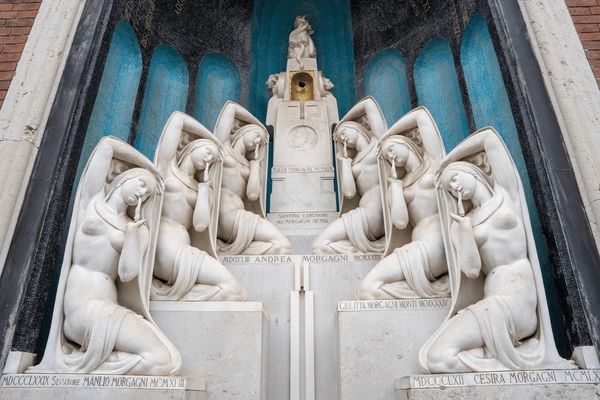
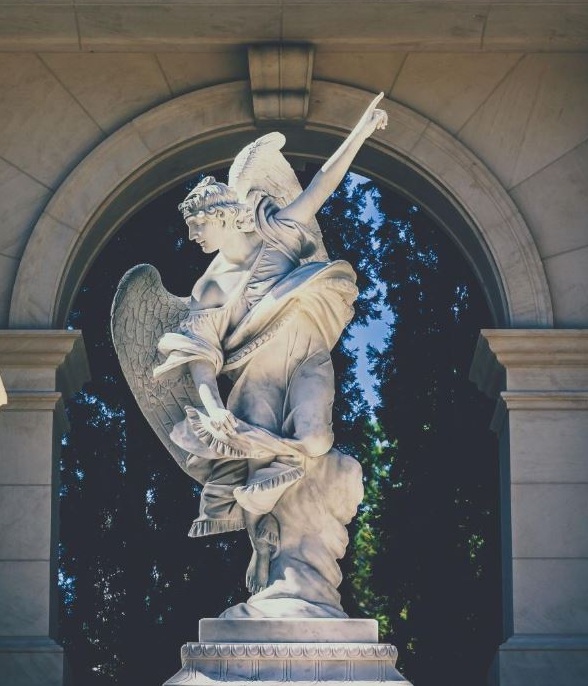
Cemetery sculptures rarely exist without symbolic meaning. Even small details carry messages.
Common symbolic figures include:
- Angels (guidance to the afterlife)
- Mourning women (grief and remembrance)
- Children (innocence)
- Draped urns (the body as a vessel)
- Broken columns (a life cut short)
These symbols form a visual language understood across generations.
If language is how we communicate with the living, symbolism is how we communicate with the future.
Cemetery sculpture becomes a dictionary of mortality.
Why Cemetery Sculptures Endure
Unlike paintings or buildings, cemetery sculptures serve a dual purpose: artistic expression and emotional preservation.
They endure because they answer three human fears:
- The fear of being forgotten
- The fear of death’s finality
- The fear that life might leave no trace
Sculpture offers resistance to time. Stone erodes slowly. Bronze oxidises gracefully. Memory gains weight when attached to material.
A sculpture says:
“This person existed. This grief existed. This love existed.”
And perhaps that is why cemetery sculpture feels so powerful — it preserves emotion as much as identity.
Cemeteries as Sculpture Gardens
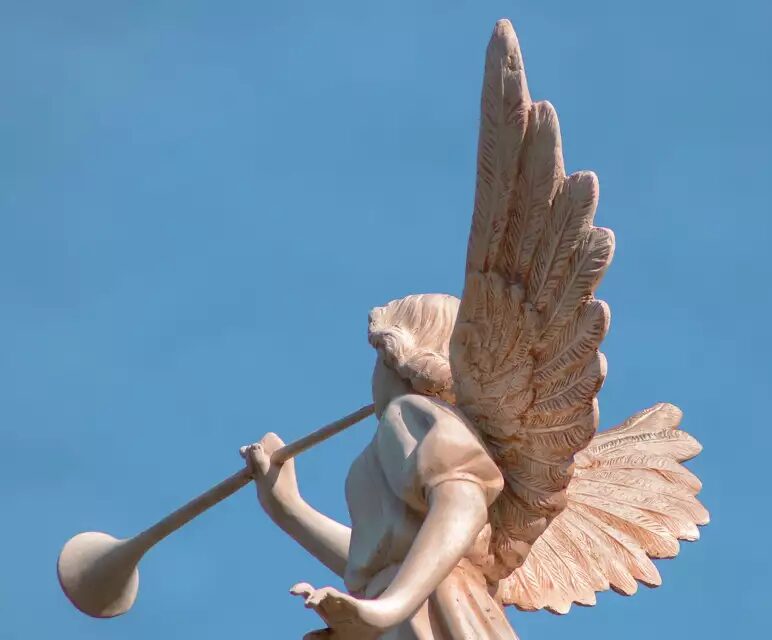
Many historic cemeteries now function as cultural landscapes where art history, anthropology, and architecture intersect.
Places like:
- Staglieno Cemetery (Italy)
- Père Lachaise (France)
- Highgate Cemetery (UK)
- Recoleta Cemetery (Argentina)
are visited as much for their sculpture as for their historical figures.
In these spaces, death becomes paradoxically creative. Cemeteries transform into archives of human feeling, carved in marble and bronze.
They remind us that while life is temporary, the desire to be remembered is remarkably durable.
Bottom Line
Cemetery sculptures are more than decoration. They are emotional documents, cultural artifacts, and artistic attempts to negotiate the permanence of loss.
From collapsing angels to veiled figures and modern abstractions, memorial sculpture reflects how societies understand death, identity, and remembrance. Each monument is a conversation between grief and time, between memory and material.
If cemeteries are cities of the dead, then sculptures are their storytellers — speaking quietly, patiently, and endlessly.
And perhaps that is the real purpose of cemetery art:
Leave a Reply