When the Dead Go Missing: Grave Robbing & Stolen Corpses in History
We like to imagine that burial is the final full stop. A grave, a stone, a name carved in permanence. Closure. Silence. Peace. But history, as it often does, complicates the narrative. What happens when the dead refuse to stay buried—not through ghosts or folklore, but through human interference?
Grave robbing is as old as burial itself. From ancient tomb raiders in Egypt to 19th-century “resurrection men” supplying medical schools, stolen corpses have haunted the margins of civilisation. Why disturb the dead? Greed? Science? Ritual? Desperation? The answer, inconveniently, is all of the above.
Let us descend, then—not into myth—but into documented history. Because when the dead go missing, the living are never innocent.
Contents
- Ancient Tomb Raiders: Gold, Glory, and the Afterlife Economy
- Rome and Relics: The Sacred Body as Commodity
- The Resurrection Men: Science’s Dirty Secret
- Body Snatching in America: From Potter’s Fields to Medical Halls
- Colonial Plunder: Skulls, Skeletons, and Scientific Racism
- The Macabre Marketplace: Hair, Teeth, and Medical Curiosities
- Modern Grave Theft: Organ Trafficking and Black Markets
- Why Do We Rob Graves? Fear, Fascination, and Power
- Legal Reform and the Protection of the Dead
- Bottom Line
- FAQs
Ancient Tomb Raiders: Gold, Glory, and the Afterlife Economy
Long before modern cemeteries, elaborate tombs signaled wealth and power. The pyramids of Ancient Egypt were not simply burial sites; they were architectural declarations of immortality. Pharaohs were interred with jewelry, chariots, statues, and enough gold to destabilise an empire.
Predictably, someone noticed.
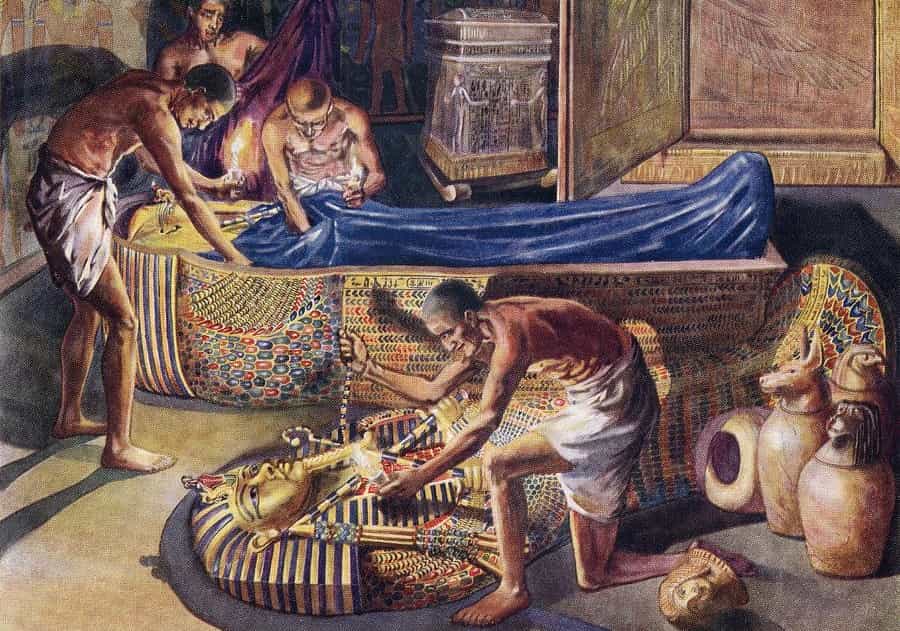
Tomb raiding in ancient Egypt was so common that it became a legal crisis. Court records from the New Kingdom document trials of grave robbers who tunneled into royal tombs. These were not impulsive crimes. They were organised operations. Teams mapped burial chambers, dismantled coffins, and stripped mummies of precious amulets.
Ironically, some robbers were the very workers who built the tombs. Familiarity breeds opportunity.
Was this sacrilege? Undoubtedly. But it was also economics. A single tomb could contain enough wealth to feed generations. In a world without banks, the dead were vaults.
Rome and Relics: The Sacred Body as Commodity
Move forward to Ancient Rome and into early Christianity. Here, grave disturbance took on a different flavour. It was not always about gold. It was about sanctity.
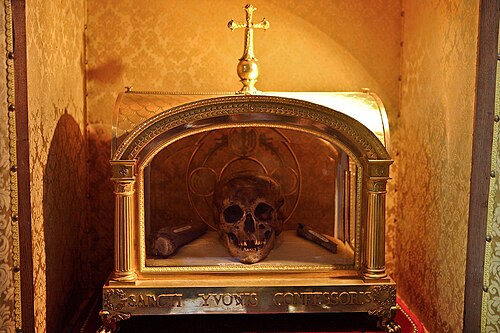
Relics—the bones of saints, fragments of skulls, strands of hair—were believed to possess divine power. Churches competed for them. Cities built reputations around them. Pilgrims traveled vast distances to kneel before them.
And so, bodies were quietly relocated.
Sometimes relics were “translated” with ceremony. Other times, they were stolen under cover of darkness. The theft of saintly remains became so frequent that medieval chroniclers developed a peculiar genre: the holy heist narrative.
What fascinates me is this: society condemned grave robbing—unless it served faith. Then it was reframed as devotion.
Context, it seems, determines morality.
The Resurrection Men: Science’s Dirty Secret
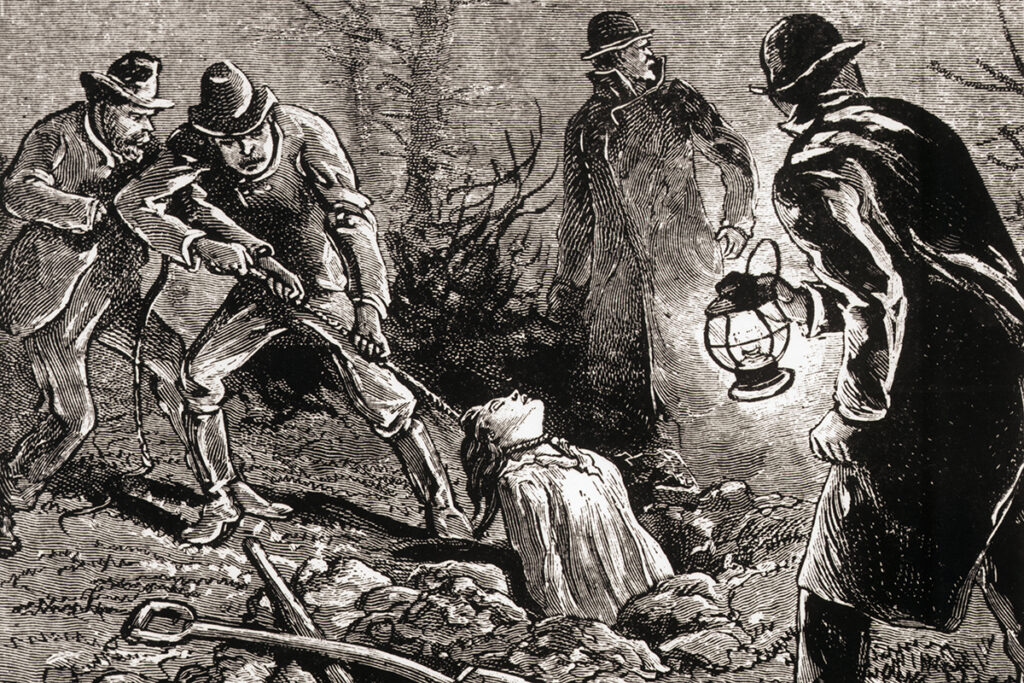
If grave robbing had a notorious golden age, it was the 18th and 19th centuries. In cities like London and Edinburgh, medical schools faced a pressing problem: cadavers were scarce.
Anatomy was emerging as a legitimate science. Surgeons needed bodies to dissect. But laws allowed only executed criminals to be used for study. Supply fell dramatically short of demand.
Enter the “resurrection men.”
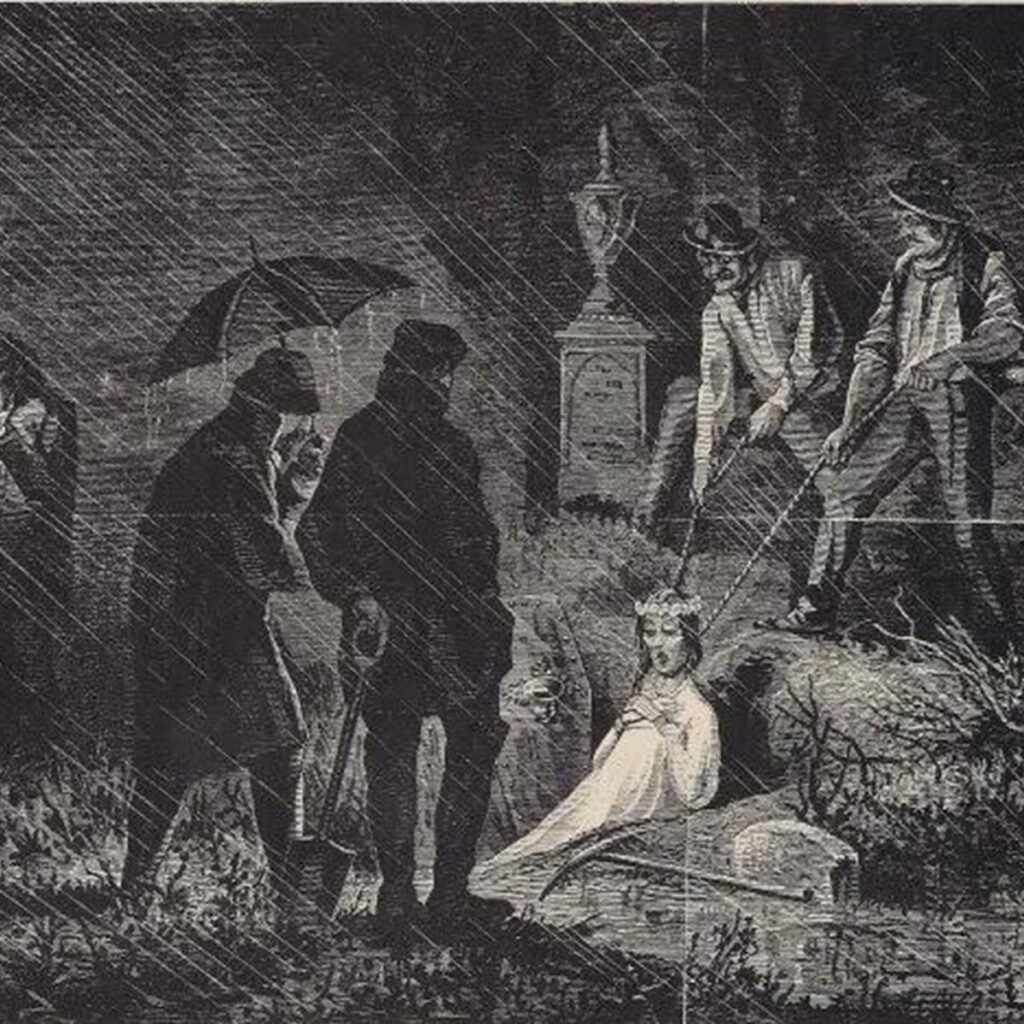
These professional body snatchers worked under the cover of night. They monitored fresh burials. They dug quickly—sometimes within hours of interment—removed the corpse, and left valuables behind to reduce legal charges from grave robbery to simple body theft.
Why leave the jewellery? Because stealing property was a felony. Stealing a body was… oddly ambiguous.
The trade became so lucrative that it crossed moral boundaries entirely. In 1828, Burke and Hare in Edinburgh dispensed with grave robbing altogether. They murdered vulnerable individuals and sold the corpses directly to anatomist Robert Knox.
Sixteen victims later, the scandal erupted.
Public outrage forced legal reform. The British Anatomy Act of 1832 expanded legal access to unclaimed bodies, reducing the incentive for grave robbing. Science had progressed—but not without collateral damage.
And here lies the uncomfortable truth: modern medicine owes part of its development to stolen flesh.
Body Snatching in America: From Potter’s Fields to Medical Halls
Across the Atlantic, the pattern repeated. In 18th- and 19th-century United States, medical schools quietly relied on grave robbers. The targets were often marginalised communities: African Americans, the poor, and those buried in potter’s fields.
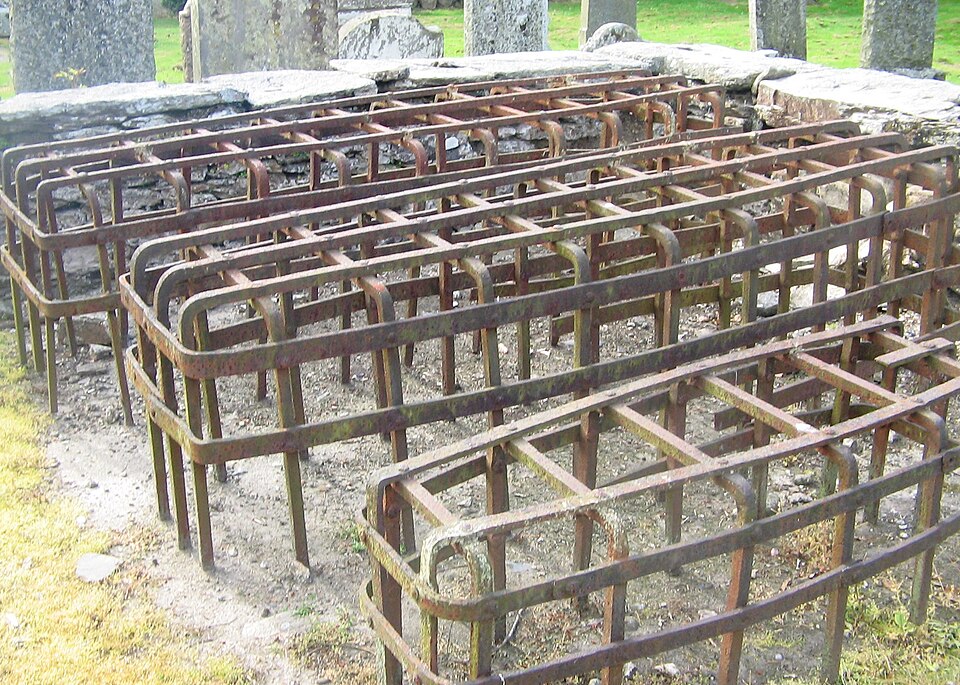
Cemeteries installed iron cages—“mortsafes”—over graves to prevent theft. Families held vigil beside fresh burials. The fear was real. So was the resentment.
Riots broke out when communities discovered medical students dissecting stolen bodies. The New York Doctors’ Riot of 1788 exposed just how volatile the issue had become.
Who owns the dead? The family? The state? Science?
The question remains disturbingly relevant.
Colonial Plunder: Skulls, Skeletons, and Scientific Racism
Grave robbing was not confined to urban crime. It became institutional.
During the 19th century, colonial powers exhumed Indigenous graves across Africa, Australia, and the Americas. Skulls were shipped to European museums in the name of “racial science.” Bones were measured. Categorised. Displayed.
Entire burial grounds were desecrated to satisfy pseudoscientific theories about hierarchy and evolution.
This was not petty theft. It was systemic exploitation.
Today, repatriation movements seek to return remains to descendant communities. Institutions like the British Museum and the Smithsonian Institution face ongoing pressure to address their collections.
The afterlife of colonial grave robbing is not over. It sits in museum drawers, awaiting ethical reckoning.
The Macabre Marketplace: Hair, Teeth, and Medical Curiosities
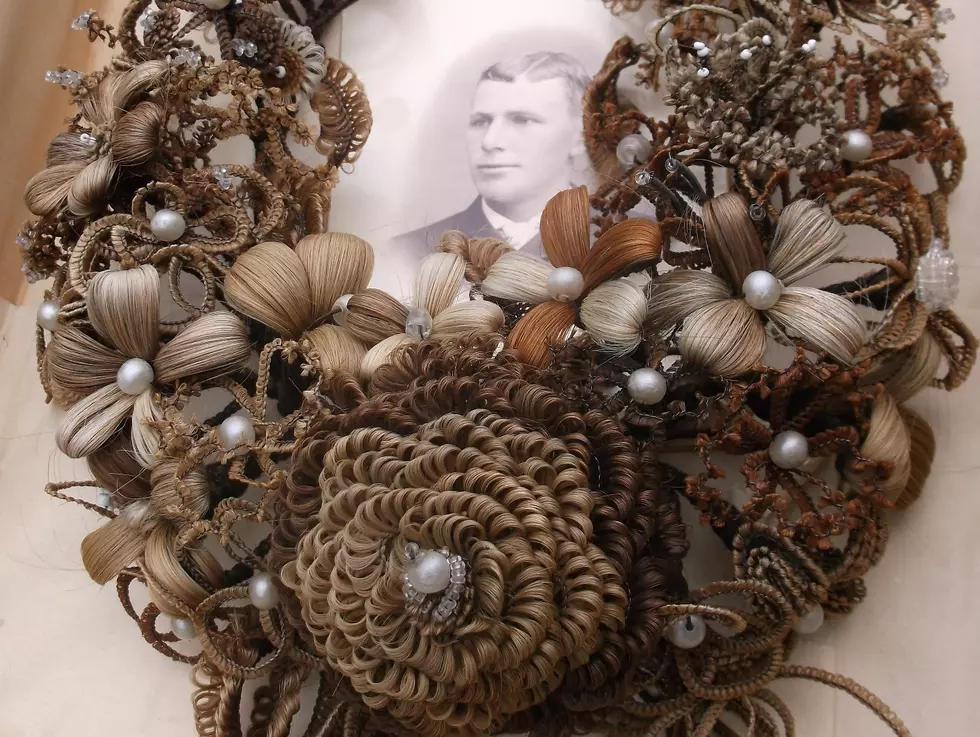
Beyond full bodies, smaller relics were also commodified. In Victorian Europe, human hair became mourning jewelry. Teeth from battlefields were repurposed into dentures—famously after the Battle of Waterloo.
Yes, the smile you admired in 19th-century London might have belonged to a fallen soldier.
Grave robbing fueled not only science but fashion and industry. The body was fragmented and repurposed. A morbid recycling system.
It sounds grotesque—and it was—but it also reflects something profoundly human: our inability to treat the body as merely organic waste. Even in theft, it retained symbolic power.
Modern Grave Theft: Organ Trafficking and Black Markets
Surely, we are more civilised now?
Not entirely.
In various parts of the world, graves are still disturbed for ritual purposes, organ trafficking, or the illicit sale of skeletal remains. Online marketplaces have occasionally listed human bones for collectors. The macabre has simply migrated to digital platforms.
Even famous figures are not immune. The body of Charlie Chaplin was stolen in 1978 from a Swiss cemetery and held for ransom. His family eventually recovered the body, but the episode reminds us: notoriety attracts violation.
Death does not guarantee privacy.
Why Do We Rob Graves? Fear, Fascination, and Power
Let us pause. Why does this happen across cultures and centuries?
Grave robbing reveals three persistent human impulses:
- Greed – The material wealth buried with the dead.
- Knowledge – Scientific advancement built on dissection and study.
- Power – Control over memory, identity, and even racial narratives.
The grave is symbolic territory. To disturb it is to assert dominance over mortality itself.
And perhaps that is the deepest layer. We fear death. We romanticise it. We attempt to decode it. Sometimes, we exploit it.
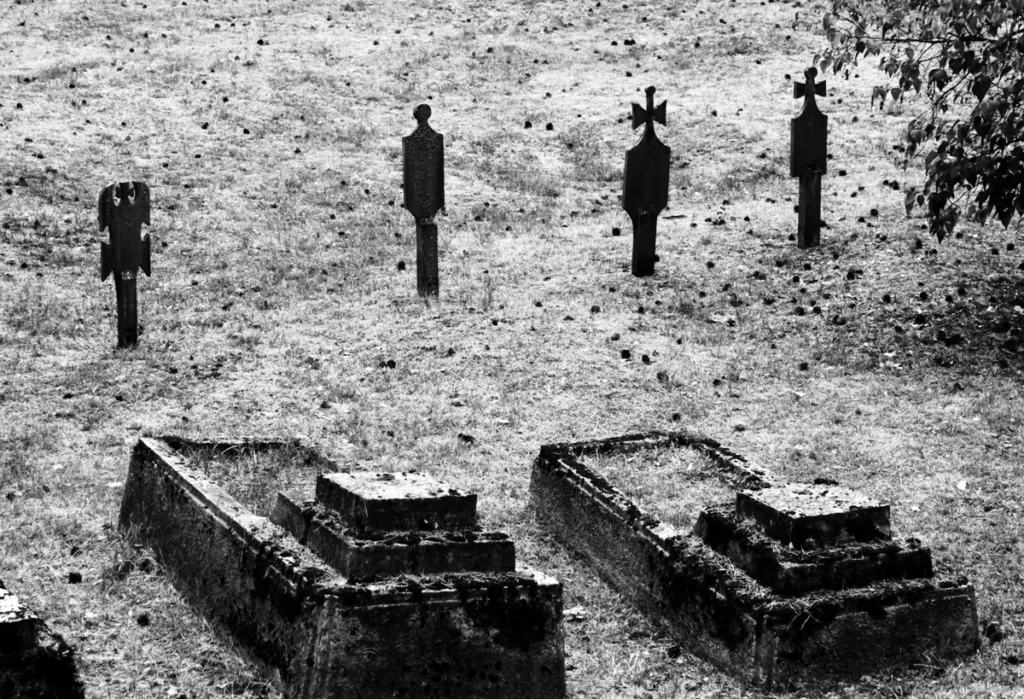
The Lost Cemeteries of the World: Forgotten Burial Grounds Rediscovered

Death & Mythology: How Ancient Beliefs Still Haunt Cemeteries
Legal Reform and the Protection of the Dead
In response to centuries of abuse, legal systems evolved. Anatomy Acts, cemetery regulations, repatriation laws—these frameworks aim to protect human remains from commodification.
Modern forensic science operates under strict ethical oversight. Museums reassess collections. Communities reclaim ancestral bones.
Progress is imperfect, but it exists.
Yet, I cannot help asking: Is protection about the dignity of the dead—or the comfort of the living?
Bottom Line
Grave robbing is not merely crime history. It is cultural autobiography.
Each stolen corpse tells us something about its era—about wealth, religion, science, colonialism, fear, and ambition. The treatment of the dead exposes the values of the living.
When the dead go missing, it is rarely about them. It is about us.
We bury our bodies hoping for permanence. History, however, reminds us that permanence is negotiable. Ethics evolve. Laws shift. Curiosity persists.
Leave a Reply