
Strange Encounters in Graveyards: Personal Stories & Readers Submissions
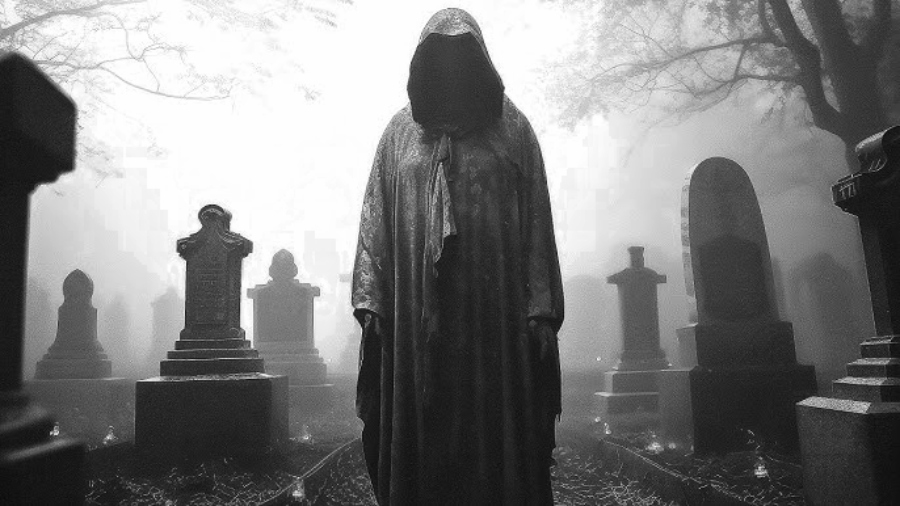
Cemeteries are curious places. On the surface, they appear quiet, orderly, and contemplative—rows of stone markers standing patiently beneath trees that have seen centuries pass. Yet anyone who has spent enough time wandering among graves will tell you something strange: cemeteries rarely feel empty.
There is an atmosphere to them. A density of memory. A sense that stories linger long after the people who created them have vanished.
Of course, historians would argue that this feeling stems from cultural symbolism. Anthropologists might say cemeteries are emotionally charged landscapes. Psychologists would remind us that the human mind excels at projecting meaning onto silence. And yet… every cemetery enthusiast eventually hears the stories.
A flicker of movement where there should be none. Footsteps echoing behind an empty path. A stranger who disappears moments after speaking. Are these supernatural events? Misinterpretations? Coincidences wrapped in folklore?
In this article, we explore strange encounters in graveyards reported by visitors—from eerie coincidences to unexplainable experiences—shared by travelers, historians, and readers who have walked among the dead and left with stories they never expected.
Contents
Why Graveyards Amplify the Unusual
Before diving into the stories themselves, it helps to understand why cemeteries are fertile ground for unusual experiences.
Cemeteries are what geographers call “liminal spaces.” These are places that exist between states: life and death, past and present, sacred and public. Humans instinctively treat such spaces differently.
Think of cemeteries as archives carved in stone. Every marker represents a life, a narrative, a family history condensed into a few words and dates. When you walk through a graveyard, you are literally moving through centuries of personal histories.
That atmosphere can heighten awareness.
Your senses sharpen. Sounds feel louder. Silence becomes meaningful.
And when the mind is primed for reflection, it becomes particularly sensitive to anomalies. But sometimes, the experiences go beyond heightened perception. Let’s look at some of the strangest encounters reported by graveyard visitors.
The Disappearing Visitor
One reader submission came from Marija, a history student researching Victorian funerary art in London.
“I visited a large historic cemetery to photograph angel statues and elaborate mausoleums. While sketching one particular monument, I noticed an elderly man standing a few meters away, quietly examining the same grave.
We struck up a brief conversation about the sculpture’s craftsmanship. He seemed quite knowledgeable and casually mentioned that the sculptor was a well-known monument maker from the 1870s.
Curious, I turned for a moment to take a photo of the statue. The entire interaction couldn’t have lasted more than ten seconds.
But when I turned back to continue the conversation, the man was gone.
No footsteps. No nearby path. No visible exit. Just empty air and rows of gravestones stretching into the distance.
Later that evening, I decided to look up the monument maker the man had mentioned.
That’s when I discovered something unsettling. The name the man had given me belonged to the sculptor himself.
And according to the records, he had died in 1883—and was buried in that very cemetery.”
Coincidence? A wandering historian? A trick of perception?
Perhaps. But the experience left her with an uneasy question: who exactly had she been speaking to?
Footsteps in the Gravel
Another common cemetery encounter involves unexplained sounds—particularly footsteps.
Daniel, an amateur genealogist researching family graves in rural Scotland, described an experience that still unsettles him years later.
“While walking through a small 18th-century churchyard, I kept hearing footsteps behind me, crunching on the gravel path. At first, I naturally assumed another visitor had entered the cemetery.
But every time I turned around, the path was completely empty.
I started walking again—and the footsteps returned. I turned around. Silence.
I walked a few more steps. Crunch. Crunch. Crunch.
After several minutes of this strange pattern, I decided to stop completely and stand still, just to see what would happen.
The footsteps continued for two more steps… and then stopped abruptly.
There was no wind. No animals rustling in the grass. No people anywhere nearby.”
Daniel eventually laughed it off, but he admits he finished his research that day a little faster than planned.
The Helpful Stranger
Not all strange cemetery encounters are unsettling. Some feel oddly helpful.
Laura, a travel writer exploring historic burial grounds in Italy, shared an experience that borders on the uncanny.
“While visiting a large cemetery, I found myself struggling to locate the grave of a 19th-century poet I had hoped to photograph. The cemetery map was confusing, and the layout of the paths seemed to loop endlessly, as if the sections were quietly rearranging themselves just to keep me wandering.
After a while, frustration got the better of me, so I approached a woman standing nearby and asked if she knew where the monument might be. She was dressed entirely in dark clothing and spoke with calm certainty. Without hesitation, she guided me through a series of winding paths and narrow rows of graves until we arrived at the exact monument I had been searching for.
Relieved and grateful, I turned to thank her properly. But when I looked around, she was gone.
I hadn’t heard footsteps, and there was no obvious path where she could have disappeared so quickly. One moment she had been beside me; the next, the cemetery was silent again.
Later that evening, while researching the poet, I came across an old photograph of his widow. What struck me immediately was the resemblance.
She looked remarkably like the woman who had helped me in the cemetery.”
Was it simply coincidence?
Or had grief, memory, and imagination woven together to create a story?
Cemeteries do that sometimes.
The Vanishing Grave
Sometimes the strange encounters involve the graves themselves.
A reader named Stefan reported an experience while exploring a small abandoned cemetery in Eastern Europe.
“While photographing old headstones, I noticed a particularly unusual grave marked by an elaborate stone sculpture of a sleeping child. It stood out immediately—delicate, haunting, and far more intricate than the surrounding monuments.
Naturally, I took several photographs from different angles. I also made a note to research the family later; the monument seemed too distinctive to belong to an ordinary burial.
A few days later, I returned to the cemetery to look at it again. But the grave was gone.
Not damaged. Not moved. Just… gone.
The exact spot where it had stood was nothing but bare ground.
For a moment I wondered if I had somehow mistaken the location, so I checked the photos on my camera. The grave was clearly there in the images—the sleeping child sculpture, the inscription, everything.
Yet when I consulted the local burial records, there was no burial matching the name carved on the monument.”
Had he photographed a relocated memorial? A forgotten cenotaph? Or something stranger?
The mystery remains unresolved.
Children’s Laughter in an Empty Cemetery
Children’s graves often evoke strong emotions. Perhaps that’s why stories surrounding them feel especially haunting.
A couple visiting a historic cemetery in New England described hearing faint laughter while walking through a section dedicated to children who died during a 19th-century epidemic.
“At first, we assumed there were children playing somewhere outside the cemetery walls. It seemed like the most logical explanation. But the sound didn’t stay in one place—it moved through the graves themselves.
Soft giggles. The faint patter of running footsteps between the headstones.
Curious, we walked towards the direction of the sound. Instantly, the laughter stopped. Silence settled over the cemetery again, as if nothing had happened.
We turned and began walking back down the path. A few moments later, the laughter started again, light and distant, drifting somewhere among the rows of small graves.
Eventually, we left the cemetery feeling uneasy. Even now, I’m not sure whether we witnessed something unusual… or simply misheard distant sounds carried strangely through the quiet.”
Our brains, after all, are excellent storytellers.
But cemeteries have a way of giving those stories a stage.
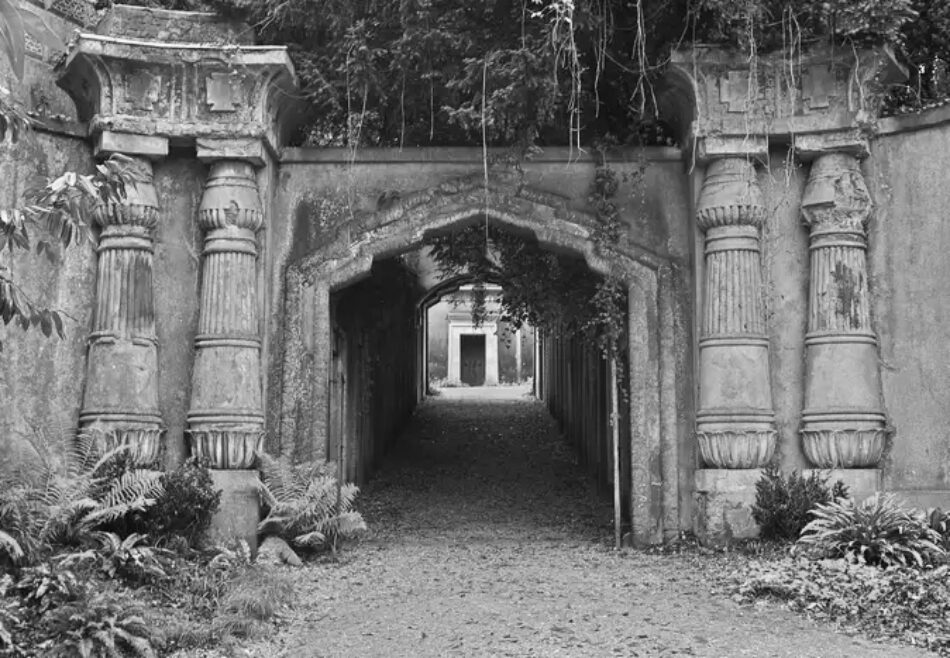
My Visit to Highgate Cemetery: A First-Hand Experience

Tombstone Tales: The Most Fascinating Graves I’ve Encountered
When History Feels Present
Cemetery encounters often feel strange because graveyards compress time.
A single cemetery might contain graves spanning three hundred years. Families buried side by side across generations. Wars, epidemics, migrations—all recorded in stone.
Walking through such places is like reading a biography of an entire community.
Sometimes visitors feel an emotional connection to those buried there.
Sometimes they report vivid dreams after visiting.
Sometimes they simply feel watched.
Are these supernatural experiences?
Probably not.
More likely they are reminders that cemeteries are landscapes of memory, where the past sits unusually close to the present.
When you spend time in such spaces, the mind begins to imagine the people who once walked those same paths.
And imagination, once awakened, rarely stays quiet.
Why People Share Graveyard Stories
Stories about strange cemetery encounters appear across cultures and centuries.
Why?
Because cemeteries sit at the crossroads of several powerful human instincts:
- curiosity about death
- reverence for ancestors
- fascination with mystery
- fear of the unknown
When these forces intersect, storytelling follows naturally.
Think of cemetery stories as modern folklore.
Some are exaggerations. Some are misunderstandings. Some may even be deliberate inventions.
But together they form a cultural tradition: humans trying to make sense of places where life and death intersect.
Cemeteries as Storykeepers
Whether or not ghosts exist is almost beside the point.
Cemeteries already contain thousands of stories.
Every epitaph hints at a life. Every weathered stone represents a family, a tragedy, a triumph.
In that sense, graveyards are not silent at all. They are simply speaking in a different language.
And sometimes, when visitors listen closely enough, their imagination fills in the missing words.
Perhaps that is why strange encounters in cemeteries feel so compelling.
Not because something supernatural is happening—but because we are suddenly aware of the immense human history surrounding us.
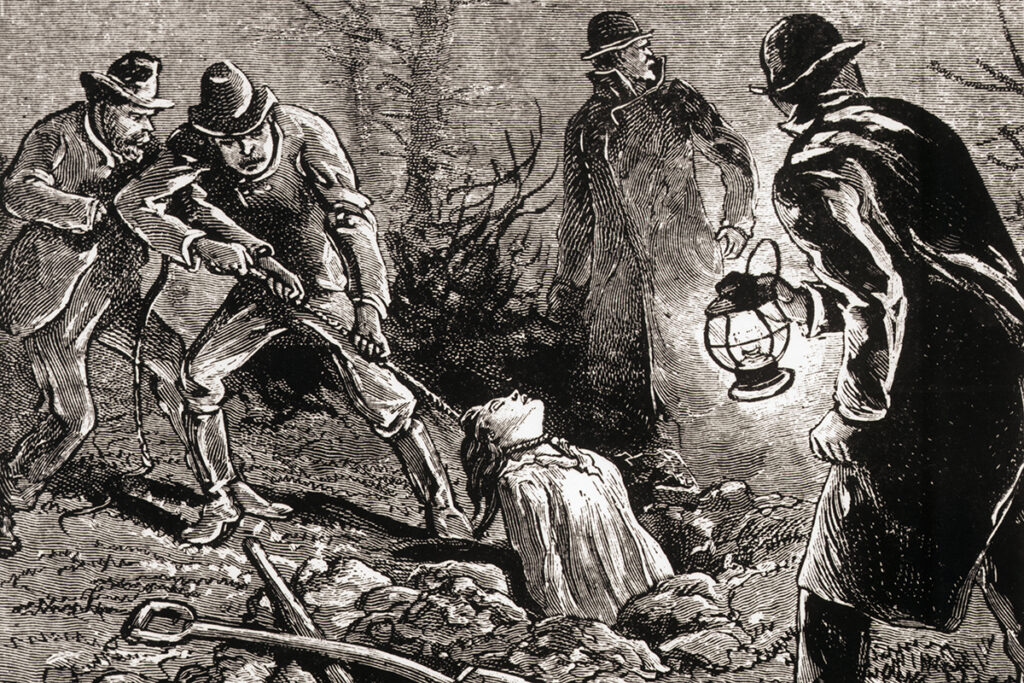
When the Dead Go Missing: Grave Robbing & Stolen Corpses in History
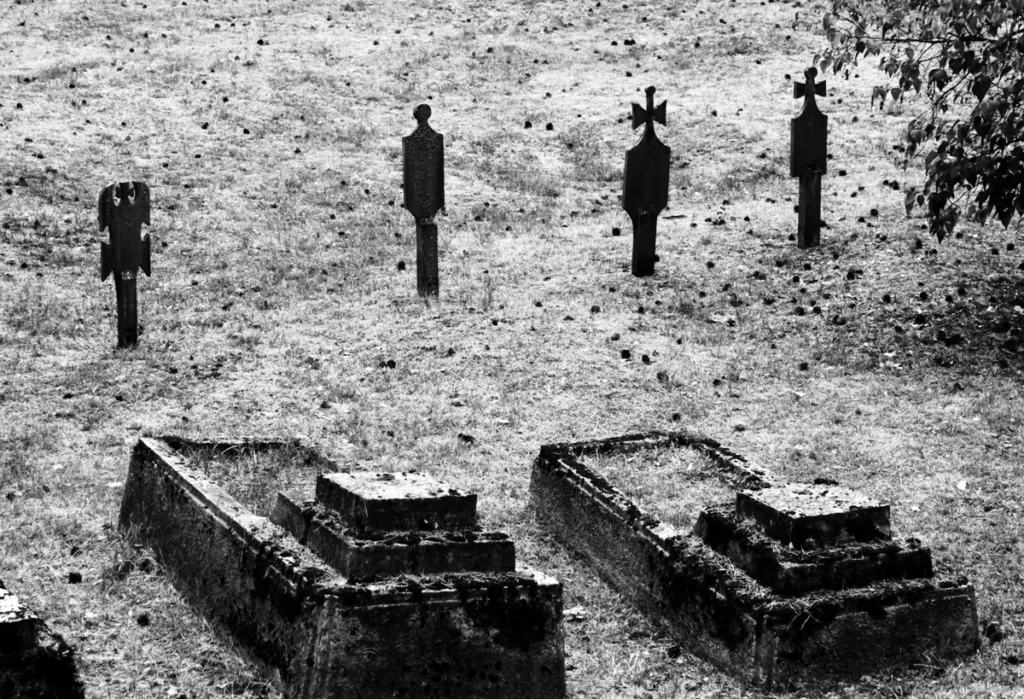
The Lost Cemeteries of the World: Forgotten Burial Grounds Rediscovered
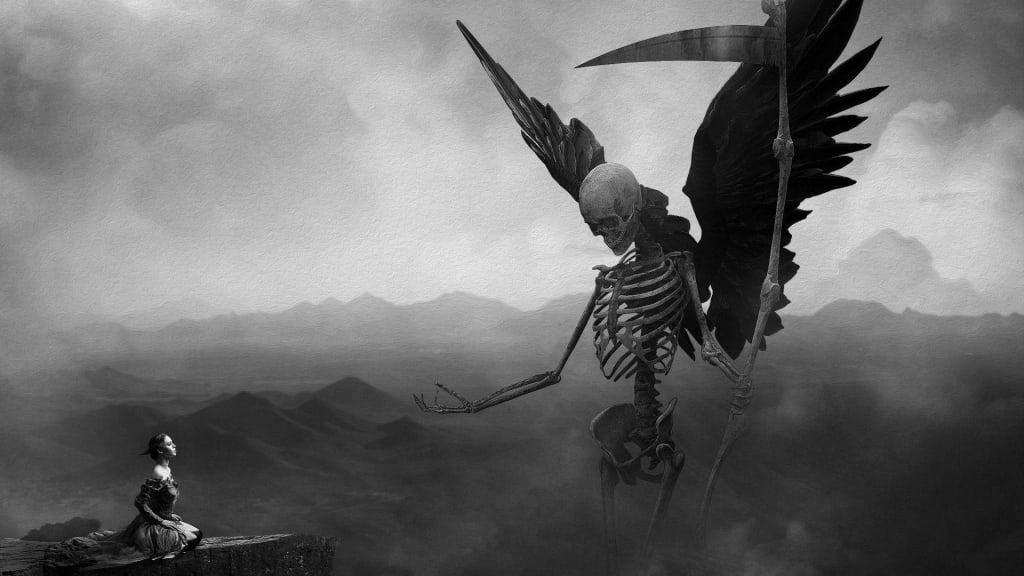
Death & Mythology: How Ancient Beliefs Still Haunt Cemeteries
Bottom Line
Cemeteries have always inspired stories. Their quiet paths, ancient monuments, and layers of history create an atmosphere where the ordinary can feel extraordinary.
The strange encounters shared by visitors—disappearing strangers, mysterious sounds, unexplained coincidences—are part of a long tradition of graveyard folklore. Whether these events have rational explanations or remain unresolved mysteries, they reveal something deeper about human nature.
We are storytellers. And cemeteries are among the richest storytelling landscapes humanity has ever created.
Leave a Reply