
The Language of Flowers on Gravestones: What Each Bloom Represents
Flowers do not speak, yet in cemeteries they have been holding conversations for centuries. Walk through any historic graveyard and you will notice that stone is rarely left to stand alone. Roses climb marble crosses, lilies bloom beside angels, ivy curls around forgotten names. These are not decorative afterthoughts. They are messages. Carefully chosen, culturally coded, and emotionally loaded messages.
In an era when literacy was limited and public expressions of grief were often restrained, flowers became a visual language—one that could express love, faith, sorrow, hope, and even quiet rebellion. To read a cemetery without understanding floral symbolism is like reading poetry without knowing the metaphors. You get the surface, but you miss the meaning.
This article explores the symbolic language of flowers on gravestones, tracing their historical roots, cultural variations, and enduring relevance. Consider this your botanical dictionary for the dead—one that reveals how grief, memory, and belief were carved into stone through petals and leaves.
Contents
- Why Flowers Became the Language of the Dead
- Roses: Love in All Its Complications
- Lilies: Resurrection, Purity, and the Afterlife
- Forget-Me-Nots: Memory That Refuses to Fade
- Ivy: Eternity, Loyalty, and Clinging Love
- Poppies: Sleep, Peace, and Eternal Rest
- Daisies: Innocence and Childhood
- Laurel and Bay Leaves: Victory Over Death
- Violets: Modesty, Faithfulness, and Quiet Grief
- Palm Branches: Martyrdom and Spiritual Victory
- Wheat and Sheaves: Life, Death, and the Harvest Metaphor
- Cultural Variations in Floral Symbolism
- Are Modern Gravestones Still Speaking This Language?
- Bottom Line
- FAQs
Why Flowers Became the Language of the Dead
Long before cemeteries became landscaped spaces, humans placed flowers with the dead. Archaeological evidence from Paleolithic burial sites suggests that flowers were laid beside bodies over 30,000 years ago. Why? Because flowers do what words often cannot: they compress emotion into form.
Flowers are transient. They bloom, fade, and return. In death, this cycle becomes metaphor. A gravestone flower whispers, this is not the end. Or sometimes, more bluntly, this was the end, and it was painful.
By the 18th and 19th centuries—particularly during the Victorian era—floral symbolism became codified. Entire dictionaries of flowers (floriography) circulated widely, allowing people to communicate complex emotional messages without speaking aloud. Cemeteries became permanent pages in this symbolic book.
Roses: Love in All Its Complications
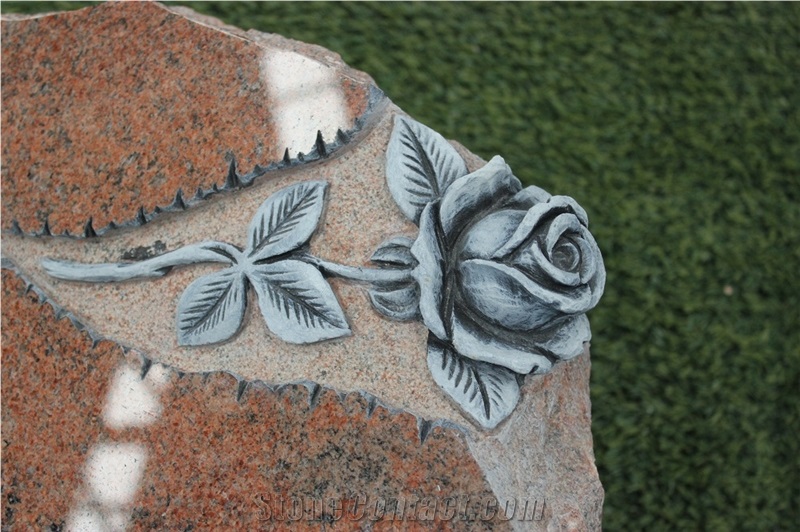
The rose is the most emotionally loaded flower in cemetery symbolism, and its meaning depends entirely on colour and condition.
- Red roses symbolise deep love, passion, and enduring affection. On a gravestone, they often mark a spouse or romantic partner, suggesting love that outlived death.
- White roses represent purity, innocence, and spiritual love. They are common on children’s graves or those of young adults.
- Pink roses convey grace, gratitude, and gentle affection.
- Wilted or broken roses signify a life cut short or love interrupted.
A rose in bloom says, “this love lived fully“. A rosebud says, “this life did not”.
Lilies: Resurrection, Purity, and the Afterlife
If roses speak of love, lilies speak of belief.
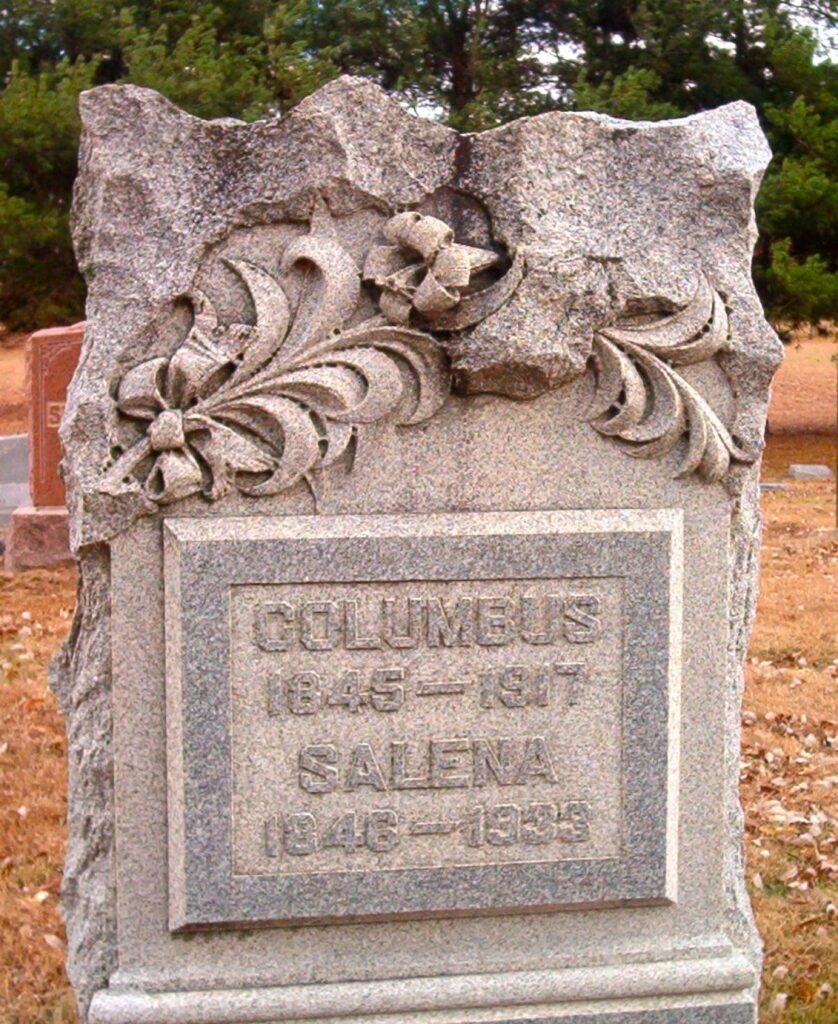
The lily—especially the white Madonna lily—is one of the most common cemetery flowers, particularly in Christian burial grounds. Its meaning is tied to resurrection, purity, and the soul’s return to divine peace.
Lilies often appear alongside angels or crosses, reinforcing the message of eternal life. They suggest not just death, but transformation. The body rests, but the soul has moved on—clean, renewed, and unburdened.
In this sense, lilies are less about mourning and more about reassurance. They tell the living, all is not lost.
Forget-Me-Nots: Memory That Refuses to Fade
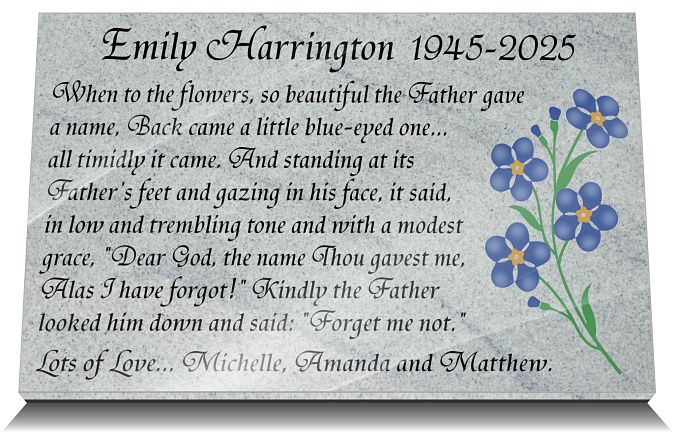
Small, delicate, and easy to overlook, forget-me-nots are among the most emotionally direct flowers in cemetery symbolism.
Their meaning is exactly what the name suggests: remembrance, fidelity, and enduring memory. They appear frequently on graves where the fear of being forgotten looms large—immigrants, soldiers, children, and those who died far from home.
Unlike grand roses or towering lilies, forget-me-nots speak softly. They do not declare belief or passion. They plead: remember me.
Ivy: Eternity, Loyalty, and Clinging Love
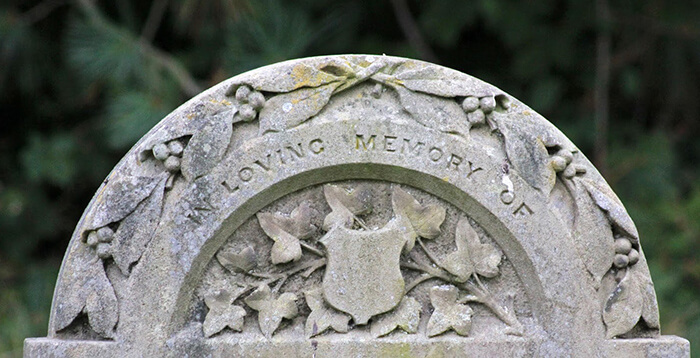
Ivy does not bloom brightly, but it persists. It clings, spreads, and survives harsh conditions. On gravestones, ivy symbolises eternity, fidelity, and the soul’s immortality.
Because ivy remains green year-round, it became associated with everlasting life and undying attachment. It often appears on family plots, symbolising bonds that death cannot break.
There is also something quietly unsettling about ivy. It creeps. It overtakes. It refuses to let go. In cemetery symbolism, that persistence can feel comforting—or haunting—depending on how you read it.
Poppies: Sleep, Peace, and Eternal Rest
Poppies carry one of the oldest death-related meanings in floral symbolism. Associated with sleep, dreams, and oblivion, poppies symbolise eternal rest.
In classical mythology, poppies were linked to Hypnos, the god of sleep, and later to death itself. Their narcotic qualities reinforced the idea of deep, untroubled rest.
In modern cemeteries, poppies—especially red ones—also symbolise remembrance for fallen soldiers. Here, the flower speaks both of sacrifice and of the final sleep that follows violence.
Daisies: Innocence and Childhood
Simple and unassuming, daisies symbolise innocence, purity, and new beginnings. In cemeteries, they are most often found on the graves of children.
A daisy suggests a life untouched by corruption or cruelty, one that ended before it could be complicated. It is a flower of gentleness, not tragedy—an attempt to soften the harshness of loss.
In this sense, daisies act almost as emotional buffers. They make unbearable grief look quieter than it truly is.
Laurel and Bay Leaves: Victory Over Death
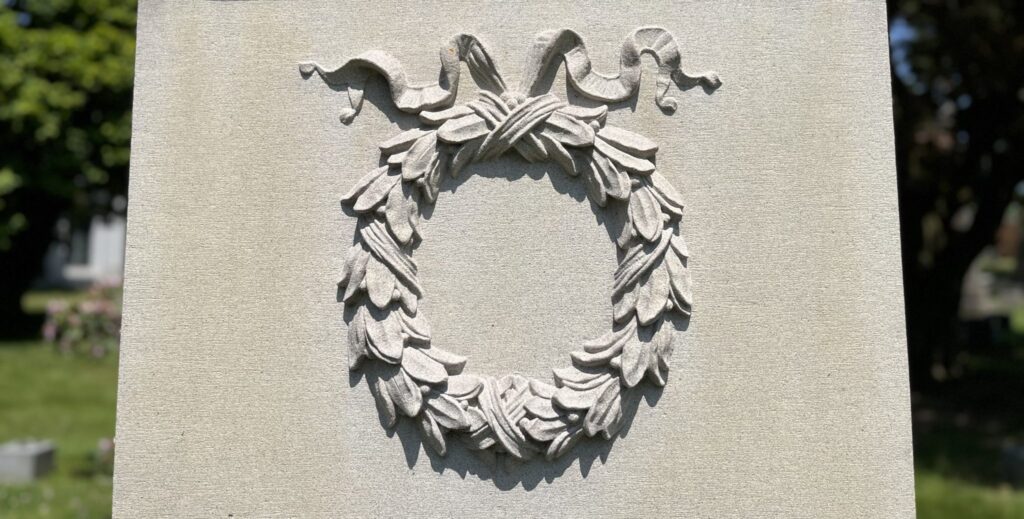
Laurel wreaths were symbols of victory and honour in ancient Greece and Rome. In cemeteries, laurel represents triumph—not over enemies, but over death itself.
It suggests moral victory, spiritual achievement, or a life well lived. Laurel appears frequently on the graves of scholars, leaders, and public figures, reinforcing the idea of legacy.
Death may have claimed the body, the laurel implies, but not the meaning of the life.
Violets: Modesty, Faithfulness, and Quiet Grief
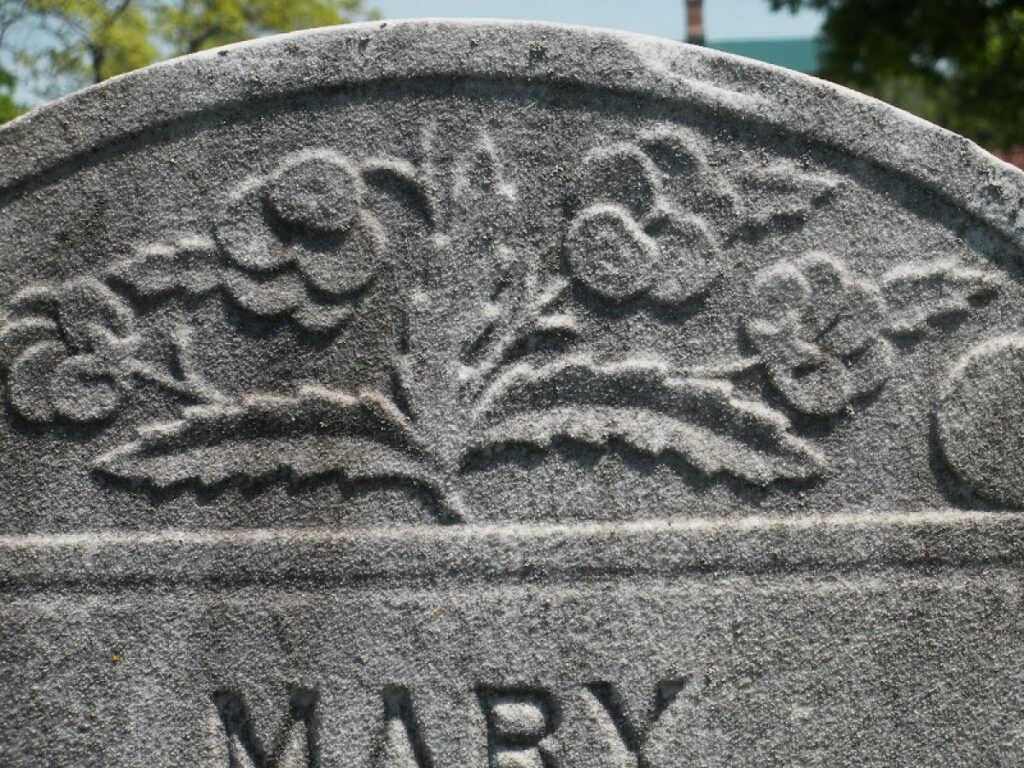
Violets are modest flowers with deep emotional undertones. They symbolise humility, faithfulness, and restrained sorrow.
In Victorian cemeteries, violets were often used to express grief that was profound but private. They do not cry out. They bow their heads.
A violet on a gravestone suggests love that did not need to be loud to be real.
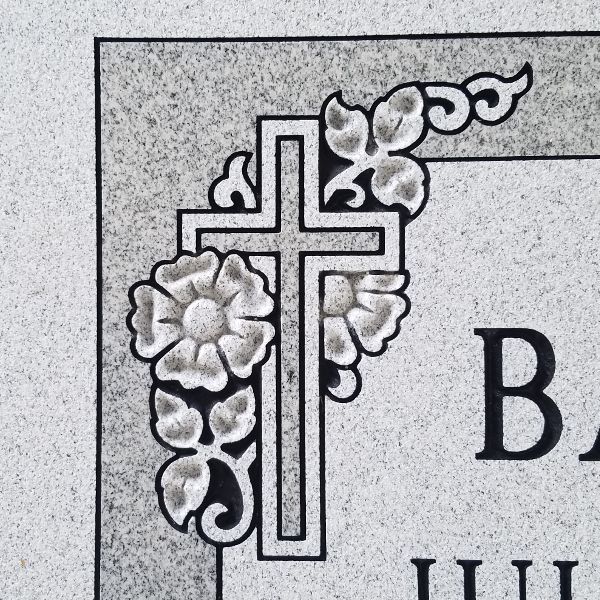
Palm Branches: Martyrdom and Spiritual Victory
Palm branches carry strong religious symbolism, particularly in Christian contexts. They represent martyrdom, triumph of the soul, and victory over death.
You will often see palm branches on the graves of those who suffered greatly, died young, or were perceived as morally exemplary. The message is clear: suffering was not meaningless.
The palm does not mourn. It proclaims.
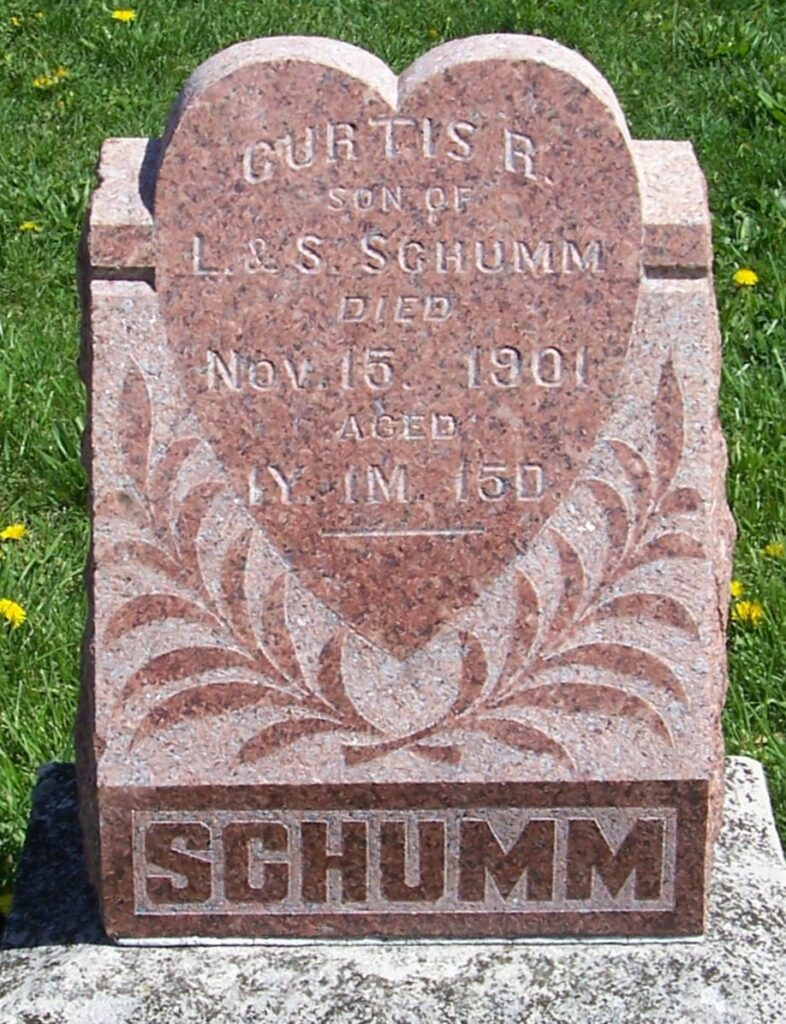
Wheat and Sheaves: Life, Death, and the Harvest Metaphor
Wheat appears frequently in cemetery art, particularly in rural or agricultural societies. It symbolises the biblical idea that life must die to bear fruit.
A full sheaf represents a long, complete life. A broken or sparse stalk suggests one cut short.
Wheat is pragmatic symbolism. It accepts death as part of a larger cycle—necessary, inevitable, and ultimately productive.
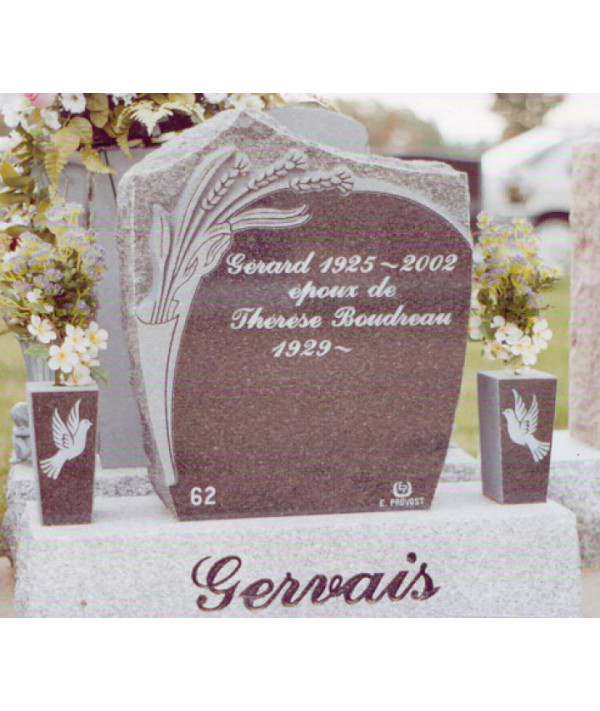
Cultural Variations in Floral Symbolism
While many flower meanings overlap across cultures, symbolism is never universal.
- In Eastern Europe, certain flowers are tied to folk beliefs about restless spirits.
- In Jewish cemeteries, flowers are traditionally avoided in favour of stones, making floral carvings more symbolic than literal.
- In Asian traditions, lotus flowers—symbols of rebirth and enlightenment—appear more frequently than Western blooms.
Understanding cemetery flowers requires cultural literacy as much as botanical knowledge.
Are Modern Gravestones Still Speaking This Language?
Yes—but more quietly.
Contemporary gravestones often favour minimalism, photographs, or abstract symbols. Yet flowers persist, especially in personalised memorials and green burials.
The difference is intent. Victorian gravestones assumed the viewer understood the code. Modern ones often rely on intuition. The language has not disappeared—it has simply become less formal, more emotional, and less standardised.
Bottom Line
Flowers on gravestones are not decoration. They are sentences carved in petals, metaphors fossilised in stone. They tell us who was loved, how they were mourned, what was believed, and what the living needed to say when words failed.
To walk through a cemetery with an understanding of floral symbolism is to read a deeply human archive—one filled with love letters, prayers, apologies, and unfinished conversations.
Leave a Reply