Who Owns the Dead? Legal & Moral Dilemmas in Cemetery Management
Let’s begin with a question that feels almost inappropriate to articulate: Who owns the dead?
It sounds cold, doesn’t it? Almost transactional. And yet, beneath the solemn silence of cemeteries lies a complex web of legal rights, moral responsibilities, and cultural expectations. Death may mark the end of a life, but it certainly does not mark the end of ownership disputes, administrative decisions, or ethical dilemmas.
Cemeteries, often romanticised as “cities of the dead,” are not merely sacred spaces. They are regulated landscapes, governed by laws, managed by institutions, and—perhaps most controversially—subject to economic realities.
So, let’s step beyond the wrought-iron gates and into a world where law meets loss, and memory collides with management.
Contents
- The Legal Reality: You Don’t Own the Dead (Or the Grave)
- Custodians of Memory: Who Holds Responsibility?
- Grave Reuse: Practical Solution or Moral Transgression?
- Exhumation and Relocation: When the Dead Are Moved
- Cultural Perspectives: Ownership Through Belief
- The Economics of Cemetery Management
- Abandoned Cemeteries: When Memory Fades
- Digital Afterlives: Ownership in the Virtual Realm
- Ethical Reflections: Beyond Law and Policy
- Bottom Line
- FAQs
The Legal Reality: You Don’t Own the Dead (Or the Grave)
Here’s the first twist: in most legal systems, you don’t actually “own” a grave.
Surprised?
When you purchase a burial plot, what you’re typically acquiring is not ownership of land in the traditional sense, but a right of interment—essentially a long-term lease. The land itself remains under the control of a cemetery authority, whether public, religious, or private.
This distinction matters.
Because if you don’t own the land, your rights over it are limited. Maintenance rules, monument restrictions, and even future use can be dictated by the managing body.
And the body buried within? Legally, it occupies a curious category. Human remains are not considered property in the conventional sense. They are treated with a unique legal status—protected, but not “owned.”
So if no one owns the dead, who is responsible for them?
Custodians of Memory: Who Holds Responsibility?
If ownership is elusive, responsibility is not.
Cemetery authorities act as custodians. They maintain the grounds, enforce regulations, and ensure that the dignity of the deceased is preserved. Families, on the other hand, hold emotional and sometimes legal responsibilities—such as maintaining grave markers or renewing burial rights.
But what happens when families disappear?
Time has a way of erasing connections. Descendants move, records are lost, and graves become… orphaned. In such cases, cemetery management often assumes full control, making decisions about maintenance, restoration, or, in some cases, reuse.
And here’s where things become ethically complex.
Grave Reuse: Practical Solution or Moral Transgression?
Imagine this: a grave untouched for decades, its inscription faded, its visitors long gone. Should it remain undisturbed indefinitely?
In many parts of the world, particularly in Europe, the answer is no.
Grave reuse is a common practice, driven by space constraints and urban expansion. Burial plots are leased for a specific period—say, 20 or 50 years—after which they can be reclaimed and reused.
From a practical standpoint, it makes sense. Land is finite. Cities grow. The living need space.
But emotionally? It’s a different story.
The idea of disturbing a grave can feel like a violation, even if no living person maintains a connection to it. It raises uncomfortable questions: Does memory have an expiration date? And who decides when it’s acceptable to let go?
Exhumation and Relocation: When the Dead Are Moved
If grave reuse is unsettling, exhumation takes it a step further.
Bodies are sometimes relocated for various reasons—urban development, archaeological research, or even family requests. Entire cemeteries have been moved to make way for infrastructure projects.
Yes, even the dead are not immune to urban planning.
Legally, exhumation requires authorisation, often involving multiple parties: local authorities, cemetery management, and, when possible, family members. Ethically, however, the issue is far murkier.
Is it ever acceptable to disturb the dead for the sake of progress?
Or does such an act reduce human remains to obstacles—mere inconveniences in the path of development?
Cultural Perspectives: Ownership Through Belief
Not all societies approach this issue in the same way.
In some cultures, graves are considered sacred and permanent. Disturbing them is unthinkable. In others, burial is viewed as a temporary phase, after which remains may be relocated or repurposed.
Take ossuaries, for example—structures where bones are stored after initial burial. They reflect a pragmatic approach to space and mortality, emphasising continuity rather than permanence.
Cultural beliefs shape not only how we bury the dead, but how we think about their “ownership.” In many traditions, the dead belong not to individuals or institutions, but to the collective memory of a community.
And that, perhaps, is a more poetic form of ownership.
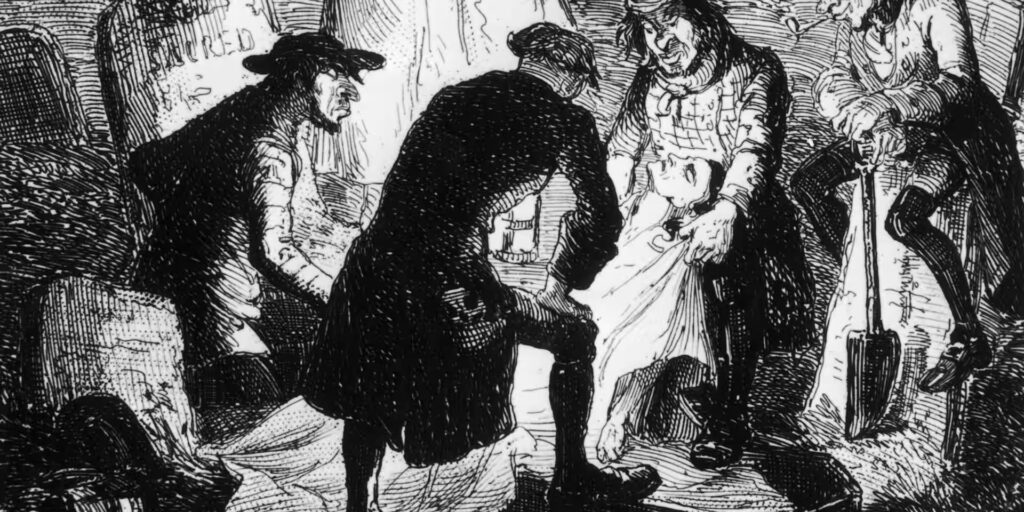
Cemetery Desecration and Grave Robbing: A Historical and Modern Perspective
Who Owns the Dead? Legal & Moral Dilemmas in Cemetery Management
The Economics of Cemetery Management
Let’s not ignore the financial dimension.
Cemeteries require maintenance—landscaping, security, record-keeping. These services cost money, and that money has to come from somewhere.
Burial fees, plot leases, and maintenance charges form the backbone of cemetery funding. In private cemeteries, profit may also be a factor.
This introduces a delicate tension: how do you balance financial sustainability with respect for the dead?
When graves are reused or removed due to unpaid fees, it can feel like a harsh reminder that even in death, economics persist.
It’s a sobering thought: memory may be priceless, but its preservation often is not.
Abandoned Cemeteries: When Memory Fades
What happens when entire cemeteries are abandoned?
It’s more common than you might think.
Urban expansion, population shifts, and changing burial practices have left many cemeteries neglected. Overgrown, forgotten, and sometimes vandalised, these spaces exist in a kind of limbo—neither fully preserved nor entirely erased.
Who is responsible for them?
In many cases, local governments step in. In others, historical societies or community groups take on the role of preservation. But resources are often limited, and priorities lie elsewhere.
Abandoned cemeteries pose a haunting question: if no one remembers the dead, do they still belong to anyone?
Digital Afterlives: Ownership in the Virtual Realm
In the digital age, the concept of ownership extends beyond physical remains.
Online memorials, social media profiles, and digital archives create new forms of remembrance. But they also raise new questions: Who controls these digital legacies? Who decides when they are deleted—or preserved indefinitely?
Unlike physical graves, digital spaces are not constrained by land. They can exist forever. Or disappear with a server shutdown.
In a way, digital memorials shift the focus from ownership of the body to ownership of memory.
And that may be the most profound shift of all.
Ethical Reflections: Beyond Law and Policy
Legal frameworks can define rights and responsibilities, but they cannot fully resolve the moral dilemmas at play.
Because at its core, this issue is not about land or law. It’s about respect.
Respect for the dead. Respect for the living. Respect for memory.
Balancing these elements is no easy task. It requires sensitivity, transparency, and, perhaps most importantly, an acknowledgment that death is not merely an administrative matter.
It is deeply, irreversibly human.

Cremation Ashes and the Environment: Myths and Facts
The Science of Embalming: A Deep Dive into Preservation Methods
Eco-Friendly Burials: The Rise of Green Cemeteries
Bottom Line
So, who owns the dead?
Legally, no one. Practically, many. Emotionally, perhaps all of us.
Cemeteries exist at the intersection of memory and management, where personal grief meets public policy. They remind us that while life may end, the questions it leaves behind do not.
In the end, the dead do not belong to us in the way property does. They belong to time, to history, and to the fragile, ever-changing landscape of human memory.
And maybe that’s the point.
It’s fascinating how many legal and moral considerations are involved – I hadn’t really thought about who “owns” the dead before, but this article makes it clear it’s more complicated than it seems.