
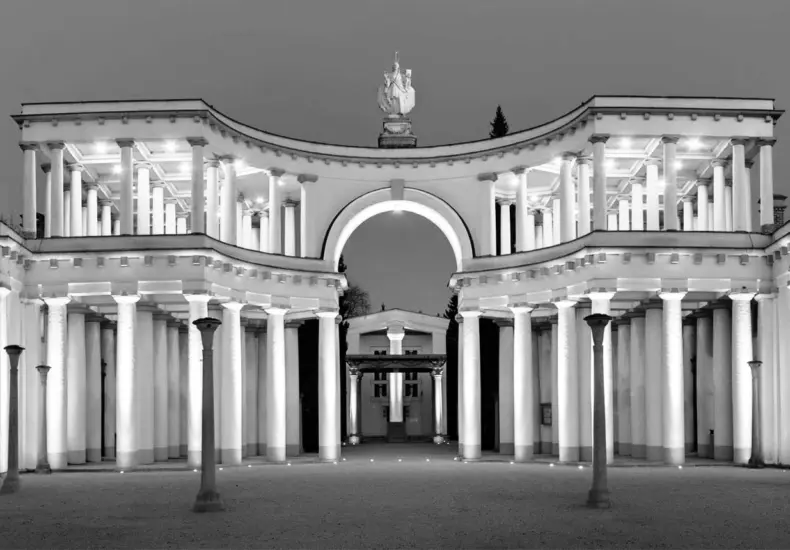
The Hidden Meaning of Cemetery Gates: Why Entrance Designs Matter
A cemetery gate is more than a functional entrance. It is a threshold between two worlds: the world of the living and the carefully constructed landscape of the dead. Whether made of imposing wrought iron, carved stone, weathered wood, or monumental masonry, cemetery entrances communicate ideas about mortality, spirituality, social status, and collective memory.
We often associate cemetery symbolism with the objects found inside burial grounds: angels, crosses, obelisks, broken columns, and elaborate epitaphs. Yet the symbolism begins long before visitors reach the first grave. It begins at the entrance.
Why do some cemeteries welcome visitors through elaborate ornamental gates while others conceal their entrances behind imposing stone walls? Why do certain historical burial grounds feature triumphal arches, religious inscriptions, or gates shaped like miniature architectural monuments? And what can these structures tell us about the societies that built them?
The answers reveal an interesting intersection of architectural history, religious symbolism, landscape design, and cultural attitudes toward death.
In this article, we explore the hidden meaning of cemetery gates, examining how entrance designs evolved, what their architectural features represent, and why these often-overlooked structures deserve closer attention.
1. Cemetery Gates as Symbolic Thresholds
The entrance to a cemetery has a purpose beyond controlling access. Architecturally and symbolically, it establishes a transition from ordinary public space into a landscape dedicated to remembrance and burial.
This concept of the threshold has deep historical roots. Across different cultures, boundaries between sacred and ordinary spaces have been marked through gates, doorways, arches, and monumental entrances. Temples, religious precincts, royal tombs, and burial grounds frequently used architectural features to distinguish spaces with particular spiritual or social significance.
Cemetery gates continue this tradition.
Passing through an imposing entrance can create a psychological shift. The sounds of traffic become more distant, the landscape changes, and visitors enter an environment governed by different expectations. Behaviour becomes quieter, movement more deliberate, and attention turns toward memory and mortality.
In this sense, the cemetery entrance functions almost like a theatrical prologue. Before visitors encounter the monuments, it establishes the atmosphere of the entire experience.
The Boundary Between Life and Death
One of the most persistent interpretations of cemetery gates is their association with the boundary between life and death.
This symbolism appears in numerous architectural traditions, although its precise meaning varies according to religious and cultural context. Gates may represent passage, transition, protection, or the separation of earthly existence from the afterlife.
In Christian contexts, for example, an entrance may incorporate references to salvation, resurrection, or eternal life. Religious inscriptions, crosses, and angelic figures can reinforce these associations.
However, not every cemetery entrance carries an explicitly religious message. Some emphasise remembrance, civic identity, or the dignity of the deceased.
The important point is that cemetery entrances are rarely neutral architectural features. Their design helps establish how visitors should understand the space beyond them.
2. The Historical Evolution of Cemetery Entrances
To understand cemetery gates, we must first consider how cemeteries themselves developed.
Burial grounds have existed for thousands of years, but the modern cemetery, particularly the landscaped urban cemetery familiar today, emerged through a series of historical and social transformations.
Ancient Burial Grounds and Monumental Entrances
Ancient civilisations often distinguished important burial sites through architectural boundaries.
Egyptian funerary complexes, for example, incorporated monumental gateways, enclosure walls, and carefully arranged approaches. These structures helped define sacred precincts and organise movement through spaces associated with royal burial and religious ritual.
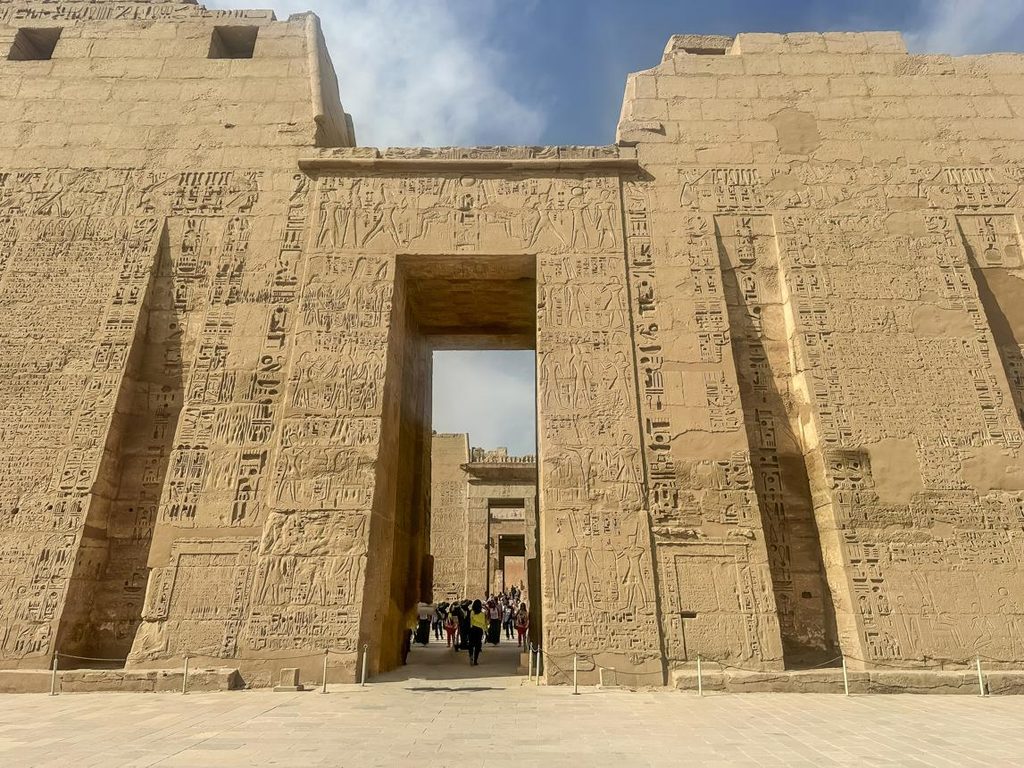
In ancient Rome, burial grounds frequently developed along roads outside city boundaries. Tombs and funerary monuments were sometimes arranged to create impressive visual displays along major routes.
Although these entrances were not necessarily cemetery gates in the modern sense, they demonstrate an enduring architectural principle: burial spaces were distinguished from their surroundings through physical boundaries and monumental structures.
Medieval Churchyards
During the medieval period in Europe, burial grounds were commonly associated with churches and religious institutions.
Churchyard entrances often consisted of relatively modest gateways, lychgates, or openings in boundary walls. Their architectural character reflected the religious importance of the surrounding church rather than an independent cemetery landscape.
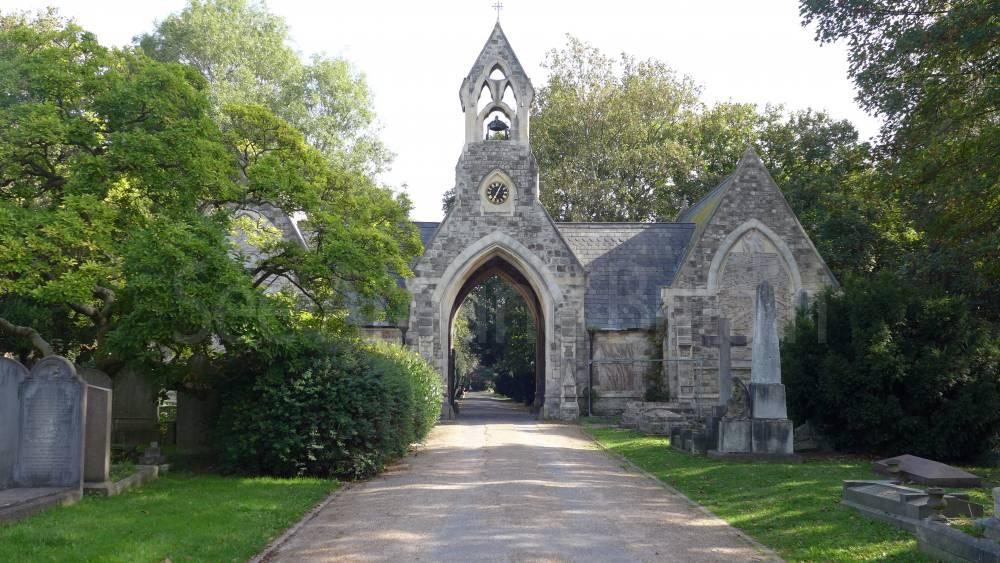
The lychgate deserves particular attention. Traditionally found at the entrances to some English churchyards, this covered structure provided shelter for the coffin and mourners while they waited for the clergyman before the funeral procession entered the churchyard.
Its name derives from an Old English word associated with the dead.
Unlike a purely decorative gate, the lychgate had a practical ceremonial function. It marked the transition between the journey to the burial ground and the religious rites that followed.
The Victorian Garden Cemetery Revolution
Perhaps the most significant transformation in cemetery entrance design occurred during the nineteenth century.
Rapid urbanisation, overcrowded churchyards, and public health concerns encouraged the development of large landscaped cemeteries outside densely populated urban centres.
The opening of Père Lachaise Cemetery in Paris in 1804 helped establish a new model of burial ground: a carefully planned landscape featuring winding pathways, trees, ornamental monuments, and designated burial plots.
This development influenced the creation of garden cemeteries across Europe and North America.
Entrance architecture became increasingly elaborate. Gates were designed to communicate dignity, permanence, civic ambition, and respectability. Ironwork, stone pillars, classical columns, and monumental arches transformed cemetery entrances into architectural statements.
The cemetery was no longer simply a place to bury the dead. It became a designed cultural landscape.
3. Wrought-Iron Gates: Protection, Prestige, and Permanence
Among the most recognisable features of historic cemeteries are wrought-iron gates.
Their popularity increased considerably during the nineteenth century, when advances in metalworking and industrial production made elaborate ironwork more accessible.
Yet wrought iron was not merely a practical material. Its aesthetic qualities made it particularly suitable for cemetery architecture.
Why Iron Became So Popular
Iron offered several advantages:
- Durability: Properly maintained ironwork could survive for generations.
- Flexibility: Craftsmen could produce intricate curves, floral patterns, and geometric arrangements.
- Security: Strong gates helped protect burial grounds from unauthorised access.
- Visual impact: Decorative ironwork created an impressive entrance without requiring the enormous expense of an entirely stone structure.
The material also carried cultural associations with strength and permanence.
In a cemetery, these qualities were particularly meaningful. The gate was expected to endure, just as the monuments beyond it were intended to preserve the memory of the deceased.
The Symbolism of Ornamental Ironwork
Look closely at historical cemetery gates and you may notice recurring decorative elements.
Flowers, leaves, vines, and intertwined branches frequently appear in ironwork designs. These motifs connect the architecture with nature, renewal, and the passage of time.
Some gates incorporate crosses, stars, crowns, or other religious and symbolic motifs.
However, interpreting these elements requires caution. Not every decorative flower represents a particular religious belief, and not every geometric pattern carries an established funerary meaning.
Architectural symbolism depends on historical context, local traditions, and the intentions of the people who commissioned the work.
4. Stone Pillars and Monumental Arches: Architecture as a Statement
While iron gates often provide intricate decoration, their supporting structures can be equally significant.
Stone pillars, columns, and monumental arches give cemetery entrances a sense of permanence and authority.
Their designs frequently draw inspiration from classical architecture, particularly Greek and Roman traditions.
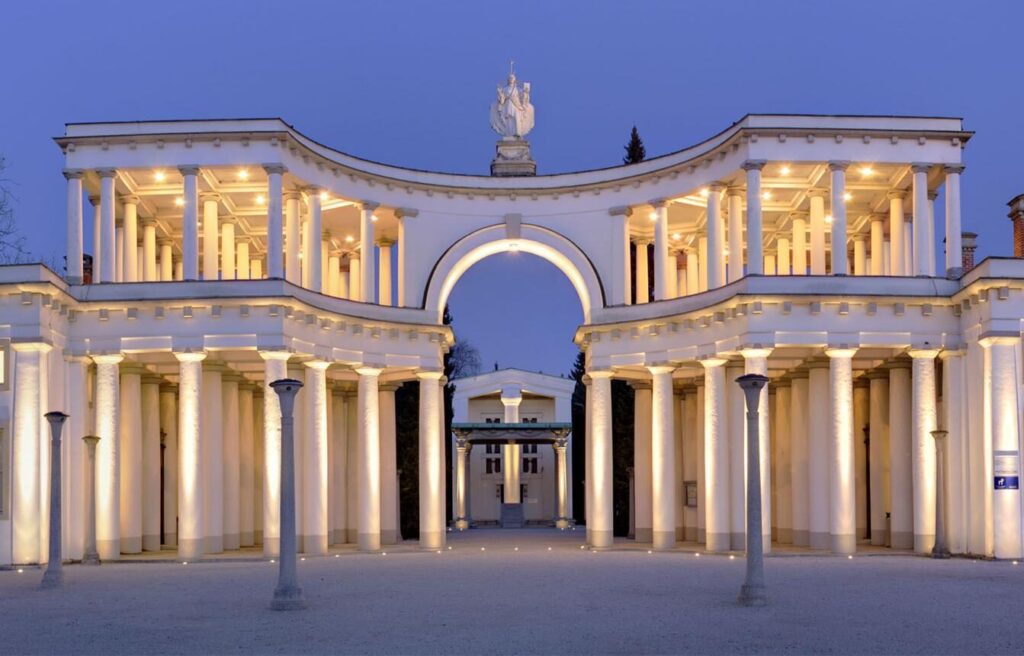
Classical Columns and the Language of Eternity
Columns have long been associated with stability, order, and architectural grandeur.
In cemetery entrances, classical columns can communicate dignity and permanence. Their presence also connects burial architecture with the visual language of temples, memorials, and civic monuments.
Different column orders, including Doric, Ionic, and Corinthian, offer distinct aesthetic qualities.
- Doric columns: Their relatively simple appearance can communicate strength and restraint.
- Ionic columns: Their characteristic scroll-shaped capitals introduce a more decorative appearance.
- Corinthian columns: Their elaborate acanthus-leaf capitals create an impression of ornamentation and grandeur.
These distinctions are primarily architectural rather than universal funerary symbols. Nevertheless, their use in cemetery design reflects the nineteenth century’s fascination with classical antiquity.
The Triumphal Arch and the Idea of Passage
Some cemetery entrances resemble triumphal arches.
Historically associated with military victories, imperial authority, and civic commemoration, triumphal arches were adapted for various monumental and memorial purposes.
In cemetery architecture, an arched entrance can create a powerful visual transition.
The visitor does not simply walk through a gate. They pass beneath a monumental structure that frames the landscape beyond.
The arch can therefore reinforce the cemetery’s identity as a place of collective memory, historical continuity, and commemoration.
5. Gates, Angels, and Religious Symbolism
Religious imagery frequently appears around cemetery entrances, particularly in historically Christian burial grounds.
Angels, crosses, biblical inscriptions, and references to resurrection can transform a functional gateway into an expression of spiritual belief.
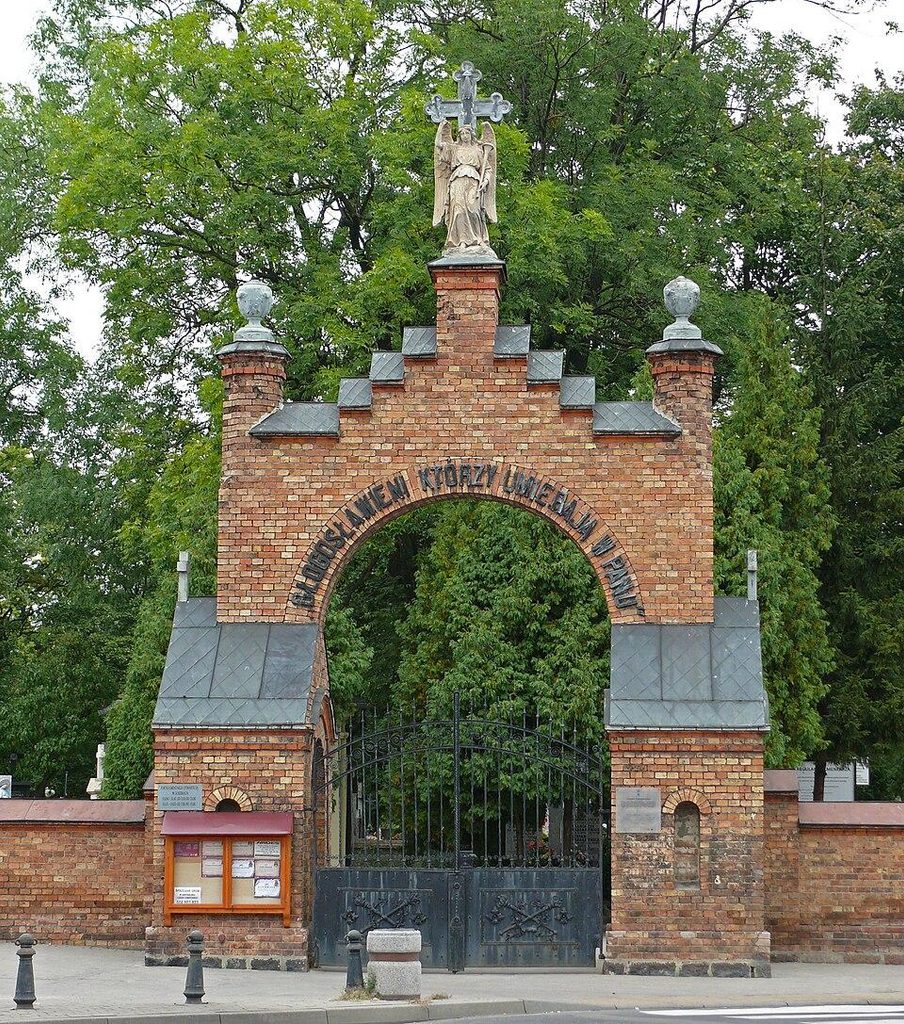
Angels as Guardians of the Entrance
Angels are among the most recognisable figures in funerary art.
Their presence at cemetery entrances can evoke divine protection, spiritual guidance, and the relationship between earthly and heavenly existence.
In Christian iconography, angels may also represent messengers of God, guardians, or figures associated with resurrection and judgment.
When placed near an entrance, an angel sculpture can create the impression of a symbolic guardian watching over the burial ground.
However, the meaning depends on the figure’s attributes and historical context. An angel holding a trumpet, for example, may evoke the Last Judgment, while one carrying a wreath may suggest victory over death or eternal remembrance.
The Cross as a Statement of Faith
The Christian cross is another recurring feature of cemetery entrance design.
Its presence communicates the religious identity of the burial ground and may reinforce ideas of sacrifice, salvation, and resurrection.
In some cemeteries, crosses appear as decorative elements integrated into the ironwork. In others, they occupy prominent positions above entrance arches or on stone pillars.
Their architectural placement matters. A cross positioned directly above the entrance becomes part of the visual experience of entering the cemetery, establishing a religious context before visitors encounter individual graves.
6. Cemetery Gates and Social Status
Not all cemetery entrances were designed to communicate the same message.
Historically, burial grounds often reflected the social hierarchies of the communities that created them. Differences in monument size, burial location, materials, and architectural decoration could reveal distinctions in wealth and social standing.
The entrance was part of this visual hierarchy.
The Cemetery as a Reflection of Society
During the nineteenth century, prosperous urban cemeteries frequently incorporated monumental entrances designed by prominent architects or commissioned by municipal authorities.
Their grandeur communicated civic ambition and cultural sophistication.
Some cemeteries featured impressive gatehouses, elaborate ironwork, and carefully landscaped approaches. Others had modest entrances reflecting limited resources.
These differences were not accidental.
Cemeteries often functioned as extensions of the societies that built them. The architecture could express local wealth, religious identity, political priorities, and aspirations for social respectability.
Public Cemeteries and Private Burial Grounds
The distinction between public and private burial grounds also influenced entrance design.
Private family mausoleums and aristocratic burial grounds sometimes incorporated gates that emphasised exclusivity and ownership.
Municipal cemeteries, by contrast, could use monumental entrances to project an image of public order and shared civic identity.
In both cases, gates helped define who could enter, under what circumstances, and how the space should be perceived.
They were architectural expressions of access and authority.
7. The Gothic Cemetery Gate: Creating an Atmosphere of Mystery
Few architectural styles are as closely associated with cemeteries as Gothic architecture.
Pointed arches, intricate tracery, spires, gargoyles, and ornamental ironwork contribute to an atmosphere that many people associate with death, mystery, and the supernatural.
The popularity of Gothic Revival architecture during the nineteenth century made it particularly influential in cemetery design.
Its visual language offered something that classical architecture did not always provide: a strong emotional atmosphere.
Where classical forms could communicate order and rationality, Gothic forms often suggested spirituality, historical continuity, and the mysterious dimensions of human existence.
Why Gothic Architecture Suits Cemeteries
Gothic architecture has a long association with medieval churches and religious buildings.
Its vertical emphasis can evoke aspirations toward heaven, while its elaborate ornamentation creates opportunities for symbolic storytelling.
Pointed arches frame entrances dramatically. Towers and spires draw the eye upward. Decorative ironwork can incorporate religious and natural motifs.
The result is an entrance that feels almost theatrical.
It is worth remembering, however, that Gothic architecture is not inherently associated with death. Its connection with cemeteries developed through historical religious architecture, nineteenth-century Romanticism, and changing cultural attitudes toward mortality.
The Gothic cemetery entrance is therefore as much a product of cultural imagination as architectural tradition.
8. Open Gates, Closed Gates, and the Psychology of Access
The physical appearance of a cemetery gate influences how visitors experience the burial ground.
An open entrance may suggest accessibility, welcome, and public remembrance. A closed or heavily fortified entrance can communicate privacy, solemnity, protection, or restricted access.
These impressions are not universal, but they demonstrate how architecture influences human behaviour.
The Invitation to Remember
A cemetery with an open, landscaped entrance may encourage visitors to explore its pathways and monuments.
This approach is particularly common in historic garden cemeteries, where the landscape itself forms part of the visitor experience.
Such cemeteries were sometimes designed as places for quiet recreation and reflection, not exclusively as burial grounds.
Their gates therefore served as invitations to enter a carefully cultivated environment.
The Protection of Sacred Space
Conversely, some cemetery entrances emphasise enclosure.
High walls, heavy gates, and restricted openings can create a stronger distinction between the cemetery and the surrounding urban environment.
This may reflect practical requirements, such as security and preservation, as well as religious or cultural expectations regarding the treatment of burial grounds.
The gate becomes a physical expression of respect for the dead.
It also reminds visitors that access to a cemetery comes with responsibilities.
9. Cemetery Gates as Historical Documents
Cemetery entrances are valuable historical objects in their own right.
Their materials, construction techniques, inscriptions, and decorative details can provide information about the period in which they were built.
A nineteenth-century wrought-iron gate, for example, may reveal the craftsmanship and industrial capabilities of its time. A stone entrance bearing a municipal inscription may offer clues about the institution responsible for establishing the cemetery.
Even apparently minor details can be historically significant.
What Can Cemetery Gates Tell Us?
Researchers examining historical cemetery entrances may investigate several elements:
- Construction materials: Stone types, iron alloys, timber, and decorative finishes.
- Architectural styles: Gothic Revival, Neoclassical, Baroque, and regional vernacular influences.
- Inscriptions: Dates, religious references, municipal dedications, and commemorative messages.
- Craftsmanship: Evidence of local workshops, foundries, architects, and sculptors.
- Alterations: Repairs, replacements, and changes in access arrangements over time.
The entrance can therefore serve as an architectural record of the cemetery’s development.
It may also reveal how attitudes toward death and public remembrance changed across generations.
The Importance of Conservation
Historic cemetery gates are vulnerable to corrosion, weathering, structural deterioration, and inappropriate restoration.
Ironwork can rust, stone pillars can crack, and decorative elements may become detached or disappear.
Conservation requires more than making an entrance look attractive again. It involves understanding the original materials, construction techniques, historical significance, and appropriate restoration methods.
Organisations such as the Association for Gravestone Studies and heritage conservation bodies provide valuable resources for understanding the preservation of funerary heritage.
Protecting cemetery gates means preserving an important part of the architectural and cultural history of burial grounds.
10. Famous Cemetery Entrances Worth Examining
Some cemeteries offer particularly interesting examples of how entrance architecture establishes the character of a burial ground.
Here are three worth exploring.
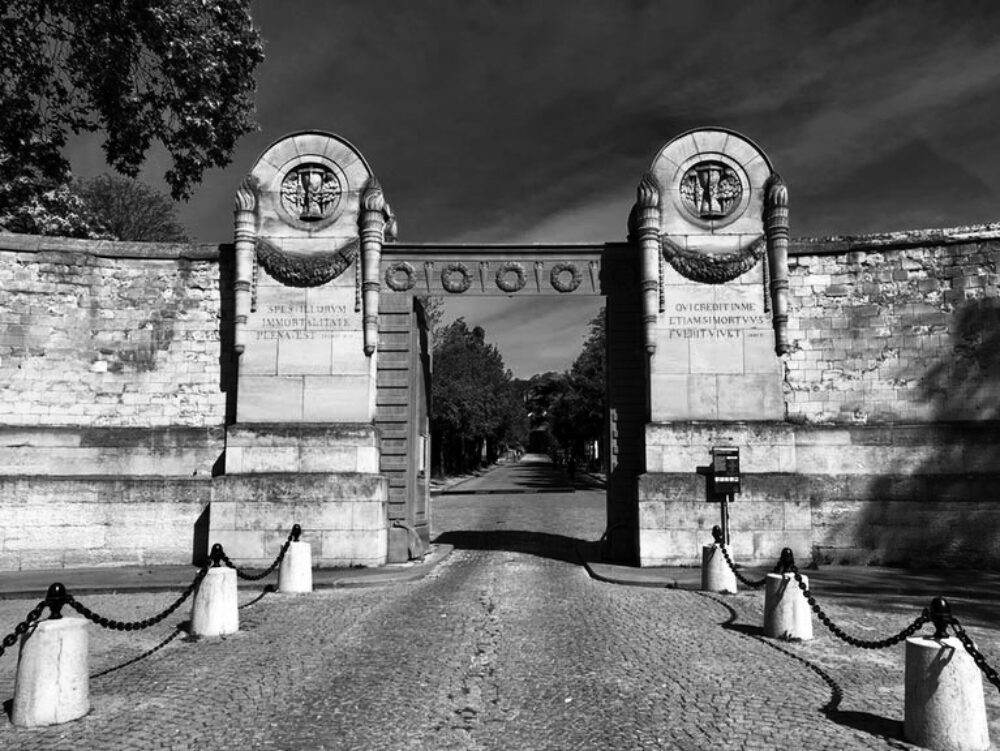
Père Lachaise Cemetery, Paris
Established in 1804, Père Lachaise Cemetery became one of the most influential examples of the modern landscaped cemetery.
Its entrances and surrounding architectural elements contribute to the cemetery’s identity as a carefully organised monumental landscape.
The cemetery is particularly interesting because it combines funerary architecture, landscape design, and public cultural heritage.
Its famous residents include Oscar Wilde, Frédéric Chopin, and Jim Morrison.
Highgate Cemetery, London
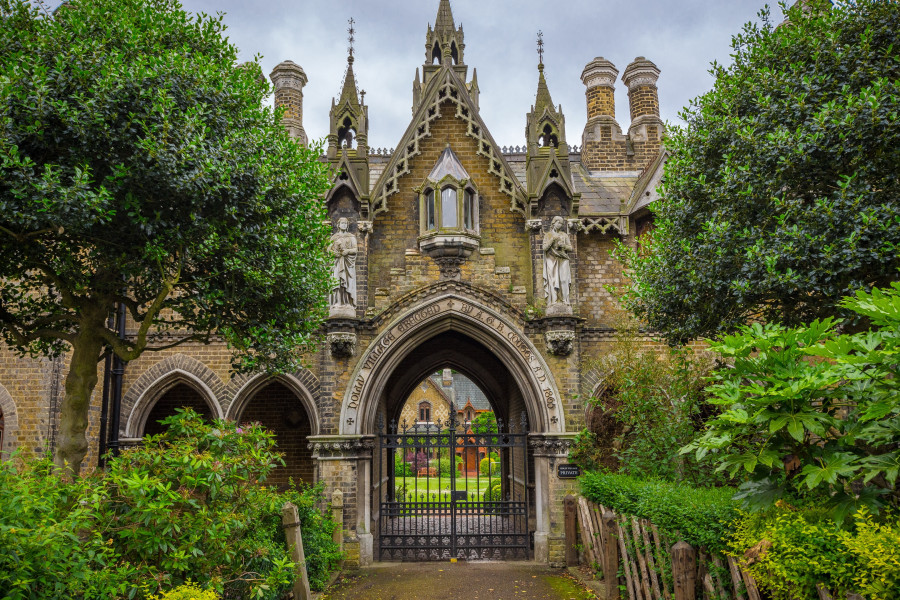
Highgate Cemetery is particularly famous for its elaborate Victorian architecture and atmospheric landscape.
Its Egyptian Avenue, featuring monumental stone architecture and distinctive columns, demonstrates how nineteenth-century cemetery design incorporated historical references and exotic architectural influences.
The entrance and surrounding structures establish a dramatic atmosphere that continues throughout the cemetery.
Highgate is an excellent example of how architecture can shape the visitor’s emotional experience of a burial ground.
Recoleta Cemetery, Buenos Aires
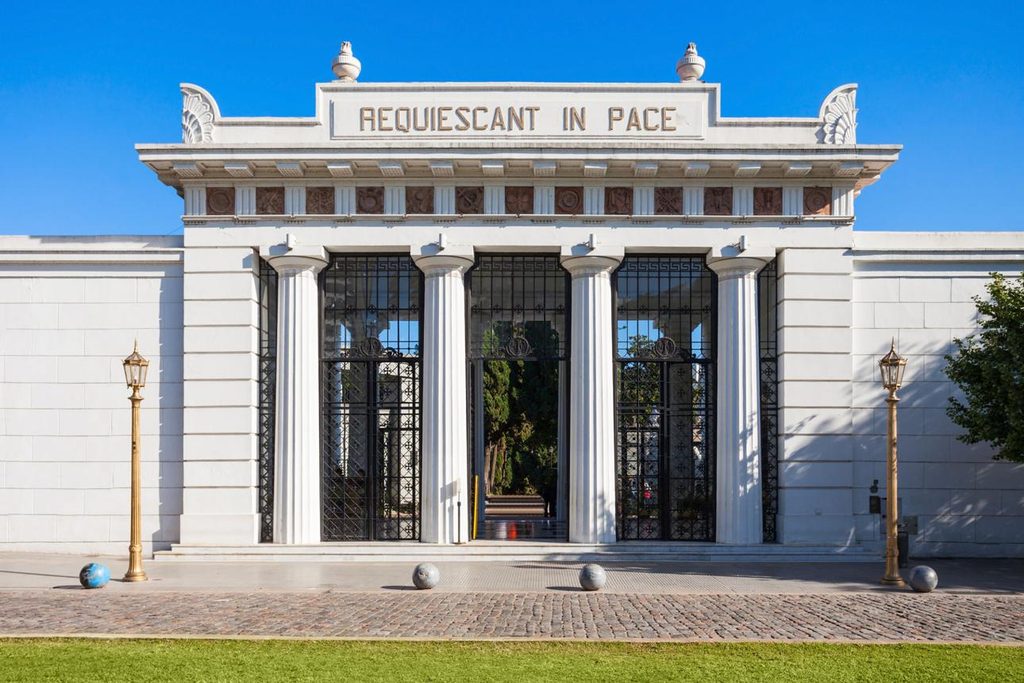
Recoleta Cemetery is renowned for its elaborate mausoleums, sculptural monuments, and architectural diversity.
Its entrance provides access to an extraordinary urban necropolis where Neoclassical, Art Nouveau, Gothic, and other architectural influences coexist.
The cemetery also offers an opportunity to examine the relationship between funerary architecture, Argentine history, and the social aspirations of prominent families.
Together, these three cemeteries demonstrate that an entrance is not simply an architectural boundary. It is part of the historical and artistic identity of the entire burial ground.
Bottom Line: The Architecture of the Threshold
Cemetery gates are among the most overlooked elements of funerary architecture, yet they communicate a remarkable amount about the societies that created them.
Through materials, ornamentation, religious imagery, and architectural styles, entrances reveal changing attitudes toward mortality, spirituality, social status, and collective remembrance.
They establish boundaries, protect sacred spaces, and prepare visitors for the experience of encountering the dead. Whether monumental or modest, Gothic or classical, these structures deserve attention as historical documents and works of art. The next time you visit a cemetery, pause before walking through its gates. Look closely at the ironwork, the stone pillars, the inscriptions, and the architectural details.
Leave a Reply