
The Role of Death Masks in Preserving History and Identity
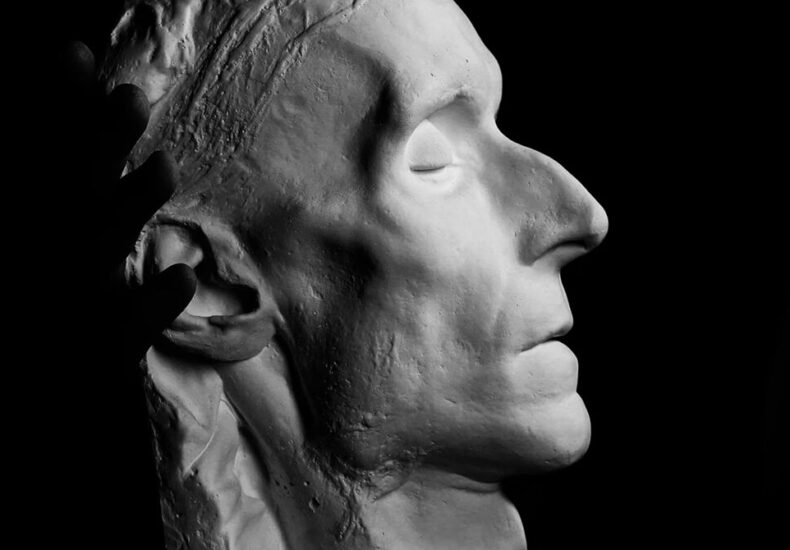
What if memory had a face? Not a metaphorical one, but a literal imprint—every wrinkle, every contour, every quiet trace of a life once lived. This is precisely what death masks attempt to capture: the final, unfiltered portrait of a human being at the threshold of eternity.
Death masks, those hauntingly lifelike casts taken from the faces of the deceased, sit at the curious intersection of art, science, and ritual. They are neither entirely morbid nor purely artistic. Instead, they function as historical artifacts—silent witnesses to identity, culture, and the human desire to outlast mortality.
But why would anyone want to preserve a face after death? Is it remembrance… or resistance against oblivion? Let’s explore.
Contents
- The Origins of Death Masks: Where Memory Meets Material
- From Ritual to Record: The Evolution of Technique
- Death Masks as Historical Documents
- Identity Preserved: The Psychological Dimension
- Art, Accuracy, and the Question of Truth
- The Decline of Death Masks: A Changing Relationship with Death
- Modern Revival: Memory in New Forms
- Ethical Considerations: Between Respect and Curiosity
- Bottom Line
- FAQs
The Origins of Death Masks: Where Memory Meets Material
Death masks are far from a modern fascination. Their origins stretch deep into antiquity, where preserving the likeness of the dead was both a spiritual and cultural imperative.
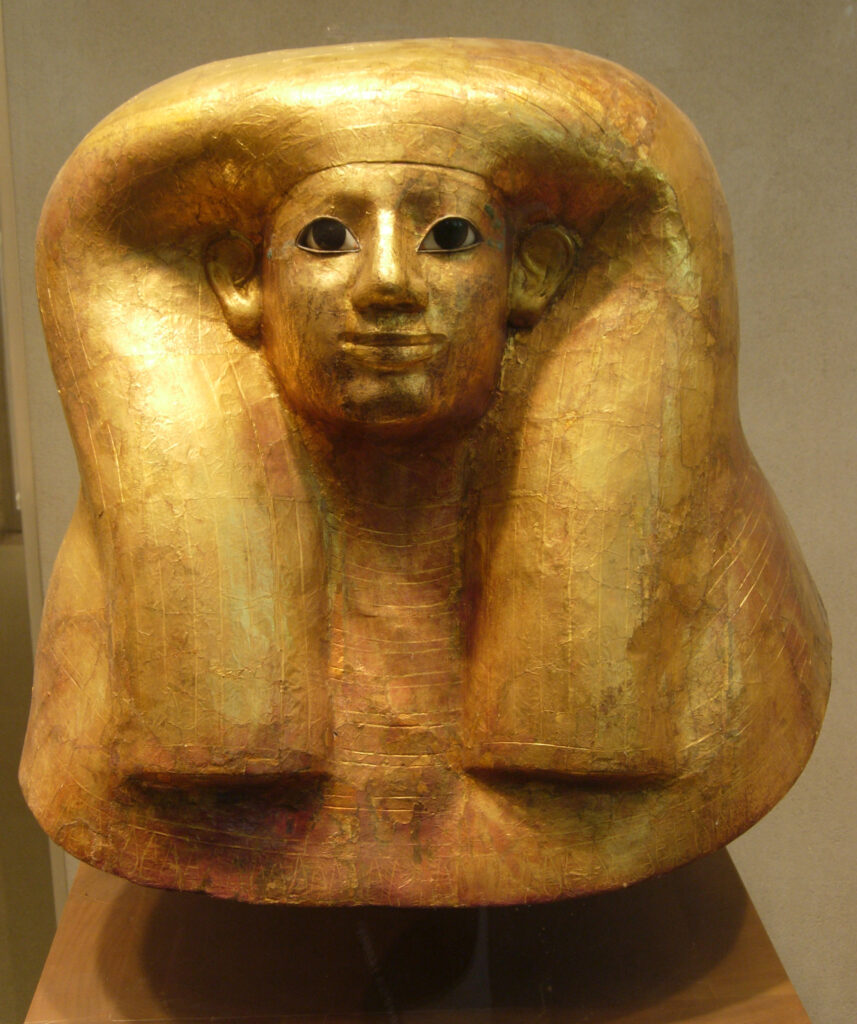
In ancient Egypt, although not “death masks” in the strict casting sense, funerary masks served a similar purpose. They were idealised representations, often crafted in gold, designed to guide the soul in the afterlife. Think less realism, more divine branding.
The Romans, however, took a more literal approach. Wax masks—known as imagines—were molded directly from the faces of deceased family members. These masks were displayed in homes and paraded during funerals, reinforcing lineage and social status. In a way, they were the ancient equivalent of a family photo album—albeit far more unsettling.
The message was clear: identity mattered, even after death.
From Ritual to Record: The Evolution of Technique
As centuries passed, the purpose of death masks began to shift. What started as ritual slowly transformed into documentation.
By the Renaissance, Europe saw a renewed interest in realism. Artists and sculptors used death masks as references for posthumous portraits and sculptures. Accuracy became essential. The face was no longer just symbolic—it was evidential.
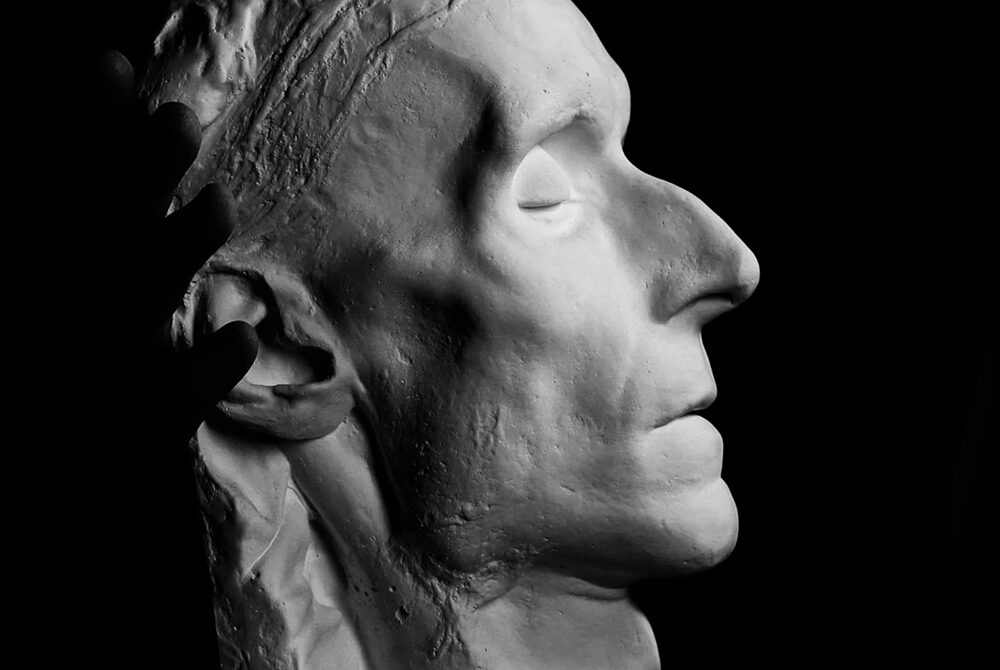
The process itself was surprisingly straightforward, though not for the faint-hearted. A layer of plaster or wax was applied to the face of the deceased, creating a negative mold. Once removed, it was filled to produce a positive cast—a precise replica of the individual’s features.
No embellishment. No interpretation. Just truth.
And perhaps that’s what makes death masks so compelling. They don’t idealise. They reveal.
Death Masks as Historical Documents
Imagine standing face-to-face with history—not through paintings or written accounts, but through the exact contours of a person who once lived.
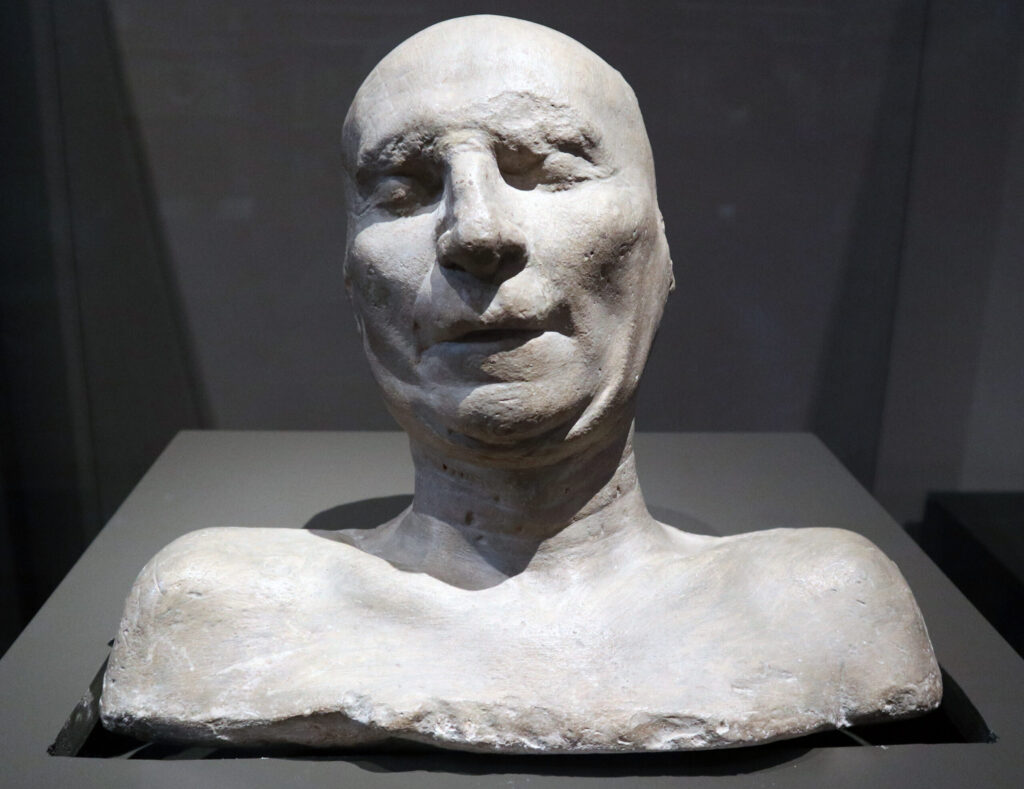
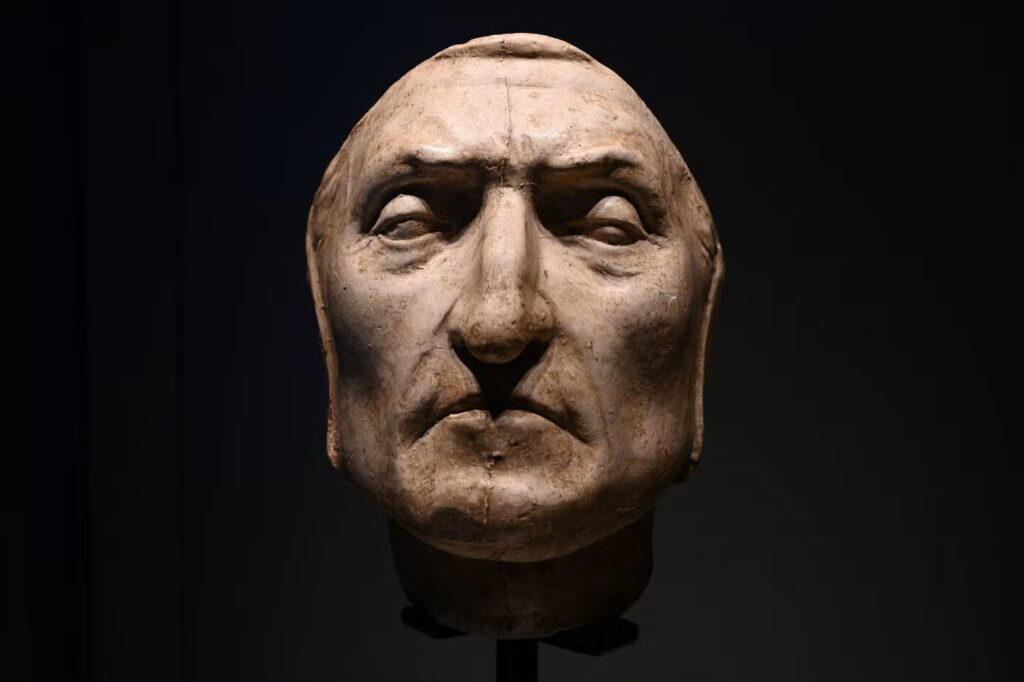
Death masks have preserved the likenesses of countless historical figures, offering a level of realism that portraits often fail to achieve. They strip away artistic bias, leaving behind something raw and immediate.
In this sense, death masks function as historical documents. They provide insight into physical appearance, health, and even emotional expression at the moment of death. A furrowed brow, relaxed lips, sunken cheeks—each detail tells a story.
But more than that, they humanise history.
It’s one thing to read about a philosopher, a monarch, or a revolutionary. It’s another to see their actual face, untouched by artistic interpretation. Suddenly, they’re not just names in a textbook. They’re people.
And that changes everything.
Identity Preserved: The Psychological Dimension
There’s something deeply intimate about a death mask. It’s not just a record—it’s a confrontation.
Unlike photographs, which capture moments in life, death masks capture stillness. Finality. They present a version of identity that is both complete and irrevocably closed.
Why does this matter?
Because humans are obsessed with identity. We spend our lives constructing it—through actions, relationships, achievements. Death threatens to erase all of that. A death mask, in its own quiet way, resists that erasure.
It says: This person existed. This was their face. Remember it.
In psychological terms, death masks can be seen as tools of continuity. They bridge the gap between presence and absence, offering the living something tangible to hold onto.
A face, after all, is the most recognisable expression of identity. To preserve it is to preserve the essence of a person—at least, that’s the illusion.
Art, Accuracy, and the Question of Truth
Here’s where things get interesting.
Death masks are often praised for their realism. But are they truly objective?
Not entirely.
The casting process can distort features. Muscles relax after death, altering expressions. External factors—time, temperature, handling—can affect the final result. What we see is not a perfect snapshot, but a translation.
And yet, compared to paintings or sculptures, death masks come remarkably close to authenticity.
Artists have long relied on them as references, using them to create lifelike busts and memorials. In this way, death masks blur the line between art and science. They are both a starting point and a finished product.
A paradox, perhaps—but a fascinating one.
The Role of Death Masks in Preserving History and Identity
The Business of Death: How the Funeral Industry Has Evolved
The Decline of Death Masks: A Changing Relationship with Death
If death masks were once so significant, why did they fall out of favour?
The answer lies in technology—and in shifting cultural attitudes.
With the invention of photography in the 19th century, capturing a person’s likeness became faster, easier, and less invasive. Post-mortem photography, in particular, offered a more accessible alternative to death masks.
At the same time, society’s relationship with death began to change. Death moved out of the home and into hospitals. It became more sanitised, more distant. The tactile, intimate act of creating a death mask no longer fit this new paradigm.
In a world increasingly uncomfortable with death, the idea of casting a face from a corpse felt… excessive.
And so, the practice declined.
Modern Revival: Memory in New Forms
Despite their decline, death masks have not disappeared entirely. In fact, they are experiencing a quiet revival—albeit in different forms.
Today, we see echoes of death masks in forensic reconstruction, 3D scanning, and even digital avatars. Technology allows us to preserve faces with unprecedented accuracy, often without physical contact.
Museums and historical institutions continue to study and display death masks, recognising their value as cultural artifacts. They offer a unique lens through which to explore identity, mortality, and memory.
Interestingly, contemporary artists have also revisited the concept, using it to challenge our perceptions of death and representation.
It seems that, even in a digital age, the desire to preserve the face endures.

Why Some Graves Face East: Astronomical and Religious Alignments
The Secret Codes of Freemason Gravestones

How Religion Influences Cemetery Symbolism: A Comparative Look
Ethical Considerations: Between Respect and Curiosity
Of course, preserving a person’s face after death raises ethical questions.
Who has the right to create a death mask? Was consent given? Are these objects respectful memorials—or intrusive relics?
In historical contexts, consent was rarely considered. Today, however, ethical standards are far more stringent. The creation and display of death masks must navigate issues of dignity, privacy, and cultural sensitivity.
There’s also the question of audience. Are we honouring the dead… or satisfying our own curiosity?
The line is thin. And often, it’s blurred.
Bottom Line
Death masks occupy a strange and compelling space in human history. They are at once intimate and distant, scientific and artistic, respectful and unsettling.
But above all, they are human.
They remind us that identity is not just an abstract concept—it has form, texture, presence. And even in death, that presence lingers.
In a world obsessed with capturing moments, death masks offer something different: permanence. Not the fleeting click of a camera, but the quiet solidity of a face preserved against time.
So, what do they ultimately tell us? Perhaps this:
Leave a Reply