
The Secret Codes of Freemason Gravestones
Walk through an old cemetery long enough and you begin to notice something peculiar. Amid the angels, crosses, and weeping willows, strange symbols emerge from the shadows of weathered gravestones: compasses, squares, all-seeing eyes, pillars, stars, and cryptic handshakes carved into marble like fragments of a forgotten language.
Coincidence? Hardly.
These are the silent signatures of the Freemasons—one of history’s most mysterious and misunderstood fraternal organisations. For centuries, Freemasonry has fascinated historians, conspiracy theorists, architects, and curious wanderers alike. But nowhere is its symbolism more hauntingly visible than in cemeteries.
Freemason gravestones are more than memorials. They are coded monuments, layered with symbolism, philosophy, morality, and identity. Like architectural riddles buried among the dead, they invite us to ask uncomfortable yet irresistible questions: What did these symbols truly mean? Were they secret messages? Spiritual markers? Social status symbols? Or simply decorative flourishes misunderstood by later generations?
The answer lies somewhere between history and myth. So, let us step quietly into the cemetery gates and decode the secret world of Freemason gravestones.
Contents
- Who Were the Freemasons?
- Why Freemasons Used Symbols on Gravestones
- The Square and Compasses: The Most Recognisable Masonic Symbol
- The All-Seeing Eye: Divine Surveillance or Enlightenment?
- Broken Columns and Cut Trees: Symbols of Interrupted Life
- The Acacia Tree: Immortality and Resurrection
- Handshakes, Chains, and Hidden Brotherhood
- Freemasonry and Cemetery Architecture
- Conspiracy Theories and Public Fascination
- Why Freemason Gravestones Still Fascinate Us
- Bottom Line
- FAQs
Who Were the Freemasons?
Before deciphering their gravestones, we need to understand the men behind the symbols.
Freemasonry emerged officially in the early 18th century, though its roots likely stretch much further back into medieval stonemason guilds. Originally, these guilds protected the trade secrets of cathedral builders—the architects of Europe’s great Gothic monuments.
Over time, however, Freemasonry evolved into a philosophical and social fraternity focused on morality, enlightenment, brotherhood, and personal improvement.
Think of it as a strange blend of philosophy club, networking society, and ritual theater.
Freemasons included politicians, artists, scientists, military leaders, and businessmen. Figures such as George Washington, Wolfgang Amadeus Mozart, and Winston Churchill all had connections to Freemasonry.
And because Freemasonry prized symbolism above almost everything else, its language naturally extended into death memorials.
Why Freemasons Used Symbols on Gravestones
Freemasonry is built on allegory. Every object, gesture, and ritual represents something deeper.
To Freemasons, symbols were educational tools—visual metaphors designed to teach moral lessons. A gravestone, therefore, became more than a marker of death. It became a final statement of identity and philosophy.
In many ways, Freemason gravestones function like coded autobiographies.
Unlike traditional Christian gravestones focused solely on salvation and mourning, Masonic markers often emphasised virtue, enlightenment, integrity, and the journey of the soul. The deceased was not merely buried; he was symbolically completing the final stage of initiation.
Death, in Masonic philosophy, was less a closed door and more a passage into “the Grand Lodge Above.”
Poetic? Absolutely. Slightly theatrical? Also yes.
The Square and Compasses: The Most Recognisable Masonic Symbol
What Does It Mean?
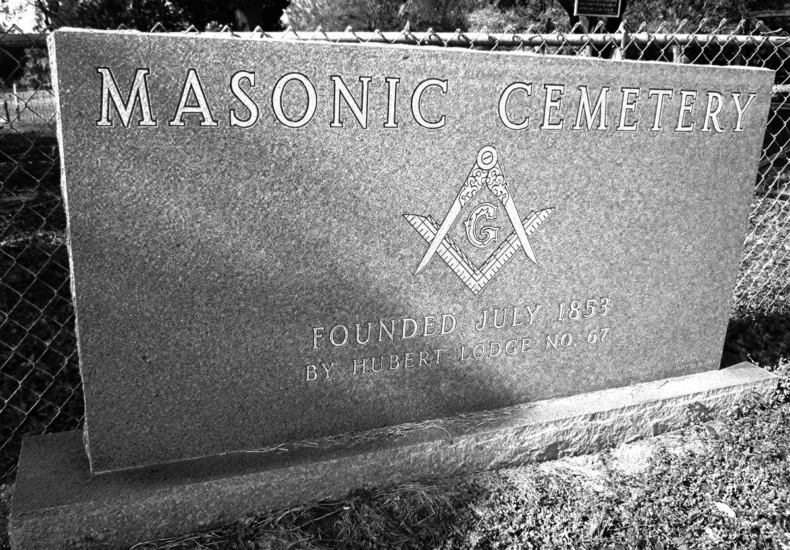
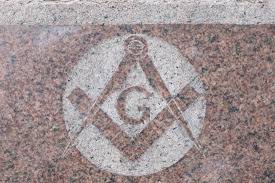
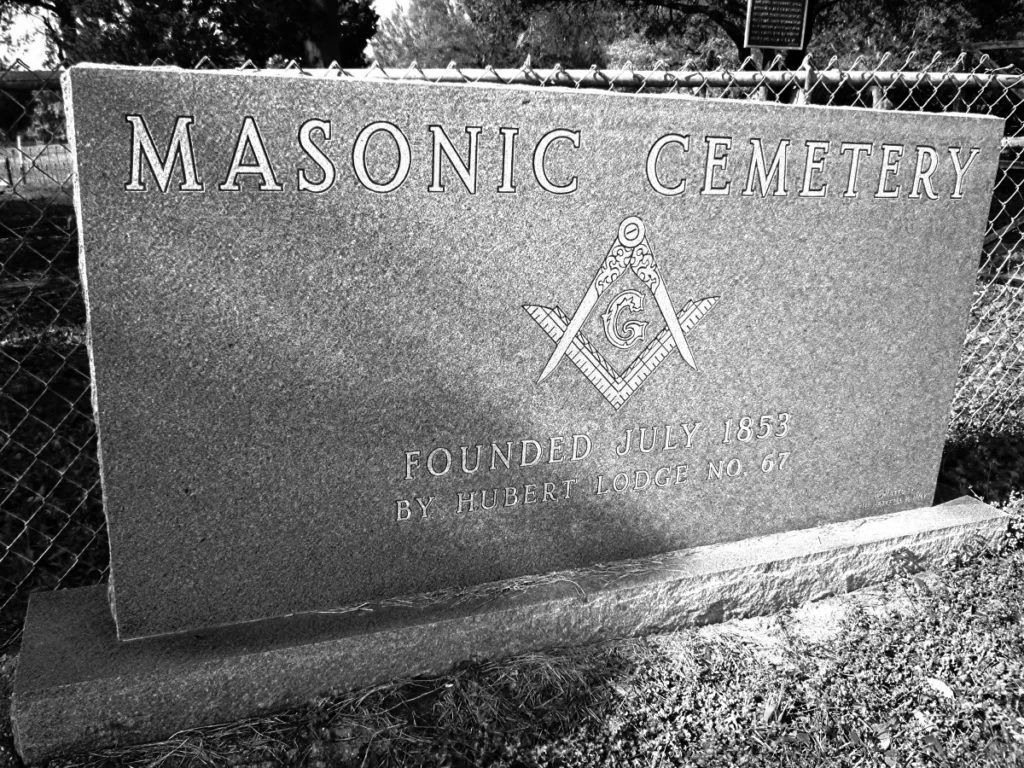
The most famous Freemason symbol is undoubtedly the Square and Compasses.
You have probably seen it before, even if you did not realise what it represented. On gravestones, it often appears prominently near the top or center of the marker.
The square symbolises morality, honesty, and virtue. It reminds Masons to “square” their actions with ethical principles. The compasses represent self-restraint and spiritual boundaries—the ability to control desires and maintain balance.
Together, they symbolise the harmony between morality and wisdom.
Sometimes the letter “G” appears in the center. Its meaning remains debated even within Freemasonry itself. It may represent God, Geometry, or both. Considering Freemasons’ obsession with architecture and sacred mathematics, the ambiguity feels almost intentional.
The symbol is elegant in its simplicity. Two ordinary construction tools transformed into a moral philosophy.
Quite literally, a blueprint for life.
The All-Seeing Eye: Divine Surveillance or Enlightenment?
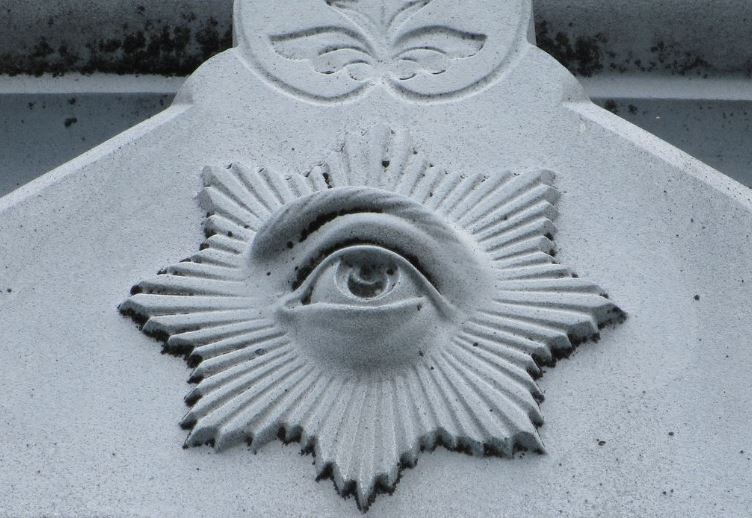
Another common symbol on Freemason gravestones is the All-Seeing Eye, often enclosed within rays of light or a triangle.
Popular culture has turned this image into the mascot of conspiracy theories. Mention the “eye” today and someone inevitably starts talking about secret governments or reptilian overlords.
Historically, however, the symbol had a far less dramatic meaning.
In Freemasonry, the eye represented divine observation—the idea that human actions are constantly witnessed by a higher power. It symbolised truth, spiritual awareness, and moral accountability.
In other words, the universe is watching.
Cheerful thought for a cemetery, isn’t it?
Interestingly, the symbol predates Freemasonry by centuries and appears in Christian art, Egyptian iconography, and Renaissance imagery. Freemasonry simply adopted and reinterpreted it within its own symbolic framework.
Broken Columns and Cut Trees: Symbols of Interrupted Life
Cemeteries are full of metaphors, but Freemason gravestones elevate metaphor into an art form.
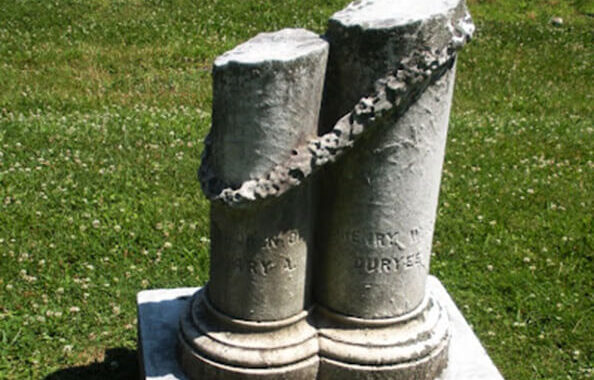
One particularly striking image is the broken column.
A column snapped in half represents a life cut short—strength interrupted before completion. It often appears on the graves of younger individuals or respected community members whose deaths were considered untimely.
Similarly, tree stumps or severed branches symbolise mortality and the fragility of human existence. The symbolism is surprisingly emotional beneath its stoic surface.
Life, these gravestones suggest, is architectural. We build ourselves slowly over time, stone by stone, branch by branch. Death arrives not as destruction, but as interruption.
There is something deeply human in that idea.
The Acacia Tree: Immortality and Resurrection
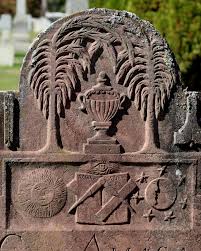
Among Freemason symbols, the acacia tree carries profound spiritual meaning.
In Masonic tradition, the acacia symbolises immortality and the eternal nature of the soul. It appears frequently on gravestones either as a carved branch, wreath, or floral motif.
Why acacia?
Because the tree remains evergreen in harsh conditions. To Freemasons, it represented endurance beyond death.
The symbolism traces back to Masonic legend surrounding the death of Hiram Abiff, the mythical architect central to Masonic ritual narratives. According to legend, an acacia branch marked his burial site.
Thus, the tree became associated with resurrection, remembrance, and eternal life.
Unlike skulls and skeletons common in older cemeteries, the acacia offered something softer—hope wrapped in botany.
Handshakes, Chains, and Hidden Brotherhood
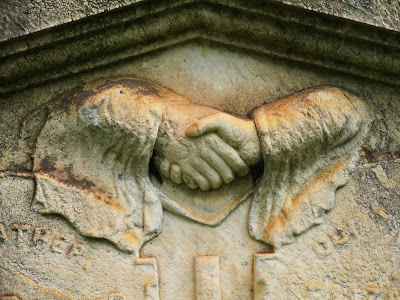
Some Freemason gravestones display clasped hands or linked chains.
At first glance, these seem harmlessly sentimental. But within Masonic symbolism, they carry layered meanings connected to fraternity and eternal brotherhood.
The handshake represented loyalty between members. Death could sever life, but not fraternity. The bond continued beyond the grave.
Chains, meanwhile, symbolised unity and continuity. Individual links formed a collective whole, much like members within the fraternity itself.
There is something oddly comforting about this imagery. In a world obsessed with individuality, Freemason gravestones repeatedly emphasise connection.
The dead are never entirely alone.
Freemasonry and Cemetery Architecture
Freemason influence extended far beyond individual gravestones.
Entire cemetery layouts, mausoleums, and memorial designs often incorporated Masonic symbolism and sacred geometry. Some cemeteries even contain dedicated Masonic sections organised around symbolic spatial patterns.
Geometry mattered enormously to Freemasons. Shapes, proportions, and orientations were believed to reflect universal order.
This fascination explains why many Masonic graves appear unusually symmetrical or architecturally elaborate. They were not merely decorative. They were philosophical structures built from stone.
A cemetery, in this context, becomes something extraordinary: an outdoor library of symbols waiting to be interpreted.
The Secret Codes of Freemason Gravestones

How Religion Influences Cemetery Symbolism: A Comparative Look
Conspiracy Theories and Public Fascination
Of course, no discussion of Freemasonry survives long without conspiracy theories crashing through the door.
The secrecy surrounding Masonic rituals fueled centuries of suspicion. Critics accused Freemasons of political manipulation, occult practices, and hidden global influence.
As a result, Masonic gravestones often attract intense curiosity. Visitors interpret symbols as evidence of secret societies operating behind history’s curtain.
But the reality is usually less cinematic.
Most Masonic gravestone symbolism revolves around morality, virtue, spiritual reflection, and fraternity—not world domination.
Still, mystery sells. And cemeteries thrive on mystery.
A weathered symbol hidden beneath ivy will always provoke imagination more effectively than a straightforward inscription.
Why Freemason Gravestones Still Fascinate Us
Why are people still captivated by these symbols centuries later?
Perhaps because modern life rarely leaves room for mystery anymore. Everything is explained instantly, categorised immediately, and uploaded online within seconds.
Freemason gravestones resist that simplicity.
They invite interpretation rather than offering direct answers. Like puzzles carved into stone, they force us to slow down, observe, and think symbolically.
And maybe that is their true power.
They remind us that cemeteries are not merely spaces for the dead. They are cultural archives, philosophical landscapes, and emotional mirrors reflecting the anxieties and aspirations of the living.
Each gravestone becomes a dialogue between memory and meaning.
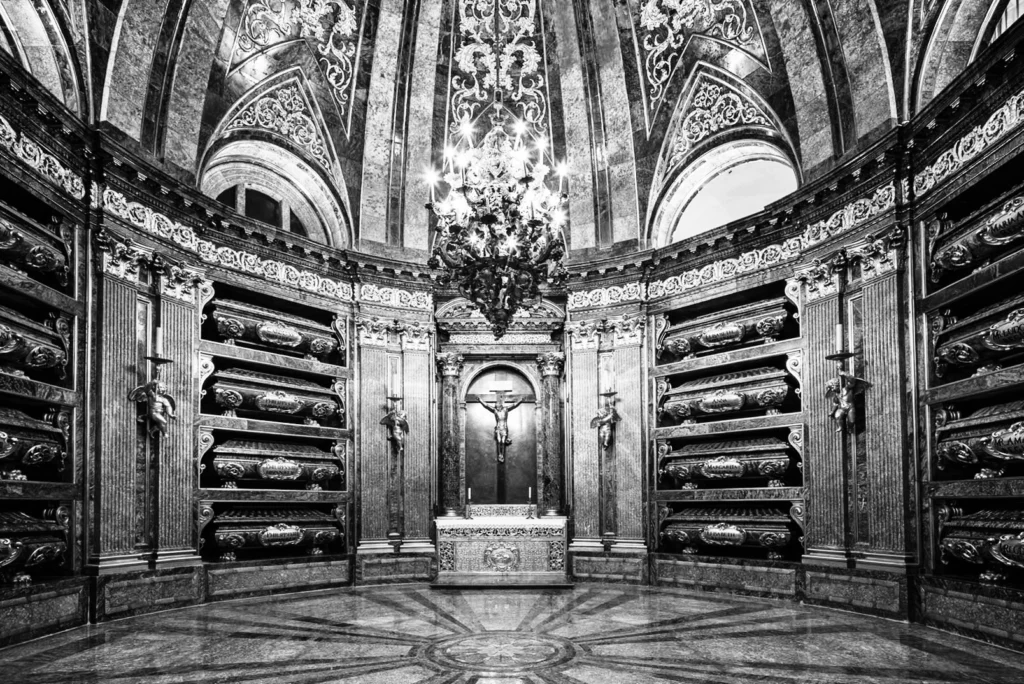
Royal Tombs and Eternal Power: How Monarchs Shaped Their Legacy in Death
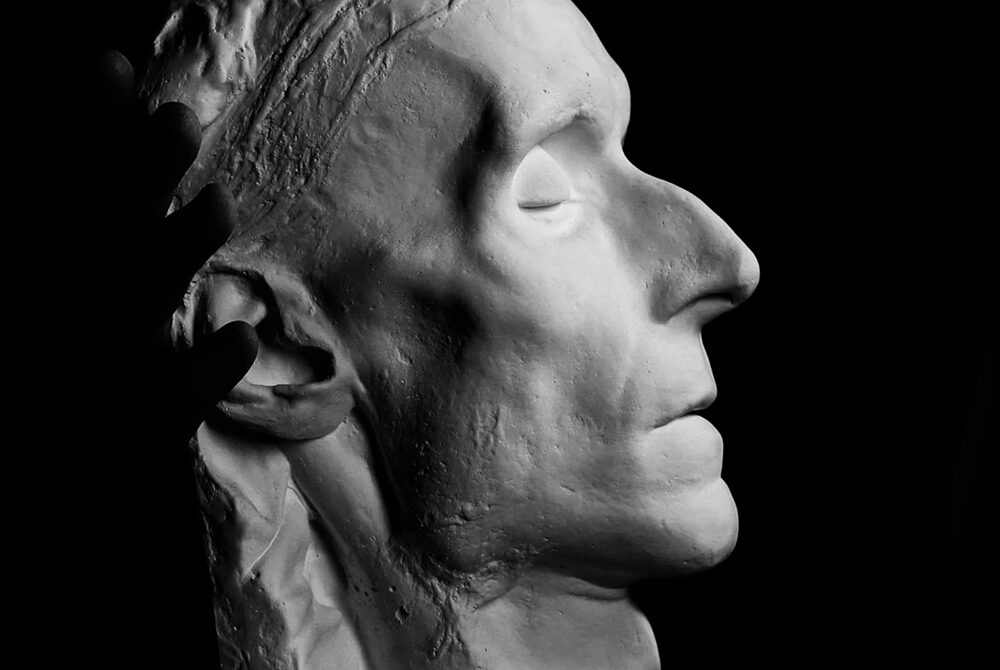
The Role of Death Masks in Preserving History and Identity
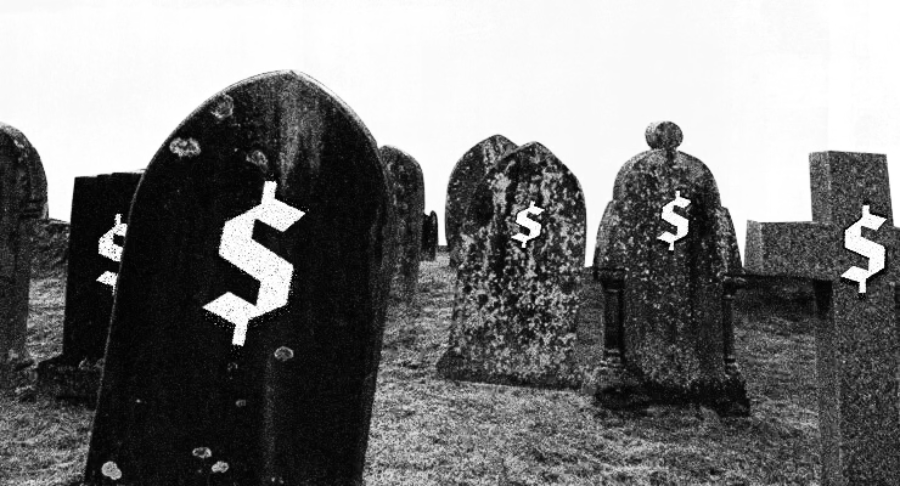
The Business of Death: How the Funeral Industry Has Evolved
Bottom Line
Freemason gravestones are far more than decorative relics. They are coded expressions of belief, morality, identity, and mortality itself.
Through squares, compasses, acacia branches, and broken columns, Freemasons transformed cemeteries into symbolic landscapes rich with hidden meaning. Their gravestones reveal a worldview obsessed not with death alone, but with virtue, legacy, and spiritual continuity.
And perhaps that is why these markers continue to intrigue us.
Because beneath the stone and symbolism lies a universal human desire: to leave behind something meaningful. A message. A philosophy. A trace of ourselves that survives after silence arrives.
In the end, Freemason gravestones are less about secrets and more about storytelling.
Leave a Reply