A Cemetery Lover’s Bucket List: 10 Burial Sites You Must Visit Before You Die
Some people plan their travels around beaches. Others collect Michelin-starred restaurants, medieval castles, or famous museums. And then there are those of us who see an old cemetery on a map and immediately wonder whether we can squeeze it into the itinerary.
If that sounds familiar, welcome. You are among friends.
Cemeteries are among the most revealing cultural landscapes humans create. They are archives written in stone, gardens designed around grief, outdoor sculpture galleries, genealogical repositories, religious spaces, political monuments, and occasionally very good places to contemplate the questionable brevity of human existence.
More importantly, no two cemeteries tell quite the same story. Burial grounds reflect attitudes toward class, religion, nationalism, architecture, nature, memory, hygiene, urban planning, and death itself. To walk through one is therefore not simply to visit the dead. It is to examine the society that buried them.
So, which cemeteries deserve a place on the serious cemetery enthusiast’s bucket list? Pack comfortable shoes, charge your camera, and prepare for an unusually morbid world tour.
1. Père Lachaise Cemetery — Paris, France
If cemeteries had celebrities, Père Lachaise would require its own security detail.
Opened in 1804, the cemetery emerged partly from a practical problem. Parisian burial grounds had become overcrowded and increasingly incompatible with changing ideas about sanitation and urban life. Père Lachaise was established beyond the densely populated centre, initially proving rather less fashionable than its creators hoped.
The solution was essentially nineteenth-century marketing: associate the cemetery with prestigious dead people. It worked remarkably well.
Today, its avenues contain an extraordinary concentration of cultural figures, including Oscar Wilde, Frédéric Chopin, Édith Piaf, Marcel Proust, Eugène Delacroix and Jim Morrison.
Yet celebrity graves are only part of its importance.
Père Lachaise helped establish the cemetery as a deliberately landscaped environment—a city of monuments in which architecture, vegetation and memory interact. Wander away from the busiest routes and you encounter Gothic chapels, Classical temples, weathered sculptures, family mausoleums and narrow paths disappearing beneath trees.
It also demonstrates something fundamental about cemeteries: burial landscapes are social landscapes. Wealth, prestige, religion, artistic taste and family identity become visible in stone.
Why visit: funerary architecture, sculpture, French history and the development of the modern cemetery.

2. Highgate Cemetery — London, England
Few places have influenced the popular image of the Gothic cemetery as strongly as Highgate.
Opened in 1839 as one of London’s celebrated “Magnificent Seven” cemeteries, Highgate emerged during a period when the rapidly growing metropolis desperately needed alternatives to overcrowded parish churchyards.
Victorian cemetery planners did not merely create somewhere to dispose of bodies. They created landscapes.
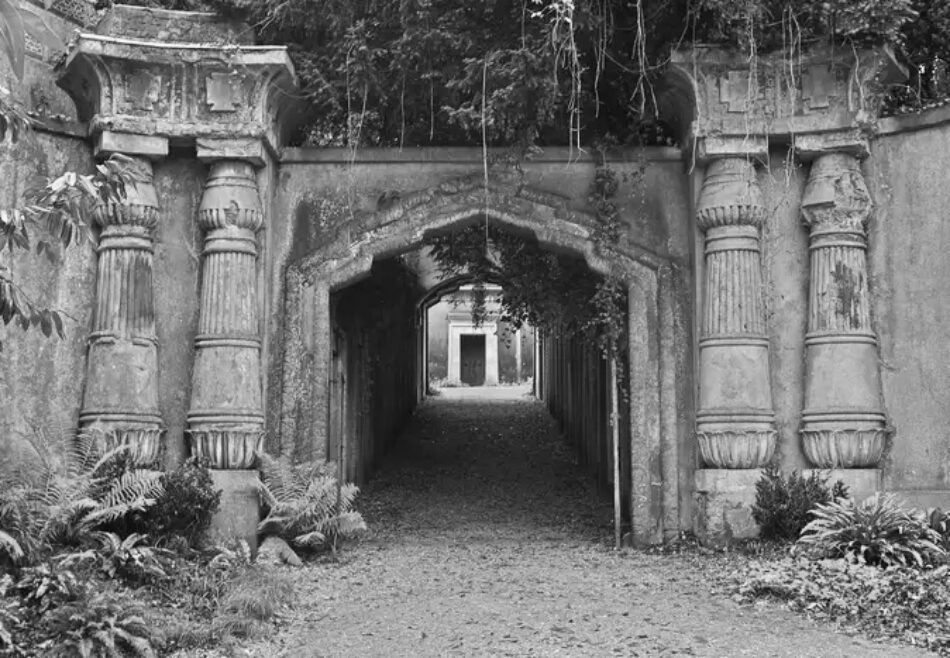
At Highgate, architecture, vegetation and theatricality work together beautifully. Ivy creeps over stone. Angels emerge from foliage. Mausoleums darken with age. Paths curve rather than march obediently in straight lines.
The Egyptian Avenue and Circle of Lebanon are particularly striking examples of Victorian fascination with historic architectural styles and the symbolic possibilities of antiquity.
Karl Marx is Highgate’s most internationally famous resident, although the cemetery contains the graves of numerous artists, writers, scientists and political figures.
Highgate also offers a fascinating lesson in changing attitudes toward heritage. After decades of decline during the twentieth century, conservation efforts transformed the cemetery into a protected historical landscape.
And yes, there are ghost stories. But the history is considerably more interesting than the ghosts.
Why visit: Victorian mourning culture, Gothic aesthetics, landscape design and cemetery conservation.
3. Cimitero Monumentale — Milan, Italy
Calling Milan’s Cimitero Monumentale a cemetery feels almost inadequate.
It is closer to an enormous open-air museum where everyone happens to be dead.
Opened in 1866, the cemetery reflects Milan’s economic prosperity and the ambitions of the families who commissioned its monuments. The result is an astonishing collection of funerary architecture and sculpture spanning styles from Neoclassicism and Realism to Art Nouveau and modernism.
Here, mourning became patronage.
Prominent families commissioned elaborate memorials from architects and sculptors, transforming private grief into public artistic display. Angels collapse dramatically over tombs. Bronze figures guard mausoleums. Classical temples compete with modern geometric structures.
The cemetery therefore raises fascinating questions about class and commemoration. A grave may memorialise an individual, but monumental graves also communicate wealth, cultural sophistication and social status to the living.
Death may be the great equaliser, but cemetery architecture frequently refuses to cooperate.
Why visit: funerary sculpture, Italian architecture, social history and the relationship between wealth and memorialisation.
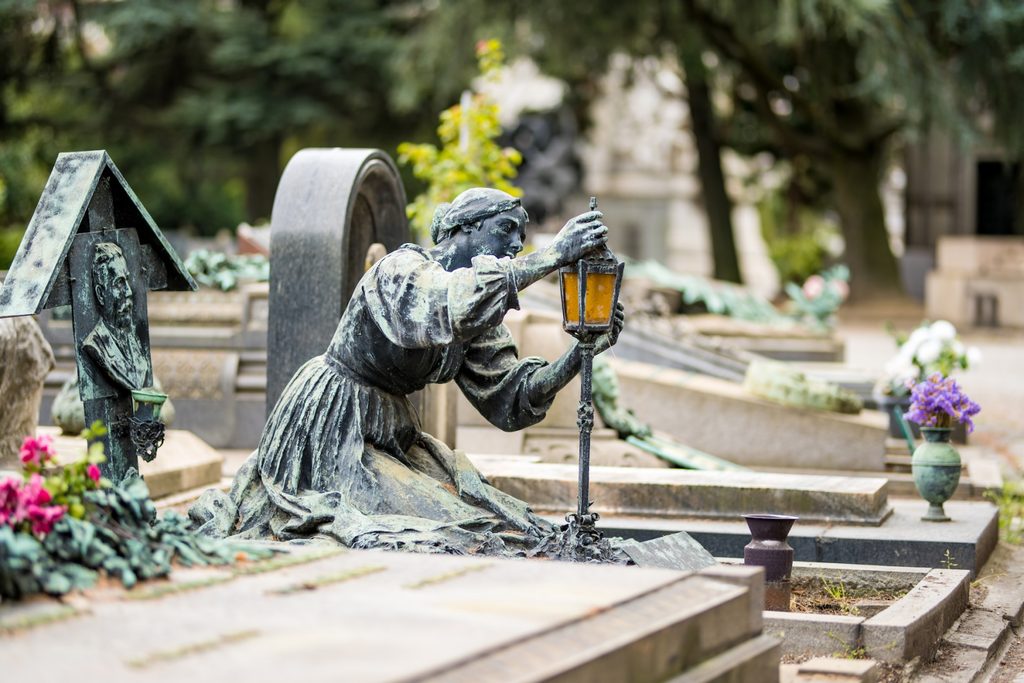
4. La Recoleta Cemetery — Buenos Aires, Argentina
Recoleta resembles a miniature city constructed exclusively for people who no longer require housing.
Its narrow avenues are lined with elaborate mausoleums, creating an urban landscape of stone, marble, bronze and stained glass. Established in the early nineteenth century, the cemetery became closely associated with Argentina’s political, military and social elite.
Its most famous burial is Eva Perón, whose relatively restrained family tomb attracts visitors from around the world.
But concentrating exclusively on Evita would miss what makes Recoleta so fascinating.
The cemetery reveals how architectural language can migrate across continents. Classical, Gothic, Art Nouveau and Art Deco influences coexist within a distinctly Argentine historical context. European aesthetic traditions were adopted, transformed and used to express status and identity by Buenos Aires’s elite.
Walking its streets feels strangely familiar to anyone interested in urbanism. There are façades, intersections, landmarks and visual hierarchies. Only the inhabitants are unusually quiet.
Why visit: Latin American history, mausoleum architecture, political memory and cemetery urbanism.

5. Staglieno Monumental Cemetery — Genoa, Italy
If Cimitero Monumentale in Milan is an outdoor museum, Staglieno is where sculpture appears to have developed an existential crisis.
Opened in 1851, Genoa’s monumental cemetery became famous for extraordinarily realistic nineteenth- and early twentieth-century funerary sculpture.
The dead are not always idealised into serene angels or heroic Classical figures. Sculptors represented clothing, facial expressions, gestures and textures with remarkable detail. Some monuments portray mourners rather than the deceased, freezing grief itself in marble.
This realism provides valuable evidence about changing attitudes toward individuality and commemoration. The monument becomes not merely symbolic but biographical.
Staglieno is also architecturally dramatic. Long arcades create repeated perspectives filled with sculptures, chapels and tombs, while the surrounding landscape adds another layer to the experience.
Friedrich Nietzsche visited the cemetery, and Mark Twain wrote about it. It is easy to understand why.
Few cemeteries demonstrate so clearly that funerary art deserves to be studied alongside sculpture displayed in conventional museums.
Why visit: nineteenth-century sculpture, realism, Italian funerary art and the visual representation of mourning.
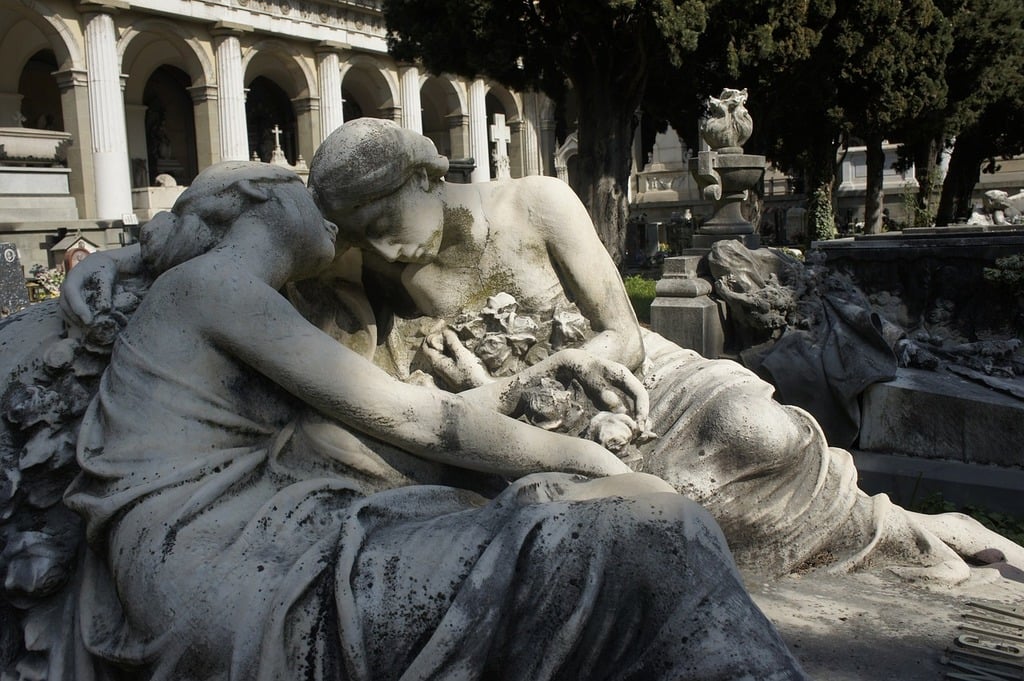

Unexpected Beauty: The Hidden Charm of Small, Local Cemeteries
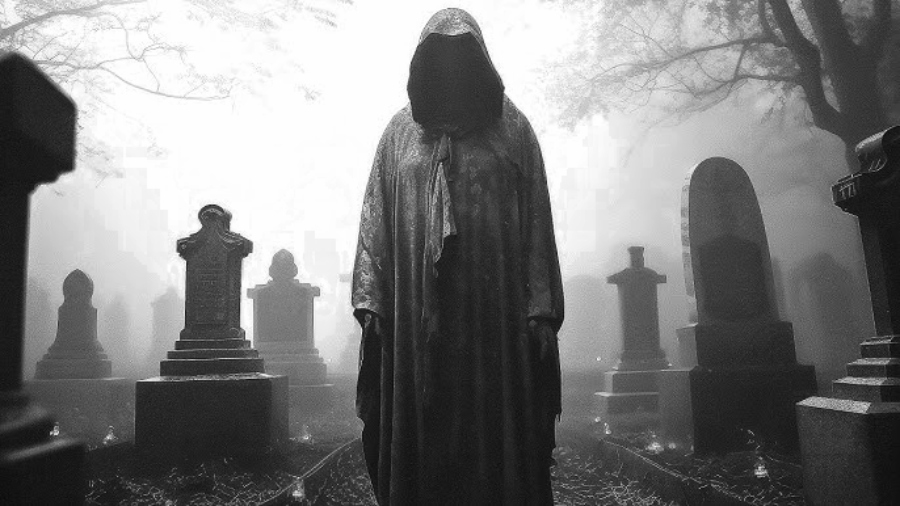
Strange Encounters in Graveyards: Personal Stories & Readers Submissions
6. Okunoin Cemetery — Mount Kōya, Japan
Okunoin requires a different way of thinking about cemeteries altogether.
Located on sacred Mount Kōya, a centre of Shingon Buddhism, Okunoin surrounds the mausoleum of Kūkai—also known as Kōbō Daishi—the founder of the tradition.
Thousands upon thousands of memorials stand beneath towering cedar trees along pathways leading toward the sacred complex.
The atmosphere differs dramatically from that of European monumental cemeteries. Nature does not function merely as landscaping surrounding monuments. Moss, roots, stone, forest and memorial architecture appear intertwined.
This relationship makes Okunoin especially valuable for comparative cemetery studies. Western cemetery traditions often emphasise permanence through architecture: polished stone, inscriptions and structures designed to resist decay. Okunoin can encourage visitors to think differently about nature, transience and sacred space.
Even contemporary memorials appear among ancient stones, illustrating that burial landscapes are rarely frozen historical sites. They continue to evolve because societies continue to use them.
Why visit: Buddhist funerary culture, sacred landscapes, comparative religion and the relationship between nature and memory.

7. Merry Cemetery — Săpânța, Romania
Who decided cemeteries had to be solemn?
The Merry Cemetery in the Romanian village of Săpânța offers perhaps the most cheerful rebuttal imaginable.
Its famous wooden crosses are painted predominantly in vivid blue and decorated with colourful scenes depicting the lives—and sometimes deaths—of the people buried beneath them. Many include epitaphs characterised by humour, candour and everyday detail.
The tradition is associated with craftsman Stan Ioan Pătraș, who began creating the distinctive memorials in the twentieth century.
What makes Săpânța academically fascinating is not simply its colour. It challenges assumptions about what constitutes “appropriate” commemoration.
Many Western cemetery traditions developed visual languages dominated by solemnity: black clothing, weeping figures, extinguished torches, broken columns and angels staring thoughtfully toward eternity. At Săpânța, personality and humour survive death.
The deceased remain farmers, drinkers, mothers, workers, musicians and neighbours. Their imperfections can become part of their memorial identity rather than something politely erased.
It reminds us that mourning does not have one universal aesthetic.
Why visit: folk art, epitaph traditions, Romanian culture and alternative approaches to death and remembrance.

8. Greyfriars Kirkyard — Edinburgh, Scotland
Greyfriars is compact compared with some cemeteries on this list, but what it lacks in acreage it compensates for with atmosphere.
Established in the sixteenth century, the kirkyard contains elaborate monuments, weathered stones and centuries of Edinburgh history. Its location within the historic city makes it particularly valuable for understanding the older European relationship between burial grounds and urban communities.
Greyfriars is also connected to important episodes in Scottish religious and political history, particularly the Covenanters.
Naturally, modern popular culture has added additional layers. Greyfriars Bobby, the famously loyal dog associated with the cemetery, became a beloved local legend. More recently, visitors have searched its stones for names resembling characters from the Harry Potter novels.
Then there are the ghost stories.
These narratives are culturally interesting whether one believes them or not. Haunted reputations illustrate how cemeteries acquire secondary identities through folklore, tourism, storytelling and media.
A cemetery is therefore never merely what its founders intended it to be. Later generations continually reinterpret it.
Why visit: Scottish history, early cemetery architecture, folklore and the construction of dark-tourism narratives.

9. Bonaventure Cemetery — Savannah, Georgia, USA
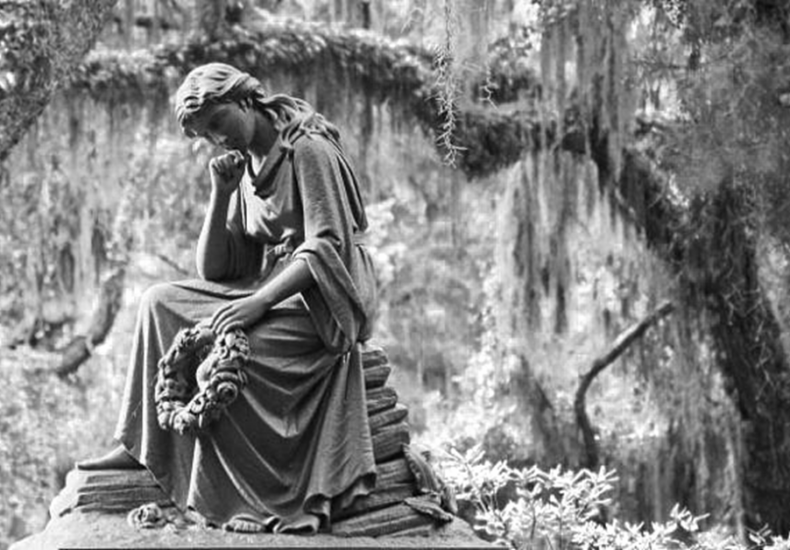
Bonaventure demonstrates how powerfully landscape can shape our emotional interpretation of burial space.
The cemetery is famous for avenues shaded by mature trees, elaborate monuments and the distinctive vegetation associated with the American South. Its visual character helped make it internationally recognisable, particularly after its association with Midnight in the Garden of Good and Evil.
Yet Bonaventure is more than a photogenic backdrop.
Its landscape belongs to a broader nineteenth-century tradition in which cemeteries increasingly became park-like environments. Before extensive systems of public parks existed in many cities, landscaped cemeteries could function as places for walking, contemplation and even recreation.
That idea may seem strange today. Picnicking beside tombstones? Scandalous.
Historically, however, the boundary between cemetery and public green space could be surprisingly porous.
Bonaventure consequently provides an excellent opportunity to study how vegetation, architecture and topography influence the experience of mourning. A cemetery does not communicate through inscriptions alone. Paths, trees, views, shadows and spatial sequences participate in the story.
Why visit: landscape architecture, Southern history, cemetery photography and the rural-cemetery tradition.
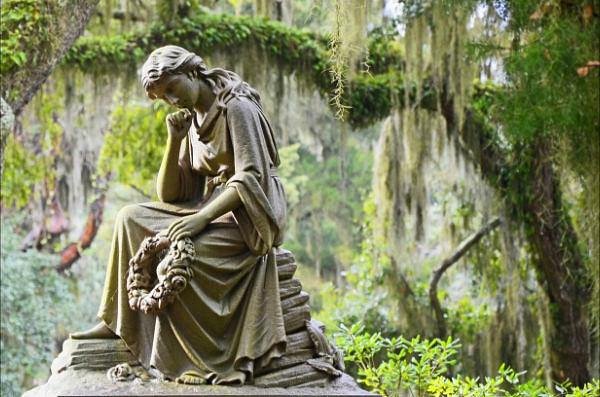
10. Waverley Cemetery — Sydney, Australia
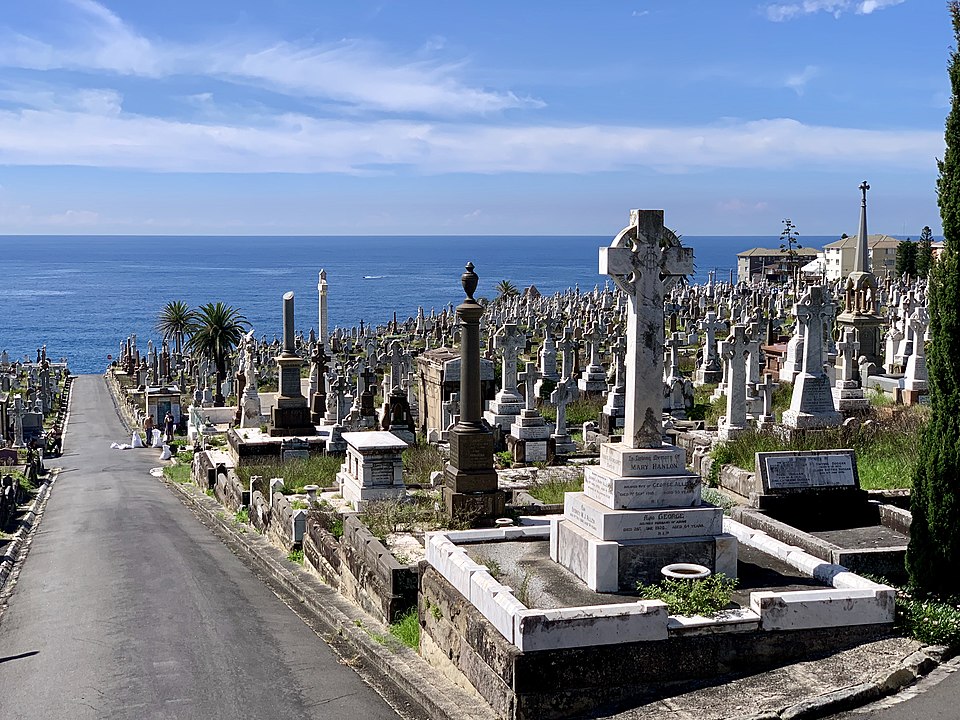
Perched dramatically above the Pacific Ocean, Waverley Cemetery demonstrates that location can become part of a cemetery’s identity.
Opened in 1877, it contains an extensive collection of Victorian and Edwardian monuments overlooking the sea. White stone memorials rise against enormous stretches of blue water, producing one of the world’s most striking cemetery landscapes.
But beauty should not distract us from historical interpretation.
Waverley preserves evidence about migration, religion, social hierarchy and colonial Australian society. Its monuments reveal connections between Britain, Ireland and Australia while demonstrating how European funerary traditions were transplanted into a dramatically different geographical setting.
It also presents contemporary conservation challenges. Coastal environments are spectacular but not necessarily gentle on historic materials. Salt, wind and weathering remind us that even monuments designed to proclaim permanence are temporary on a sufficiently long timeline.
Rather poetic, really.
Why visit: Australian social history, Victorian funerary art, coastal landscapes and heritage conservation.
What Makes a Cemetery Worth Travelling For?
A cemetery does not need a famous corpse to deserve attention.
The most rewarding burial grounds often possess several layers of significance simultaneously. Architecture tells us how societies imagined eternity. Inscriptions reveal language, religion and family relationships.
Spatial organisation exposes class distinctions and changing theories of urban planning. Plants tell environmental histories. Damaged monuments reveal conservation problems. Empty spaces may reveal stories that official records preferred to forget.
Even the way visitors behave matters.
Who receives flowers centuries after death? Which graves become tourist attractions? Which monuments deteriorate unnoticed? Whose names appear prominently on maps, and whose disappear from them?
These questions turn cemetery tourism into something richer than sightseeing.
They transform the cemetery into evidence.
How to Visit Cemeteries Responsibly
Cemetery tourism inevitably involves an ethical contradiction: we visit spaces created primarily for mourning because we find them historically, artistically or aesthetically interesting.
That does not make cemetery tourism inherently disrespectful. It simply means visitors should remember that heritage sites may also remain active burial grounds.
Treat funerals and mourners as absolutely private. Follow photography restrictions. Do not climb on monuments or touch fragile sculpture. Never remove objects, flowers or fragments, however abandoned they appear.
Photography deserves particular care. A beautiful monument may be art to you while remaining the grave of someone’s parent or child.
Curiosity and respect are perfectly capable of occupying the same space.
In fact, they should.
Bottom Line
Cemeteries are among the few places where architecture, anthropology, art, religion, politics, ecology and personal biography physically overlap.
Père Lachaise demonstrates the emergence of the monumental modern cemetery. Highgate embodies Victorian attitudes toward death and landscape. Milan and Staglieno transform commemoration into extraordinary art. Recoleta resembles a miniature city. Okunoin places memory within a sacred forest. Săpânța laughs gently at mortality. Greyfriars accumulates history and legend. Bonaventure merges burial with landscape, while Waverley places remembrance against the seemingly infinite horizon of the sea.
Yet perhaps the greatest cemetery is simply the one that makes you stop walking.
You notice a name. A date. A sculpture. An inscription. Someone who lived for ninety years—or nine months. For a moment, a stranger who disappeared a century ago becomes visible again.
That is the peculiar power of cemeteries.
They remind us that history is not composed only of kings, wars and famous people. It is made from individual lives, most of which eventually become little more than names carved into stone.
And if that sounds depressing, consider the alternative.
Leave a Reply