
Why Some Graves Face East: Astronomical and Religious Alignments
Walk through an old cemetery in Europe or North America and you may notice something curious. Despite the apparent disorder of leaning stones, encroaching vegetation, and generations of monuments competing for space, many graves seem to follow the same direction.
Quite often, they run east to west.
This is not simply the result of a particularly tidy gravedigger with a compass. The east-facing grave tradition has deep roots in religion, cosmology, symbolism, and practical cemetery planning. For centuries, the direction in which a body was buried could express beliefs about resurrection, sacred geography, the movement of the Sun, and humanity’s position within the universe.
Yet grave orientation is far from universal. Muslims traditionally orient burials toward Mecca. Jewish burial customs vary considerably according to place and community. Ancient cultures aligned tombs with celestial events, landscapes, temples, or directions carrying cosmological significance.
A cemetery, therefore, is not merely a collection of graves. Look at it from above and it can resemble a compass made of human bodies—a landscape in which belief has quite literally been given direction.
So why do some graves face east? To answer that, we need to look toward the rising Sun.
The East-Facing Grave Tradition
When people speak about graves “facing east,” the terminology can become confusing.
In many traditional Christian burials, the body was placed on an east-west axis with the head towards the west and the feet towards the east. If the deceased were imagined rising from the grave, they would therefore rise facing east.
The gravestone itself may stand at the western, or head, end of the grave. Consequently, saying that a headstone “faces east” does not necessarily mean exactly the same thing as saying that the deceased “faces east.”
This distinction matters, particularly when studying historical cemeteries.
The orientation was connected primarily to Christian ideas about resurrection and the Second Coming of Christ. East was not simply one point among four on a compass. It carried theological weight.
For early and medieval Christians, direction could communicate belief.
And east had quite a lot to say.
Why Is East So Important in Christianity?
The symbolic importance of east predates Christianity, but Christianity incorporated the direction into its own sacred geography.
The most obvious reason is astronomical.
The Sun rises in the east.
For agricultural societies—and indeed for almost anyone who regularly observes the sky—the sunrise represents renewal with remarkable efficiency. Darkness disappears. Light returns. A new day begins.
It requires little theological imagination to connect this daily celestial event with ideas of rebirth and resurrection.
Christianity developed precisely such associations. Christ became linked symbolically with light, while resurrection represented victory over death. The rising Sun consequently provided a powerful natural metaphor for Christian expectations of eternal life.
The symbolism becomes particularly striking in a cemetery.
The dead lie through the metaphorical night awaiting resurrection. Their bodies are directed toward the place where light returns.
Subtle? Not especially.
Effective? Absolutely.
Facing the Second Coming
The eastward orientation of Christian graves is also commonly connected with traditions concerning Christ’s return.
The Gospel of Matthew compares the coming of the Son of Man with lightning appearing from the east and shining toward the west. Over time, eastward expectation became embedded within Christian liturgy, architecture, and funerary practice.
A deceased Christian buried with the feet toward the east could symbolically be positioned to meet Christ at the resurrection.
The grave therefore became something more than storage for mortal remains.
It became a place of expectation.
This helps explain why orientation mattered even when nobody expected the corpse itself to remain neatly positioned for eternity. The arrangement was theological rather than practical. The grave expressed what the community believed would eventually happen to the person buried within it.
In this sense, cemetery design can function rather like a creed written across the landscape.
Instead of words, it uses bodies, stone, space, and direction.
Churches Were Looking East Too
Graves did not develop their directional symbolism in isolation.
Christian architecture had already established a complicated relationship with the east.
Many historic churches were constructed along an east-west axis, with the sanctuary or altar toward the eastern end. The practice was never completely universal—topography, existing streets, older buildings, local customs, and other practical considerations frequently interfered—but liturgical east remained an important architectural concept.
The result was a spatial relationship between churches and their surrounding burial grounds.
Church, altar, worshipper, grave, and sunrise could all participate in the same symbolic system.
This is particularly visible in medieval churchyards where graves often cluster around a church while broadly respecting its orientation.
A cemetery was therefore not simply adjacent to sacred architecture.
It extended that architecture into the landscape.
The building organised the living congregation; the churchyard organised the dead.
The Curious Case of Priests Buried in Reverse
One particularly interesting variation concerns clergy.
In some Christian burial traditions, priests were buried in the opposite direction from members of the congregation: head toward the east and feet toward the west.
Why?
The explanation traditionally given is wonderfully architectural.
Ordinary Christians would rise facing east, toward Christ. Clergy, by contrast, would rise facing west—toward their congregation.
Even resurrection, apparently, required pastoral organisation.
The arrangement symbolically preserved the relationship established during worship. A priest celebrating the liturgy faced the congregation; in death, his grave could maintain that role.
However, this custom should not be treated as universal. Burial practices varied considerably by denomination, period, region, and local tradition.
That variation is precisely what makes grave orientation so useful to researchers. Deviations can be as revealing as conformity.
The Sun as Humanity’s Oldest Compass
Christian burial practices form only one chapter in a much older relationship between death and the sky.
Humans were orienting monuments according to astronomical phenomena thousands of years before Christianity existed.
Ancient tombs, megalithic structures, ceremonial landscapes, and temples sometimes demonstrate relationships with sunrise, sunset, solstices, lunar cycles, or prominent stars.
Why connect death with astronomy?
Perhaps because the heavens provide something human life conspicuously lacks: apparent permanence.
People die. Generations disappear. Kingdoms collapse. The Sun, irritatingly indifferent to all of this drama, rises again the following morning.
Celestial cycles therefore offered ancient societies a powerful language through which to conceptualise continuity, renewal, time, and the afterlife.
Orienting the dead toward significant astronomical events could integrate individual mortality into a much larger cosmic order.
The grave said: this person has died, but the universe continues—and perhaps death itself belongs to that cycle.
Ancient Egypt and the Geography of Death
Ancient Egypt offers one of the clearest examples of landscape, astronomy, and funerary belief becoming intertwined.
The daily journey of the Sun carried profound religious significance. The west, where the Sun disappeared below the horizon, became closely associated with death and the realm of the dead.
This helps explain why major necropolises associated with ancient Memphis and Thebes developed on the western side of the Nile.
Here the symbolism differs dramatically from later Christian eastward burial.
For Egyptians, the setting Sun could represent entry into the realm of death, followed by regeneration and eventual rebirth.
The important point is not that one direction universally means “death” while another means “life.” There is no global cemetery compass with agreed instructions.
Directions acquire meaning within cultural systems.
One society looks toward sunrise and sees resurrection. Another watches sunset and sees the entrance to the afterlife.
The sky remains the same.
The interpretation changes.
Islamic Graves: Direction Without the Sunrise
Islam provides an especially useful comparison because orientation remains extremely important, but the determining factor is not primarily astronomical.
Muslim burials are traditionally arranged so that the deceased faces the qibla—the direction of the Kaaba in Mecca.
Because Mecca occupies a fixed geographical location, grave orientation varies according to where the burial takes place.
A Muslim grave in Indonesia will therefore not necessarily share the same compass alignment as one in Morocco or Britain.
This creates fascinating patterns in multicultural cemeteries. Different sections may follow visibly different axes because each community is mapping sacred geography onto the same physical terrain.
The Christian grave may orient toward a cosmological east.
The Muslim grave turns toward a sacred place.
Both transform geography into theology.

How Religion Influences Cemetery Symbolism: A Comparative Look
Cemetery Sculptures: The Stories Behind the Most Famous Memorials
What About Jewish Graves?
Jewish burial orientation is more difficult to reduce to a single rule.
Practices vary between communities and regions, and local traditions have historically played an important role. In some contexts, graves have been oriented toward Jerusalem. Elsewhere, east-west arrangements appear for different traditional or practical reasons.
This variability provides an important warning for anyone attempting to “decode” cemeteries.
Grave orientation should never be interpreted from direction alone.
An east-west grave does not automatically identify a Christian burial. A deviation from the surrounding cemetery does not automatically indicate religious difference either.
Historical evidence works best in layers.
Orientation should be considered alongside inscriptions, symbols, cemetery records, religious affiliation, monument style, dates, landscape organisation, and local history.
Cemeteries are texts, certainly—but they rarely come with punctuation.
When Astronomy Becomes Cemetery Planning
There is also a less romantic explanation for orderly grave orientation.
Administration.
Once cemeteries became larger, professionally planned spaces—particularly during the 18th and 19th centuries—regular layouts became increasingly important.
Rows maximise space. Paths require organisation. Drainage matters. Terrain matters. Property boundaries matter.
The picturesque garden cemetery might appear spontaneous, but beneath the trees and monuments there was usually a considerable amount of planning.
As municipal cemeteries expanded, traditional religious orientation could become entangled with surveying and efficient land use. An east-west alignment might therefore survive partly because it was symbolically meaningful and partly because somebody had drawn very straight lines on a plan.
This distinction is crucial.
Not every alignment is astronomical.
Sometimes a grave faces east because of resurrection theology.
Sometimes because the cemetery follows a church.
Sometimes because the plot fits the road.
And sometimes because the gravedigger had little choice.
Academic interpretation becomes interesting precisely where symbolism meets practicality.
Why Cemetery Orientation Changes Over Time
Walk through a cemetery established in the 19th century and later expanded, and you may notice its orientation suddenly shift.
Older graves might follow one axis while newer sections turn dramatically.
Such changes can reveal the physical history of the cemetery itself.
Perhaps additional land was purchased. A new entrance may have been created. A road could have altered the site’s boundaries. New burial regulations may have been introduced. Religious demographics might have changed.
Even secularisation can affect cemetery landscapes.
As burial becomes less tightly controlled by religious institutions, strict symbolic orientation may lose importance. Modern lawn cemeteries, cremation gardens, woodland burial sites, and columbaria often prioritise landscape design, accessibility, maintenance, or environmental considerations instead.
The compass gradually gives way to the site plan.
That shift is culturally significant.
When a society stops orienting its dead toward a particular sacred direction, it may indicate broader changes in how that society understands death itself.
Can Grave Orientation Help Archaeologists?
Yes—but cautiously.
Archaeologists can use burial orientation as one element when studying past populations, religious change, cemetery chronology, and cultural identity.
For example, a shift in orientation within an archaeological burial ground might coincide with religious conversion or changing ritual practices. Groups of graves aligned differently from neighbouring burials might suggest different phases of cemetery use.
But orientation is evidence, not a magic decoder ring.
Human behaviour is messy.
People reuse burial grounds. Communities preserve customs long after their original meanings have faded. Landscapes impose limitations. Religious rules develop regional variations.
Researchers therefore combine grave alignment with stratigraphy, artefacts, skeletal evidence, historical documents, radiocarbon dating, inscriptions, and other archaeological information.
A compass bearing becomes meaningful only when placed within context.
Reading Cemeteries as Cultural Landscapes
Perhaps the most fascinating aspect of grave orientation is what it tells us about cemeteries themselves.
We tend to see a grave as an individual object: one person, one stone, one story.
But step backwards.
Rows become patterns.
Patterns become spatial systems.
Suddenly, the cemetery begins to resemble architecture.
Its paths control movement. Monuments create hierarchy. Vegetation establishes atmosphere. Boundaries separate sacred and ordinary space. Orientation connects the site with churches, cities, distant holy places, or even celestial events.
Cemeteries are therefore not merely repositories of human remains. They are designed cultural landscapes.
And orientation is one of their least obvious design elements.
You may not notice it while reading an epitaph or admiring an angel sculpture. Yet beneath your feet, generations of bodies may be arranged according to an invisible geometry connecting earth, heaven, and belief.
That is rather extraordinary for something as mundane as a compass direction.
Do Modern Graves Still Face East?
Some do. Many do not.
Traditional Christian burial practices continue in numerous communities, while religious cemeteries may maintain specific orientation requirements. Yet contemporary burial grounds are increasingly diverse.
Urban density has also changed the equation. Cemetery land is expensive and finite, particularly in large cities. Efficient use of available space may take precedence over traditional orientation.
Cremation has altered cemetery design even further. Columbaria, memorial walls, scattering gardens, and cremation plots do not necessarily reproduce the spatial logic of full-body burial.
Meanwhile, natural burial grounds may deliberately minimise conventional cemetery architecture altogether.
The modern cemetery therefore reveals a society negotiating between inherited ritual and practical reality.
We still want death to mean something.
We simply have less room in which to arrange it.
Why Grave Orientation Still Matters
It would be easy to dismiss the orientation of graves as a minor historical curiosity.
But doing so misses something important.
The direction in which societies bury their dead reveals how they imagine the universe.
East-facing Christian graves connect death with resurrection and returning light. Islamic graves connect individual burial with the sacred geography of Mecca. Other traditions have oriented tombs according to landscapes, temples, ancestors, celestial phenomena, or local customs.
These choices transform abstract beliefs into physical space.
Religion becomes geography.
Cosmology becomes architecture.
Hope becomes orientation.
And perhaps that is why cemeteries remain such remarkable historical documents. They preserve ideas not only in inscriptions but in their very layout.
Sometimes history is written on stone.
Sometimes it is written with a compass.
Royal Tombs and Eternal Power: How Monarchs Shaped Their Legacy in Death
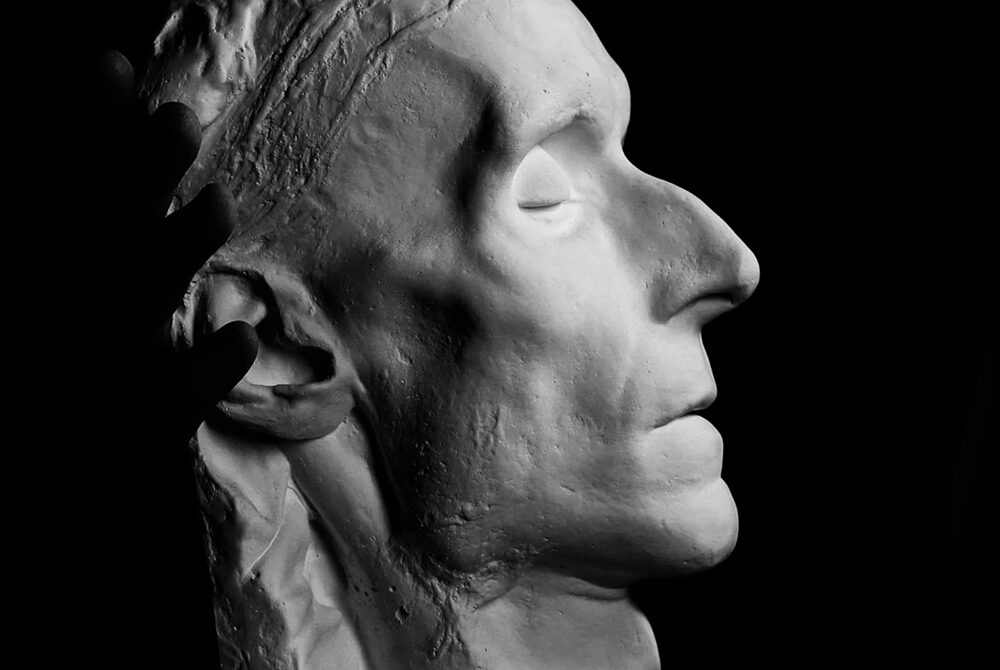
The Role of Death Masks in Preserving History and Identity
The Business of Death: How the Funeral Industry Has Evolved
Bottom Line
So, why do some graves face east?
In many Christian traditions, eastward burial reflects centuries-old associations between sunrise, Christ, resurrection, and the anticipated Second Coming. The deceased was often laid with the head toward the west and feet toward the east, symbolically prepared to rise facing the returning light.
But grave orientation becomes much more interesting once we stop searching for a single explanation.
Across cultures, humans have positioned their dead in relation to the Sun, sacred cities, religious buildings, landscapes, and cosmological ideas. At the same time, practical factors—from roads and terrain to urban planning—have always complicated these symbolic arrangements.
The cemetery is therefore both spiritual landscape and designed environment.
Next time you enter an old burial ground, don’t look only at the names and monuments. Notice where the graves point. Find east. Look at the church, the paths, and the horizon.
So,I like it