
Royal Tombs and Eternal Power: How Monarchs Shaped Their Legacy in Death
For ordinary people, a grave may mark the end of a life. For monarchs and emperors, it often marked the continuation of power by other means.
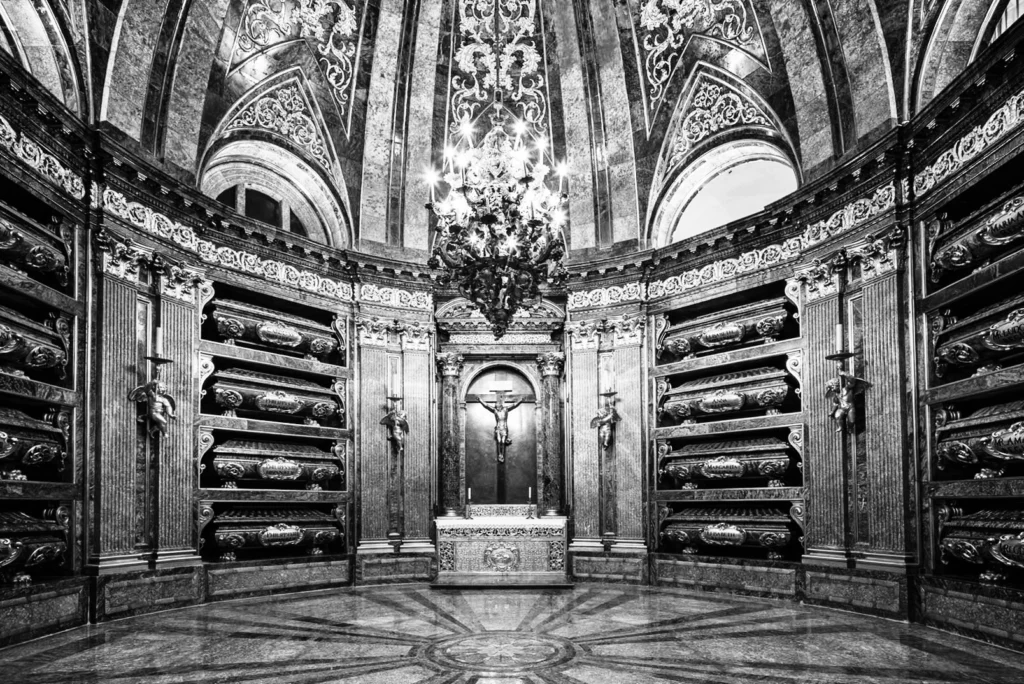
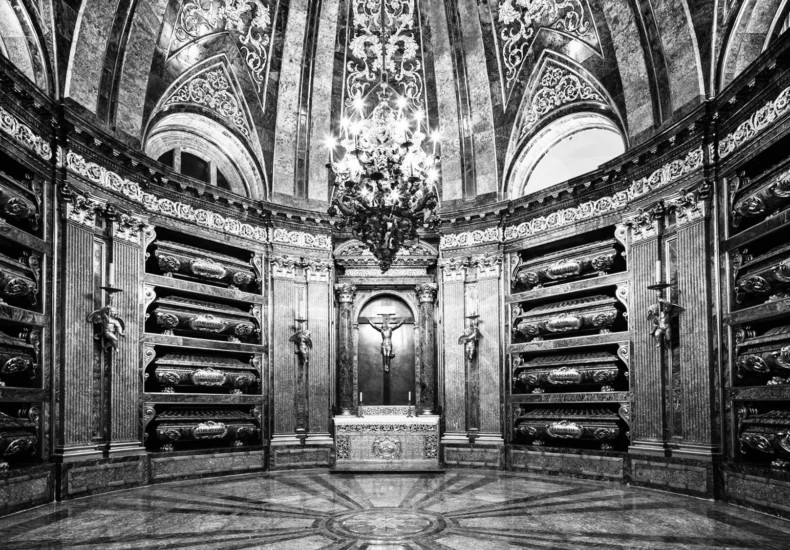
Royal burial places were rarely chosen for convenience alone. They were political statements carved in stone, staged performances of legitimacy, and architectural arguments about who deserved to be remembered. A ruler’s tomb could proclaim divine favour, reinforce dynastic continuity, dominate a sacred landscape, or quietly rewrite an inconvenient past. Even in death, kings and emperors remained remarkably busy.
Across history, rulers have treated burial architecture as a final opportunity to control their image. Some built colossal monuments visible for miles. Others selected holy sites that associated their dynasty with saints, prophets, or gods. A few chose deliberately modest graves, although royal modesty often had a suspicious tendency to become monumental once architects became involved.
Why did final resting places matter so much? Because political authority depends not only on governing the present but also on shaping memory. A royal tomb transformed a dead ruler into an ancestor, symbol, saint, founder, or national hero. It allowed a dynasty to say: we were here, we belong here, and our rule forms part of the natural order.
The history of royal burial is therefore not simply a history of death. It is a history of territory, religion, propaganda, architecture, and power.
Ancient Rulers and the Architecture of Eternity
Ancient monarchs often approached death as a logistical challenge. The body might perish, but royal authority, divine status, and cosmic order were expected to continue.
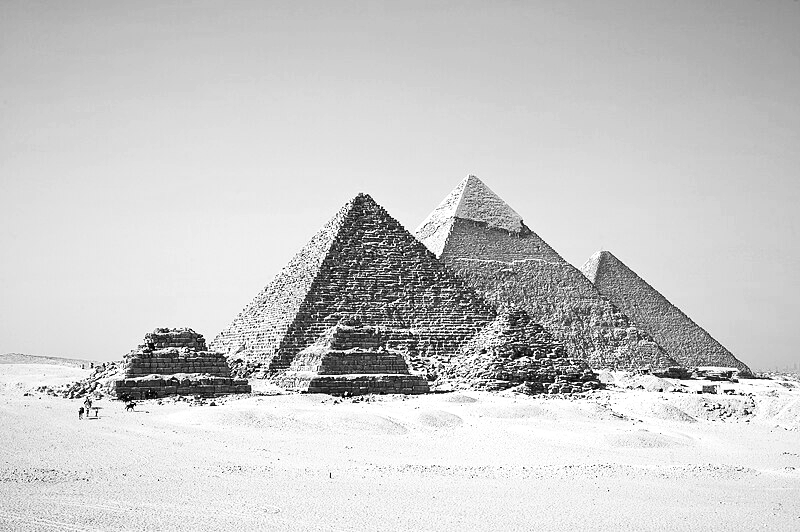
The Egyptian pyramids remain the most famous expression of this ambition. These vast tombs did more than protect a pharaoh’s remains. They connected kingship with the heavens, the gods, and the eternal rhythm of the cosmos. Their scale turned political hierarchy into physical form. A ruler who commanded thousands of workers and enormous quantities of stone in life could continue commanding the landscape after death.
The location mattered as much as the monument. Many royal tombs stood on the western side of the Nile, symbolically associated with the setting sun and the realm of the dead. Geography became theology. The landscape itself helped explain the king’s journey into the afterlife.
Later Egyptian rulers favoured hidden tombs in the Valley of the Kings. This shift reflected practical concerns, including tomb robbery, but it did not represent a retreat from grandeur. The monument moved underground, where chambers, paintings, sacred texts, and funerary objects created a private universe for the deceased ruler.
Elsewhere, ancient emperors used burial sites to establish dynastic authority. The tomb of China’s first emperor, Qin Shi Huang, formed part of an enormous funerary complex guarded by the terracotta army. The emperor did not simply prepare for death; he prepared to govern within it. Soldiers, officials, animals, and symbolic landscapes reproduced imperial order beneath the earth.
The message was difficult to misunderstand. The empire did not end at the grave. It followed the emperor into eternity.
Roman Emperors and the Politics of the Mausoleum
Roman rulers inherited traditions of monumental burial but adapted them to the needs of an empire obsessed with ancestry, civic virtue, and political spectacle.
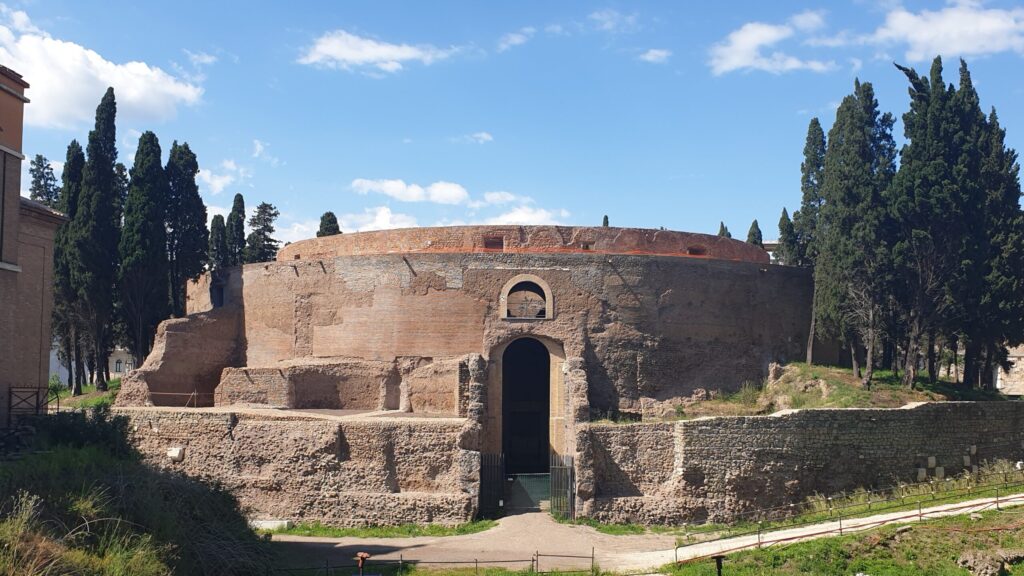
The Mausoleum of Augustus offers a clear example. Augustus understood that his authority required careful presentation. He had emerged from civil war, dismantled the Roman Republic in practice, and yet avoided presenting himself as an ordinary tyrant. His tomb therefore became part of a wider political programme that portrayed him as restorer, founder, and father of a renewed Roman order.
The mausoleum’s location within Rome was crucial. Augustus did not disappear into a distant necropolis. His burial place occupied the city whose political identity he had reshaped. It created a dynastic centre and invited future emperors and relatives to be buried around him. The tomb converted personal death into institutional continuity.
Later emperors used funerary monuments in similar ways. Hadrian’s mausoleum, now known as Castel Sant’Angelo, stood as another massive expression of imperial permanence. Its later transformation into a fortress and papal stronghold adds an almost comic historical footnote: monuments built to preserve one form of power are often appropriated by another.
Roman imperial funerals also included public processions, speeches, images, and acts of deification. Burial was only one component of a larger political ritual. The dead emperor could be elevated among the gods, allowing loyalty to the ruler to continue as religious devotion.
This was useful for successors. A new emperor who presented himself as the legitimate heir of a deified predecessor inherited more than a throne. He inherited sacred prestige.
Sacred Ground and Medieval Kingship
In medieval Europe, royal burial became deeply entangled with Christianity. Kings increasingly chose churches, abbeys, and cathedrals as their final resting places, positioning themselves near altars, saints, relics, and communities of prayer.
This arrangement served spiritual and political purposes simultaneously.
A ruler buried within a prestigious religious institution benefited from perpetual prayers for the soul. At the same time, the burial associated the monarchy with sacred authority. The king rested not in an ordinary graveyard but within a holy building, often near the most revered spaces.
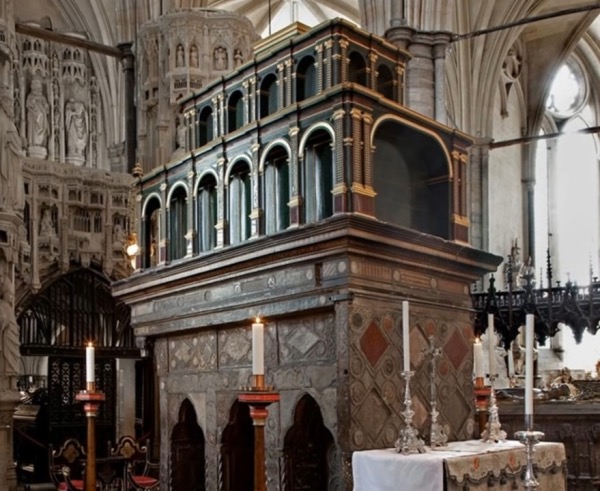
Westminster Abbey became one of the most important examples of dynastic burial in England. Edward the Confessor’s shrine gave the site special spiritual significance, while later coronations and royal burials transformed the abbey into a theatre of monarchy. Kings were crowned where earlier kings lay buried, linking accession with ancestry.
The architecture made a powerful argument. The living ruler stood above or beside the royal dead, receiving authority within a space saturated with dynastic memory. Succession appeared not as a political struggle but as an orderly passage blessed by tradition and religion.
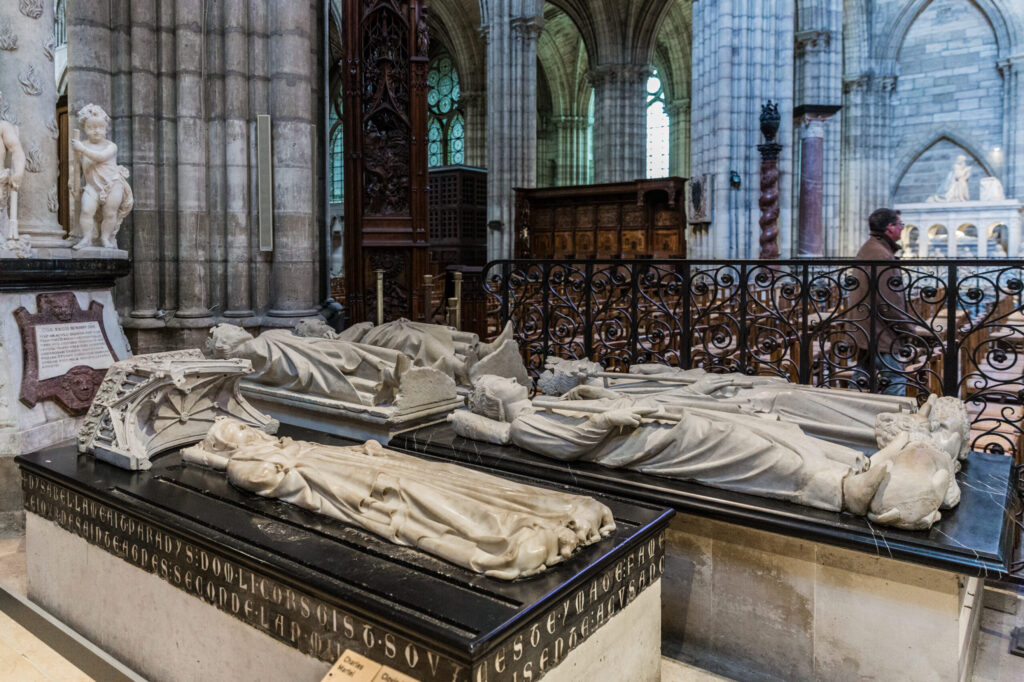
In France, the Basilica of Saint-Denis performed a similar role. It became the principal burial place of French monarchs and developed into a monumental record of kingship. The presence of multiple generations created a stone genealogy. Tombs, effigies, inscriptions, and chapels presented the monarchy as continuous even when actual politics involved rebellion, assassination, disputed inheritance, and the occasional disastrous war.
Royal necropolises were therefore instruments of selective memory. They smoothed the rough edges of history.
Dynastic Burial and the Manufacture of Continuity
One of the most important purposes of a royal burial place was to create the illusion of uninterrupted dynastic order.
Monarchies depend heavily on lineage. A ruler may possess armies, wealth, and administrative power, but hereditary legitimacy requires a convincing story about blood, ancestry, and rightful succession. Royal tombs gave that story a physical location.
By gathering generations of rulers in one church, mausoleum, or crypt, a dynasty transformed itself into a visible historical sequence. Each tomb became a chapter, and the building became the book.
This was particularly useful for new or insecure dynasties. A ruler who had seized power could strengthen his position by burying himself near respected predecessors, marrying into an older royal line, or founding a new dynastic burial site intended to rival existing ones.
The choice of burial place could therefore be deeply strategic. Being buried beside a legitimate monarch might imply continuity. Being buried separately could signal a deliberate beginning. A new tomb complex could announce that history had entered a fresh era.
Even tomb design participated in this political theatre. Effigies showed monarchs crowned, armoured, praying, or peacefully sleeping. Such images rarely represented the physical reality of death. They displayed ideal kingship.
The royal corpse might have suffered disease, injury, decomposition, or an undignified end. The stone king remained calm, symmetrical, and magnificently dressed. Sculpture corrected biology.
Imperial Capitals and the Geography of Dominion
Some rulers chose burial places within capitals to reinforce their association with the political centre. Others selected ancestral homelands, conquered territories, or newly founded cities.
The decision often revealed how a ruler understood the empire.
An emperor buried in the capital claimed permanent ownership of the state’s heart. A ruler buried in an ancestral region might emphasise ethnic identity or dynastic origin. A tomb built in conquered land could symbolically absorb that territory into the ruler’s legacy.
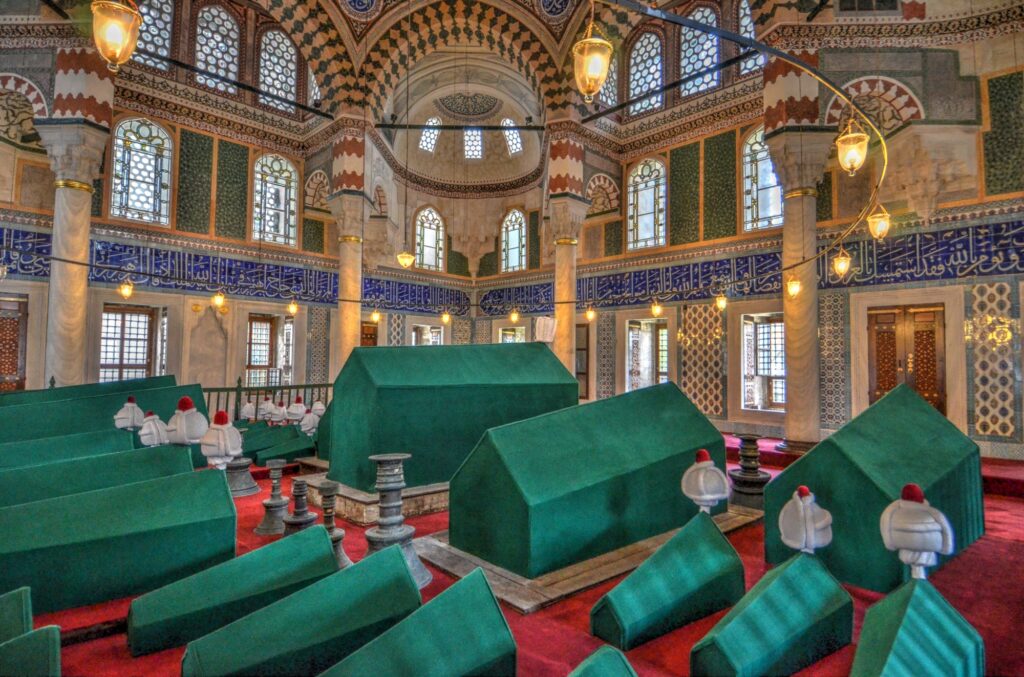
The Ottoman sultans, for example, were frequently buried in monumental tombs associated with mosque complexes. These sites integrated religion, charity, education, architecture, and dynastic memory. A sultan’s burial place formed part of an urban institution that continued shaping public life.
Such complexes demonstrated that imperial power extended beyond military conquest. It built schools, funded religious institutions, organised neighbourhoods, and structured the city. The tomb stood within a living network of authority.
In Mughal India, imperial mausoleums similarly combined dynastic ambition, religious symbolism, landscape design, and architectural spectacle. The Taj Mahal, commissioned by Shah Jahan for Mumtaz Mahal, is often described primarily as a monument to love. It was certainly that, but it was also an imperial project.
Its vast scale, refined geometry, riverside location, gardens, calligraphy, and luminous materials communicated Mughal wealth and cultural authority. Love may have inspired the monument, but empire paid the builders.
The Royal Body as a Political Relic
The physical remains of monarchs could acquire enormous symbolic importance. A royal body was not simply human matter. It could become a relic of sovereignty.
This helps explain why rulers sometimes arranged for their hearts, organs, or bodies to be buried in separate locations. Divided burial allowed one monarch to occupy several symbolic landscapes at once.
A heart might remain in a favoured church, while the body rested in a dynastic necropolis. Internal organs might be buried near the place of death. From a modern perspective, this may sound unsettling. Politically, however, it was remarkably efficient. One king could maintain multiple memorial presences.
Royal remains also became politically dangerous during revolutions. When regimes fell, tombs were sometimes opened, damaged, or destroyed. The attack on a royal grave allowed revolutionaries to challenge not only a deceased monarch but the entire system the body represented.
During the French Revolution, royal tombs at Saint-Denis were desecrated and remains removed. This was more than vandalism. It was political iconoclasm. Destroying the burial place attacked the monarchy’s claim to sacred history.
If royal tombs manufactured continuity, revolutionary destruction attempted to break it.
Conquerors, Founders, and Carefully Chosen Simplicity
Not every ruler chose excessive splendour. Some selected restrained burial places to project humility, military virtue, religious devotion, or closeness to the people.
Yet simplicity can be just as political as grandeur.
A modest tomb may suggest that the ruler valued service over luxury. It can distance a monarch from accusations of extravagance. It may support a carefully constructed image of discipline or piety.
The important point is that royal burial choices were rarely neutral. Even a plain grave could communicate a message.
Some rulers were buried in sites connected to major victories or national foundations. These burial places transformed the monarch into a founding ancestor. Visitors did not merely honour an individual; they encountered the imagined origin of the state.
The tomb of a conqueror could also legitimise territorial claims long after the conquest itself. Presence mattered. A ruler buried in a region remained symbolically embedded within it.
This is one reason political disputes sometimes arise over the relocation of royal remains. Where a ruler rests can shape who claims that ruler’s legacy.
Royal Mausoleums as Architectural Propaganda
Architecture communicates without speaking, which makes it especially useful to regimes.
A royal mausoleum can express permanence through stone, hierarchy through scale, sacred authority through religious imagery, and order through symmetry. Visitors experience these messages physically. They look upward, pass through controlled entrances, move along ceremonial paths, and encounter carefully staged tombs.
The building teaches them how to behave.
High domes and towering monuments dwarf the individual. Long approaches create anticipation. Enclosed chapels produce intimacy and reverence. Gardens suggest paradise, renewal, or cosmic order.
Royal tombs are therefore not passive containers. They choreograph memory.
Materials also matter. Marble, gold, porphyry, precious stone, bronze, and elaborate carving demonstrate access to resources and skilled labour. A lavish tomb announces that the ruler could command wealth even after death.
In this sense, monumental burial resembles a final act of taxation. The ruler gathers materials, labour, land, and artistic expertise, then converts them into remembrance.
The Role of Death Masks in Preserving History and Identity
The Business of Death: How the Funeral Industry Has Evolved
Queens, Empresses, and the Politics of Proximity
Royal women often used burial placement to assert status within dynastic systems that limited their formal power.
A queen buried beside her husband confirmed her role as legitimate consort and mother of heirs. An empress placed within a dynastic mausoleum demonstrated her incorporation into the ruling line. Conversely, exclusion from a prestigious burial site could reveal political disgrace, disputed marriage, religious conflict, or hostility from a successor.
Proximity was political.
Some royal women commissioned their own chapels, tombs, or religious foundations, creating independent spaces of memory. These projects allowed them to shape how future generations understood their piety, ancestry, and influence.
Widowed queens could become especially active patrons of funerary architecture. By commissioning tombs for husbands, children, or themselves, they participated in the construction of dynastic history.
The supposedly passive queen could therefore become the editor of royal memory.
The Problem of Unpopular and Defeated Rulers
What happens when a monarch dies without universal admiration?
The answer is often an awkward burial.
Deposed, executed, exiled, or defeated rulers posed difficult questions. Should they receive royal honours? Should they be buried with ancestors? Would a magnificent tomb encourage political nostalgia? Would a modest grave appear vindictive?
The burial of a controversial monarch could become a negotiation between memory and security.
Some rulers were buried quietly to prevent their graves from becoming pilgrimage sites. Others were denied access to dynastic necropolises. A few were later reburied when political conditions changed.
Reburial is especially revealing because it shows that royal death is never entirely settled. A later government may restore honours, relocate remains, or create a new monument in order to reinterpret the past.
The dead do not change. Political uses of the dead do.
Colonial Empires and Contested Memory
Imperial burial sites can become deeply contested after empires collapse.
A mausoleum once celebrated as evidence of civilisation or divine authority may later be viewed as a symbol of conquest, exploitation, or repression. The same tomb can inspire reverence in one group and resentment in another.
Postcolonial societies must often decide how to manage imperial remains and monuments. Should they be preserved as historical evidence? Reinterpreted? Removed? Left to decay?
There are no simple answers.
Destroying a tomb may erase material history, but preserving it without context may continue glorifying oppressive power. The challenge is not merely architectural conservation. It is ethical interpretation.
Royal burial sites force societies to confront an uncomfortable reality: heritage is not always admirable. Sometimes it is simply what survives.
Modern Monarchies and the Performance of Restraint
Modern monarchies generally operate in societies where overt displays of absolute power may appear politically inappropriate. Contemporary royal burials therefore often balance tradition with restraint.
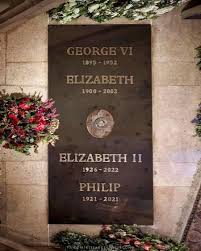
State funerals still involve ritual, military ceremony, religious observance, and national symbolism. Yet modern royal tombs may be less monumental than those of ancient emperors. The emphasis frequently shifts from divine kingship to public service, continuity, family, and national mourning.
Even so, location remains crucial.
Burial within an established royal chapel or cemetery reinforces dynastic stability. Public processions connect the monarch with the nation. Television and digital media expand the funeral’s audience far beyond the physical site.
The royal burial has not disappeared as a political spectacle. It has simply acquired cameras.
Modern coverage also creates tensions between private grief and public duty. Royal families mourn as relatives, but the state stages the event as history. Every gesture, route, hymn, uniform, and seating arrangement can carry symbolic weight.
Nothing is merely decorative.
Who Controls a Monarch’s Memory?
A ruler may choose a tomb, but later generations control much of what happens next.
Successors can enlarge, alter, neglect, restore, or reinterpret burial sites. Governments may turn them into museums. Religious institutions may maintain them as sacred spaces. Tourists may transform them into attractions.
The meaning of the tomb therefore evolves.
A site originally intended to inspire obedience may later attract architectural historians. A dynastic shrine may become a national monument. A once-feared emperor may be reduced to a ticketed exhibit beside a gift shop.
Time has a dry sense of humour.
This evolution does not erase the tomb’s original political purpose. Instead, it adds new layers. Royal burial places become historical palimpsests, repeatedly rewritten by changing regimes and audiences.
Bottom Line
Monarchs and emperors chose their final resting places with extraordinary care because they understood a fundamental principle: political power depends on memory.
A royal tomb could connect a ruler with gods, saints, ancestors, capitals, victories, and national myths. It could transform succession into continuity and conquest into destiny. Through architecture, ritual, location, and symbolism, the monarch remained publicly present even after the body had vanished from view.
These burial places also reveal the fragility beneath royal grandeur. Tombs can be robbed, neglected, destroyed, relocated, or reinterpreted. A monument designed to proclaim eternity may eventually become a ruin. A ruler who tried to control history may discover—posthumously and rather helplessly—that history has other plans.
Yet royal tombs continue to fascinate us because they occupy the border between the intimate and the political. They contain human remains, but they also contain ideas about legitimacy, ambition, faith, identity, and empire.
In the end, rulers did not simply choose where to be buried.
Leave a Reply