The Influence of War on Burial Practices: From Ancient Battlefields to Arlington
War does not end when the fighting stops. For the living, the aftermath continues in ruined cities, altered borders, political memory, and perhaps most visibly, in the places where the dead are laid to rest.
From ancient battlefields to the meticulously maintained rows of Arlington National Cemetery, societies have developed different ways of dealing with the bodies left behind by conflict. Sometimes the dead were buried quickly in mass graves. Sometimes they were burned, stacked in communal tombs, or left where they fell. In other periods, enormous bureaucratic systems emerged to identify individual soldiers, recover their remains, transport them home, and provide them with permanent graves.
Why did burial practices change so dramatically? And what does a military cemetery actually represent?
A cemetery is never simply a collection of graves. It is also a map of political values, social hierarchies, religious beliefs, technological capabilities, and collective memory. The way a society buries its war dead tells us something about how it understands the war itself.
The history of military burial is therefore not only a history of death. It is a history of how the living make sense of death.
From Battlefield to Burial Ground: The Ancient Problem of the War Dead
Long before the modern military cemetery existed, armies faced a surprisingly practical problem: what should be done with thousands of bodies after a battle?
Ancient warfare could produce enormous numbers of casualties in a matter of hours. Yet there were no identification systems comparable to modern military records, no specialised recovery teams, and no reliable means of transporting bodies across great distances.
Burial was therefore shaped by necessity as much as by ritual.
In the ancient Mediterranean world, however, the treatment of the dead could also have enormous religious and political significance. The Greeks, for example, placed considerable importance on funerary rites. The body of a fallen warrior was not simply biological waste to be removed from a battlefield. Proper treatment of the dead was connected to honour, social identity, and religious obligation.
This becomes particularly interesting when we consider enemies.
The ancient world did not necessarily regard the battlefield dead as belonging to the same moral community. Yet the dead could still possess a claim to ritual treatment. Ancient accounts repeatedly demonstrate that the recovery and burial of fallen soldiers could become a matter of negotiation between opposing sides.
The battlefield, in other words, could temporarily become a cemetery.
But it was often a cemetery without the individuality we associate with modern graves. Bodies could be buried collectively, particularly when the sheer number of casualties made individual graves impractical.
This distinction matters. Modern military cemeteries tend to emphasise the individual soldier. Ancient battlefield burial often emphasized the collective.
That difference would gradually become one of the most important transformations in the history of war and remembrance.
Mass Graves, Collective Identity, and the Medieval Battlefield
The problem did not disappear during the medieval period.
Medieval warfare could produce substantial numbers of dead, particularly during sieges and major battles. Yet burial arrangements varied enormously depending on religion, geography, military circumstances, social status, and the ability of communities to recover the bodies.
The distinction between important individuals and ordinary soldiers was particularly significant.
Kings, nobles, and prominent warriors might receive elaborate burials in churches or monumental tombs. Ordinary soldiers were much less likely to receive individualised memorials.
This was not necessarily a sign that their deaths were considered meaningless. Rather, medieval society understood status through hierarchy. The tomb itself could reproduce that hierarchy.
A ruler could become a permanent architectural presence through a monumental effigy. A common soldier might disappear into an unmarked burial.
The cemetery therefore became a kind of social diagram.
Look closely at an old burial ground and you may discover that it tells two stories simultaneously: one about death and another about the society that produced the dead.

When War Becomes Industrial: The Transformation of Military Burial
The nineteenth century changed the relationship between warfare and burial in profound ways.
Industrialisation transformed the scale of warfare. Armies became larger, weapons became more destructive, transportation improved, and conflicts increasingly produced casualties on a scale that older burial systems could not easily accommodate.
The American Civil War provides one of the clearest examples.
The sheer number of dead forced the United States to confront a question that modern states could no longer avoid: Who is responsible for the dead soldier?
Previously, military burial had often been inconsistent. Bodies might remain on battlefields, be buried locally, or be returned home if families had the means to arrange transportation.
The Civil War began changing this model.
The United States established a system of national cemeteries during the conflict, creating a government responsibility for the burial of service members. This was a major conceptual shift. The soldier’s grave was becoming a matter of national administration rather than purely private family responsibility.
Arlington National Cemetery emerged directly from this crisis.
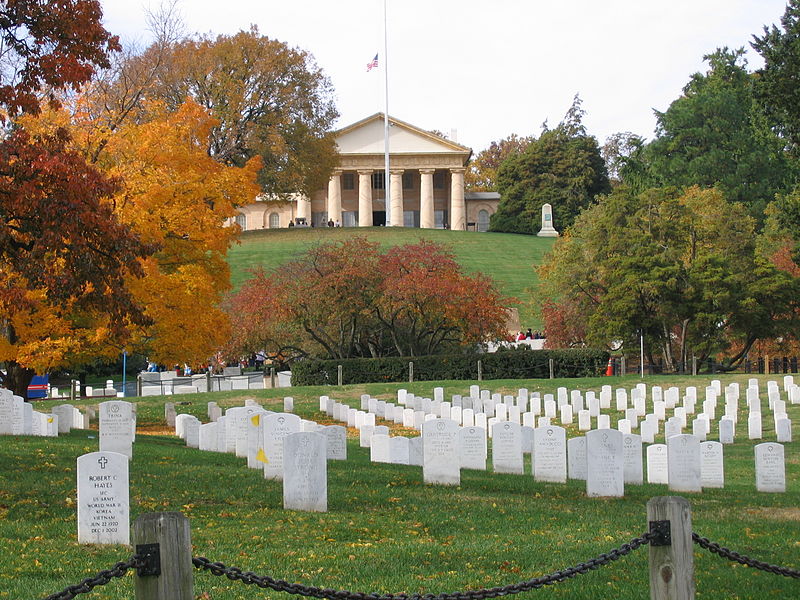
In May 1864, the first military burial at Arlington was conducted for Private William Christman. The cemetery was formally established as a national cemetery on June 15 of the same year. The original site covered approximately 200 acres.
The origins of Arlington reveal something important about military cemeteries: they can be born from necessity and acquire symbolic meaning later.
At first, Arlington was partly an answer to a practical problem. Washington-area cemeteries were filling rapidly with soldiers who had died in military hospitals. Arlington offered space.
But the site was also politically charged.
The property had belonged to the Custis-Lee family and had been occupied by the U.S. Army after the outbreak of the Civil War. The transformation of the estate into a cemetery therefore gave the landscape an additional symbolic dimension.
The dead were not simply being buried on available land.
They were becoming part of the landscape of the nation.
The Unknown Soldier: When Identity Becomes a National Question
One of the most painful consequences of mass warfare is anonymity.
Modern audiences sometimes assume that identifying the dead is simply a technical matter. It is not.
Explosions, fire, decomposition, missing records, battlefield conditions, and hurried burials can make identification extremely difficult. During the American Civil War, large numbers of soldiers were never identified. Arlington’s own historical records note that estimates suggest nearly half of Civil War dead were never identified.
This created a new cultural problem.
What happens when a nation wants to mourn its dead but does not know their names?
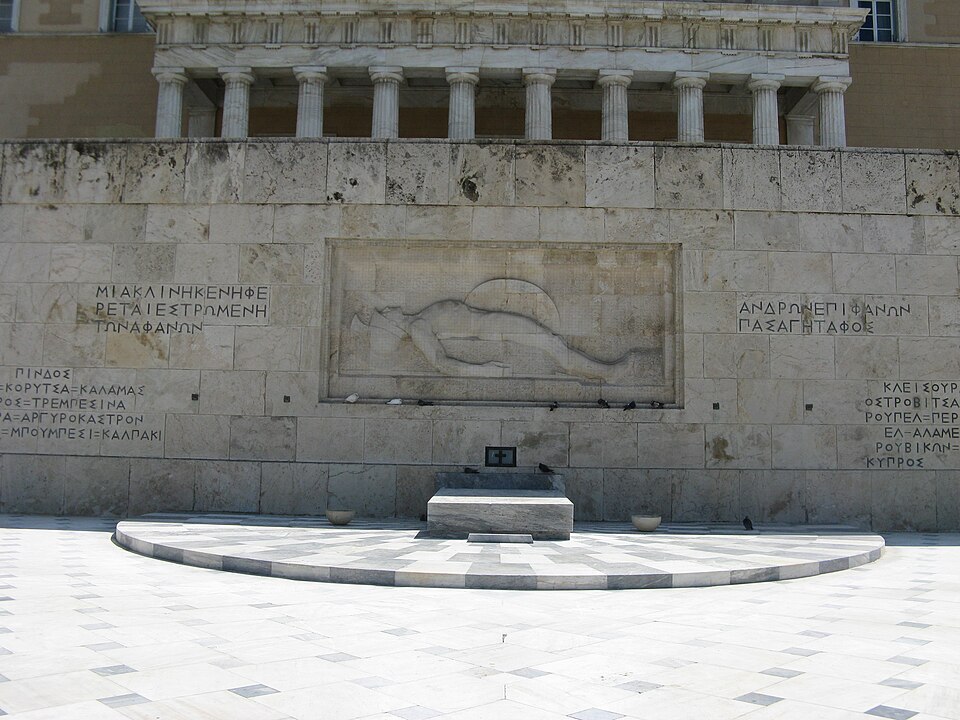
The answer was the creation of the Unknown Soldier as a symbolic figure.
The Unknown is simultaneously one person and thousands of people. He represents the individual soldier precisely by being unidentified.
Arlington’s Tomb of the Unknown Soldier, dedicated in 1921, provided a permanent resting place for an unidentified American service member from the First World War. Unknown service members from later conflicts were subsequently added.
The symbolism is extraordinarily powerful.
A named grave tells us, this person lived.
An unknown grave tells us, someone lived.
That subtle difference transforms the tomb into a national memorial. The Unknown Soldier becomes a surrogate for every family that never received a body, every soldier whose final resting place disappeared, and every person whose identity was swallowed by the machinery of war.
From Battlefield Burial to Repatriation
Another major transformation involved the relationship between the soldier’s body and the homeland.
For much of history, dying abroad could mean remaining abroad. Modern states increasingly rejected this idea.
During the Spanish-American War, the United States developed a policy of repatriating fallen service members. The government began returning bodies to the United States at public expense, establishing a model that would become increasingly important during the twentieth century.
This changed the emotional geography of war.
The battlefield was no longer necessarily the final destination of the dead.
A body could travel thousands of kilometres from a foreign battlefield back to the country for which the soldier had fought.
That journey carried enormous symbolic weight. It effectively reversed the soldier’s wartime migration.
He had left home to fight elsewhere.
His body came home.
The development of military identification systems, temporary graves, recovery units, and repatriation procedures increasingly transformed the dead soldier from an anonymous battlefield casualty into an identifiable citizen whose remains could be returned to family and nation.
The modern military cemetery was emerging alongside the modern bureaucratic state.
The Cemetery as a Tool of National Memory
Once military cemeteries became permanent institutions, their function expanded.
They no longer existed merely to dispose of bodies.
They became places where nations could tell stories about themselves.
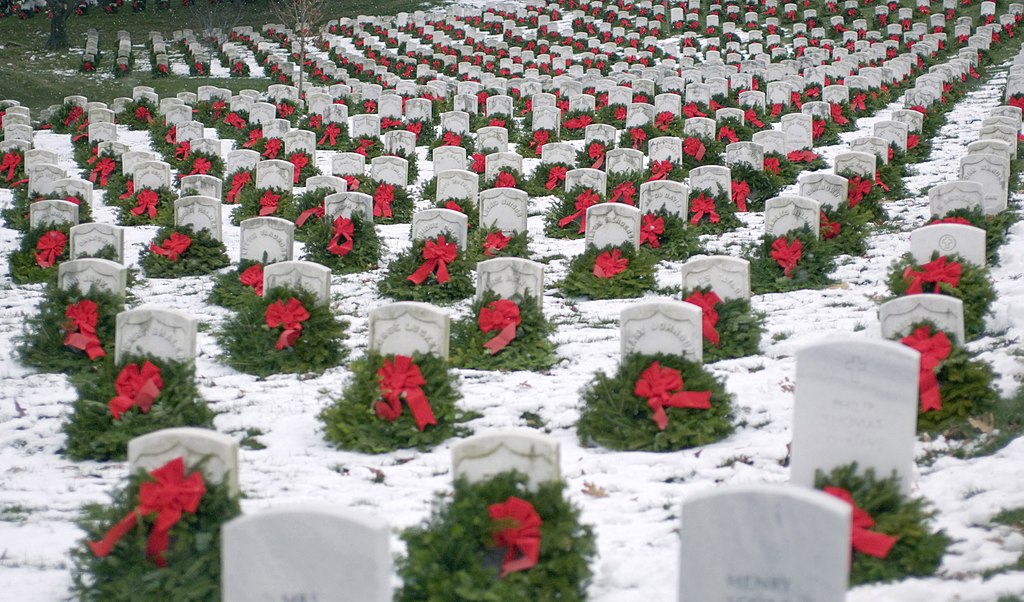
Arlington illustrates this transformation particularly well. Its grounds contain the graves of service members connected to conflicts ranging from the American Revolution to contemporary wars. The cemetery has therefore become a physical representation of American military history.
But what exactly does a military cemetery remember?
The answer is complicated.
It remembers individual lives, certainly. But it also remembers wars, national ideals, political conflicts, technological changes, social movements, and shifting attitudes toward military service.
Even the layout of a cemetery can communicate ideology.
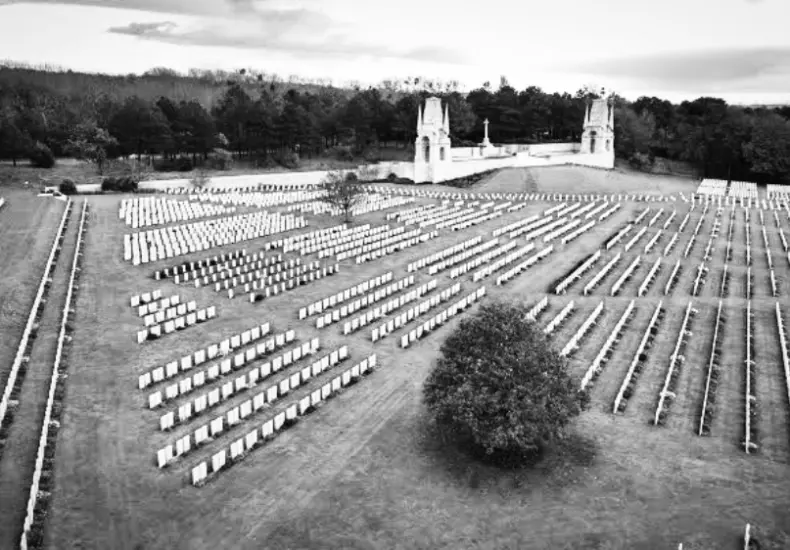
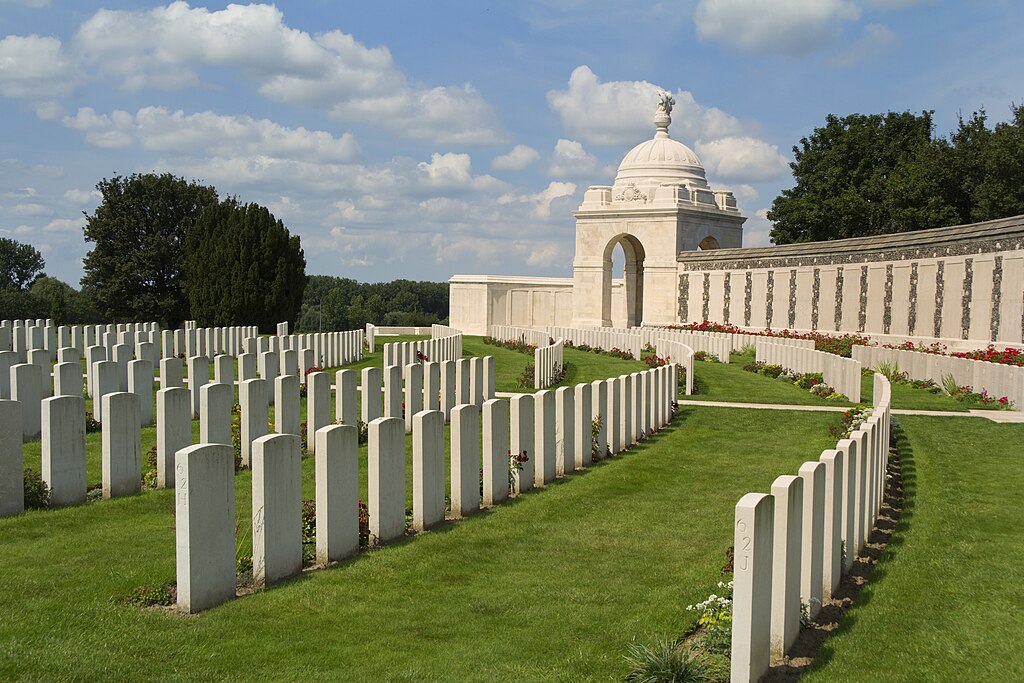
Rows of standardised headstones create an impression of equality. A general and an ordinary enlisted soldier may occupy spaces that appear remarkably similar.
This visual uniformity is powerful because war itself is profoundly unequal. Soldiers experience different ranks, roles, risks, and privileges. Yet death can flatten those distinctions into a common landscape.
The cemetery creates an image of equality among the dead.
Or does it?
Look more closely and hierarchies remain. Monuments, presidential graves, memorials, special sections, and architectural structures can distinguish particular individuals and groups.
The military cemetery therefore performs a fascinating balancing act between equality and hierarchy.
War Cemeteries and the Politics of Who Gets Remembered
Cemeteries may appear politically neutral, but they rarely are.
Every cemetery involves decisions about whose remains are preserved, whose names are recorded, which monuments are erected, and which stories receive prominence.
Arlington’s history makes this particularly visible.
For much of its history, the cemetery reflected racial segregation. African American soldiers, freed people, and other communities were not always treated within the same spatial and institutional framework as white soldiers. Arlington’s official history notes that national cemeteries were segregated by race and rank until 1948. More than 3,800 freed African Americans are buried in Section 27.
This complicates the comforting image of the cemetery as a perfectly democratic space.
The dead may appear equal beneath identical stones, but the historical circumstances surrounding those stones can be profoundly unequal.
That is precisely why cemeteries deserve historical analysis.
A grave tells us who died.
The landscape surrounding it can tell us who had power.
From Graves to Memorials: The Changing Meaning of Military Space
Military cemeteries also demonstrate that societies do not simply remember individuals. They construct narratives.
Arlington contains monuments commemorating wars, military units, professions, and historical events. Its memorial landscape has evolved over time, reflecting changing approaches to commemorative art and national memory.
The difference between a grave and a memorial is worth considering.
A grave marks a body.
A memorial can commemorate something much larger.
A battlefield monument might remember a regiment. A wall might record thousands of names. A symbolic sculpture might represent sacrifice without containing any human remains at all.
In this sense, modern war landscapes have become increasingly complex.
The cemetery is no longer simply where the dead sleep.
It is where the living negotiate what their deaths are supposed to mean.
International Law and the Dignity of the War Dead
There is also a legal dimension to the evolution of military burial.
International humanitarian law places obligations on parties to armed conflict concerning the dead and their grave sites. These rules address matters including the collection, identification, burial, and treatment of those killed during armed conflict.
This is significant because it represents another stage in the historical development of burial practices.
What was once largely determined by local custom, religion, military necessity, or social status increasingly became subject to international standards.
The underlying principle is remarkably simple: death does not eliminate human dignity.
Even an enemy combatant remains a human being after death.
That principle may sound obvious from a modern perspective, but the history of warfare demonstrates how frequently societies have struggled to uphold it.
Arlington and the Modern Military Cemetery
Today, Arlington National Cemetery contains hundreds of thousands of burials and continues to evolve as both a cemetery and a national memorial landscape. Its history stretches from the Civil War to contemporary conflicts.
Yet Arlington is not frozen in the nineteenth century.
Modern concerns such as limited burial space, cremation, changing eligibility requirements, and new forms of commemoration have altered how the cemetery functions. Columbarium courts, for example, provide above-ground niches for cremated remains, demonstrating how even one of America’s most traditional military cemeteries must adapt to changing funerary practices.
This raises a fascinating question.
If burial practices change, does the meaning of the military cemetery change with them?
Perhaps.
But there is also continuity.
The central idea remains remarkably stable: the state promises that those who died in its service will not simply disappear.
The form may change.
The promise does not.
The Role of Death Masks in Preserving History and Identity
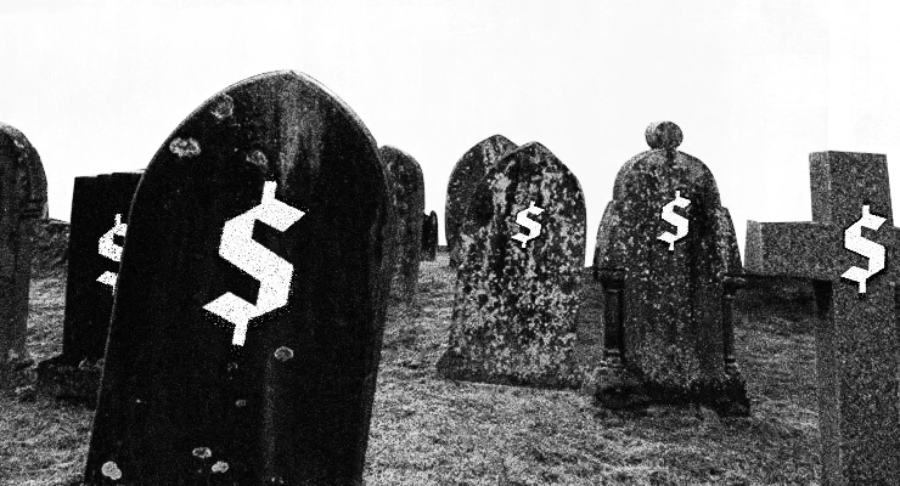
The Business of Death: How the Funeral Industry Has Evolved
Why War Cemeteries Matter
Military cemeteries are often described as places of honour, sacrifice, and remembrance. All three descriptions are accurate, but they do not tell the whole story.
They are also archaeological landscapes.
They are archives.
They are works of architecture.
They are political spaces.
They are religious and philosophical environments.
And above all, they are places where the living construct relationships with the dead.
From ancient battlefields where soldiers were buried collectively to Arlington’s precisely ordered landscape, the history of military burial reveals an enormous transformation. The dead gradually moved from being a logistical problem to becoming subjects of national responsibility.
Individual identification became increasingly important. Bodies were recovered and repatriated. Unknown soldiers became national symbols. Cemeteries became monuments. Graves became historical documents.
Perhaps the most remarkable change is that modern military cemeteries ask us to see the soldier not merely as a casualty of war, but as a person whose death creates an obligation for those who survive.
That is why the cemetery matters.
A battlefield tells us how people died.
A cemetery asks us how we choose to remember them.
Bottom Line
The history of war burial is ultimately a history of changing ideas about humanity. Ancient societies confronted the practical and religious problem of disposing of battlefield dead.
Medieval communities embedded burial within social hierarchy. Industrial warfare created casualties on an unprecedented scale and forced governments to take greater responsibility for identification and burial.
Modern military cemeteries transformed individual graves into landscapes of national memory, while monuments and Tombs of the Unknown gave symbolic form to losses that could never be completely named.
Arlington stands at the centre of this story, but it is not the endpoint. Cemeteries continue to evolve because attitudes toward death, identity, warfare, and memory continue to evolve.
Perhaps that is why military cemeteries can feel so strangely alive.
Leave a Reply